Affordable 3D Product Digitization: A Retailer’s Guide to Scaling Visual Assets

This article examines the accessible tools and workflows that allow businesses to build high-quality 3D product catalogs without enterprise-level budgets. We discuss how mobile scanning technology and artificial intelligence have lowered the barrier to entry, making immersive commerce a commercially viable strategy for brands of all sizes.
Introduction
For years, the retail industry assumed that 3D commerce required Hollywood-level budgets, specialized engineering teams, and expensive laser scanning hardware. This perception created a "paywall" that kept many mid-sized brands from using the technology, despite its clear benefits for customer engagement. However, digital asset creation has changed. High-quality product visualization is no longer limited to luxury giants but is an accessible reality for any merchant with a smartphone.
These accessible tools arrived at a critical time. Generative AI cuts creation time from hours to seconds in early 2026 implementations and signals a massive shift in how retailers will manage their visual inventory. If you don't learn the basics of this new "low-code" tech stack, you risk managing an obsolete catalog while competitors offer immersive experiences that drive sales. By using affordable 3D product digitization, brands can move from static photography to interactive models using the devices they already own. This guide peels back the layers of the technology to show how you can start digitizing your inventory today.
The Shift to Affordable 3D Product Digitization
Traditional asset creation imposed a heavy cost on retailers who wanted to modernize their catalogs. In the past, if a brand wanted high-quality digital twins of their inventory, they had to hire specialized studios or buy industrial-grade hardware. These old methods prevented most mid-sized businesses from entering the space. For instance, professional 3D rendering service costs range from $100 basic to $2,000+ for complex luxury products. Similarly, 3D scanning services cost $100-$3,000 for small objects and up to $10,000 for larger items. These prices made scaling a catalog of hundreds of items impossible for most merchants.
The industry is shifting toward software-led solutions that rely on photogrammetry and artificial intelligence. This low-code approach removes the need for expensive lasers and dedicated engineering teams. Instead, software algorithms process standard photographs to reconstruct geometry and texture. This method reduces the cost per SKU and puts the power of creation back into the hands of the retailer.
By using these accessible tools, brands can achieve affordable 3D product digitization without sacrificing quality. This evolution allows companies to spend their budgets on marketing and user experience rather than sinking capital into technical production. Falling digitization costs coincide with the widespread availability of scanning hardware in consumer pockets.
Mobile Scanning and Hardware Accessibility
Modern smartphones possess the sensors and processing power required to capture high-fidelity product models directly from a showroom floor. This capability stems largely from the integration of LIDAR (Light Detection and Ranging) sensors in mobile devices. The market reflects this growth. Analysts project the smartphone 3D camera market, valued at $2.34B in 2024, to reach nearly $46 billion by 2032. Retailers can now use the devices they already own to scan rigid objects like furniture, shoes, or home decor.
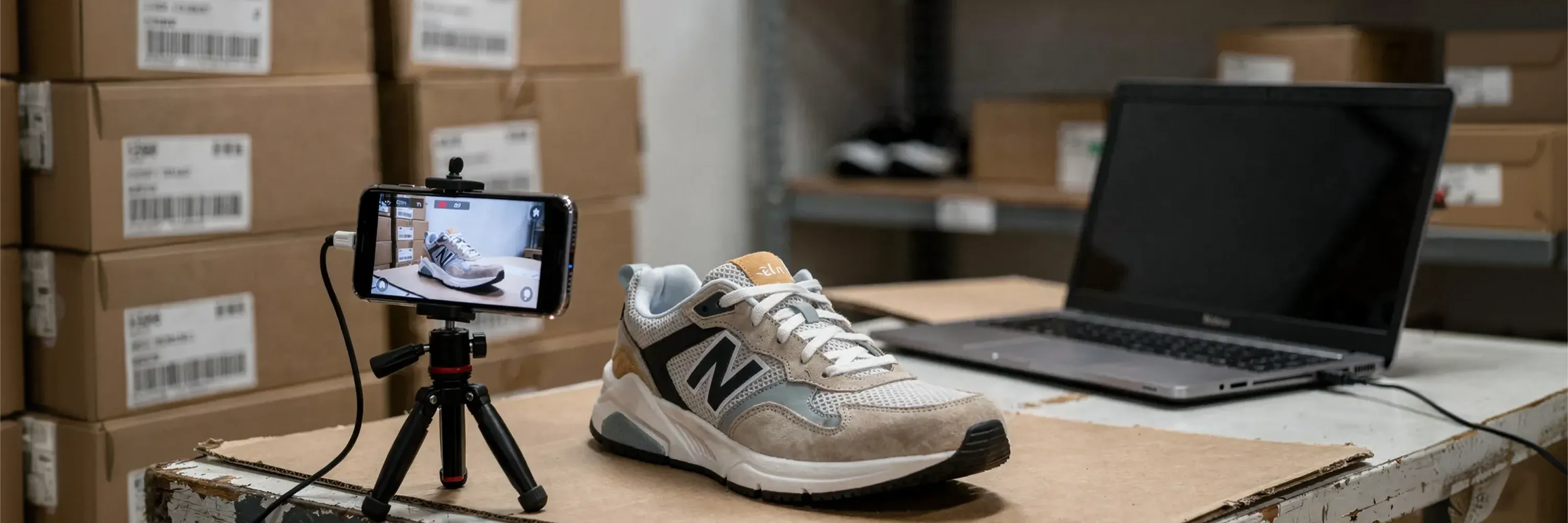
Apps such as Polycam and KIRI Engine allow store owners to walk around an object and capture it in minutes. These applications use photogrammetry and Neural Radiance Fields (NeRF) to process depth and color. NeRF technology generates 3D models from fewer input images with better flexibility than photogrammetry alone. This efficient workflow means a merchant can digitize a shelf of products in a single afternoon. Once captured, these apps export files that are ready for web use, though you should understand the difference between 3D file formats like GLB and USDZ to ensure compatibility.
This practical approach to low-cost 3D modeling works well for hard goods, but soft materials present a challenge that simple scanning cannot easily solve.
Generative AI for Fashion Products and Accessories
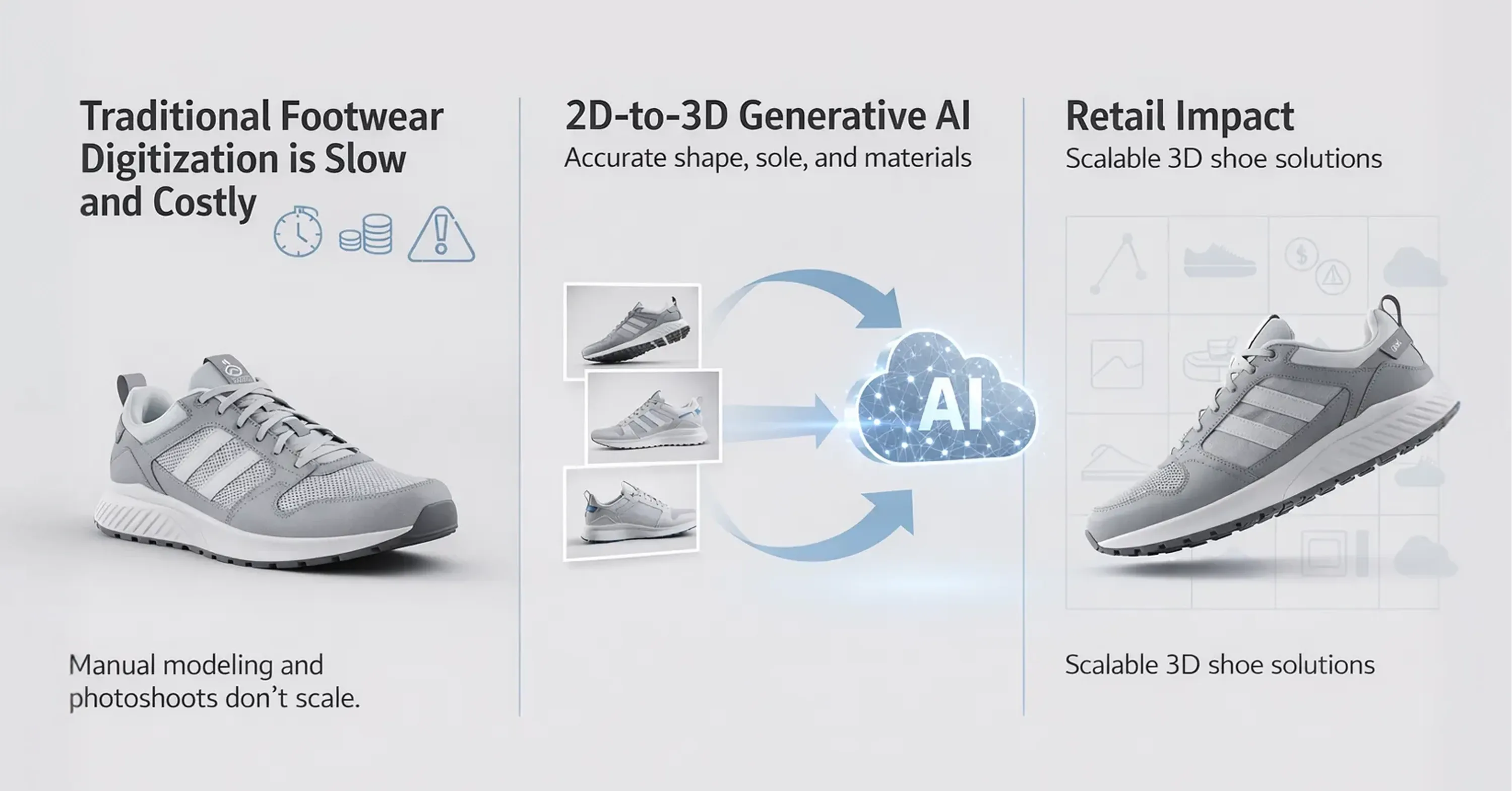
Scanning soft goods like shoes often fails because fabric wrinkles and moves in unpredictable ways that standard scanners struggle to interpret. A rigid scan of a shoe on a mannequin looks stiff and unnatural when placed in a digital environment. To solve this, the industry uses "2D-to-3D" generative AI. This technology uses standard 2D images to predict the 3D structure and texture. The speed and cost advantages are significant. 3D model generation costs approximately €0.008-€0.03 per model when using credit-based systems.
Platforms like WEARFITS use these advanced algorithms to help fashion retailers specifically. Instead of organizing a physical photo shoot to capture every angle of a shoe, WEARFITS converts standard shoe imagery into draped 3D assets. This allows brands to generate e-commerce-ready models that consumers can interact with virtually. The speed of production also supports high-volume retail needs, as 3D model generators create complex models in 100-120 seconds versus the 3-4 hours usually required for manual modeling. This scalable approach to 3D asset generation ensures that large seasonal collections can go online quickly.
Retailers who adopt these AI tools can justify the investment by measuring the Virtual Try-On ROI through increased conversion rates and reduced returns.
E-Commerce Quality Standards
Retailers often mistakenly believe that their digital product models must match the visual quality seen in Hollywood movies. This belief leads companies to overspend on high-polygon assets that hurt online performance. A cinema-quality model contains millions of polygons and huge texture files that cause slow load times on mobile browsers. In contrast, a viable e-commerce asset prioritizes speed and interactivity over microscopic detail. Shoppers want to rotate a shoe or place a chair in their living room instantly, and they can't do that if the file takes thirty seconds to load.
You should focus on creating web-ready assets. These lightweight files use formats like GLB (for Android and web) and USDZ (for Apple devices). These formats balance visual quality with file size, which ensures that the customer sees the product quickly. This streamlined approach aligns with consumer behavior. Data indicates that 95% of consumers prefer interactive 3D product views over video playback. Furthermore, 82% of product page visitors choose to activate the 3D view when a site makes it available.
When you adopt low-cost 3D modeling techniques, you stop paying for unnecessary geometry users never notice on a phone screen. By targeting web standards rather than film standards, you reduce production costs and improve the user experience. You can read more about scaling 3D production to understand how to maintain this balance across a larger inventory.
Virtual Try-On Integration
Once you capture a scan or generate a model, the work isn't finished. A raw 3D scan typically contains errors, holes, and heavy data that web browsers struggle to process. You must optimize these files before you publish them to your online store. Optimization involves reducing the file weight and correcting texture errors so the digital twin looks real under different lighting conditions. This step is critical because a glitchy or slow model destroys consumer trust faster than a bad photograph does.
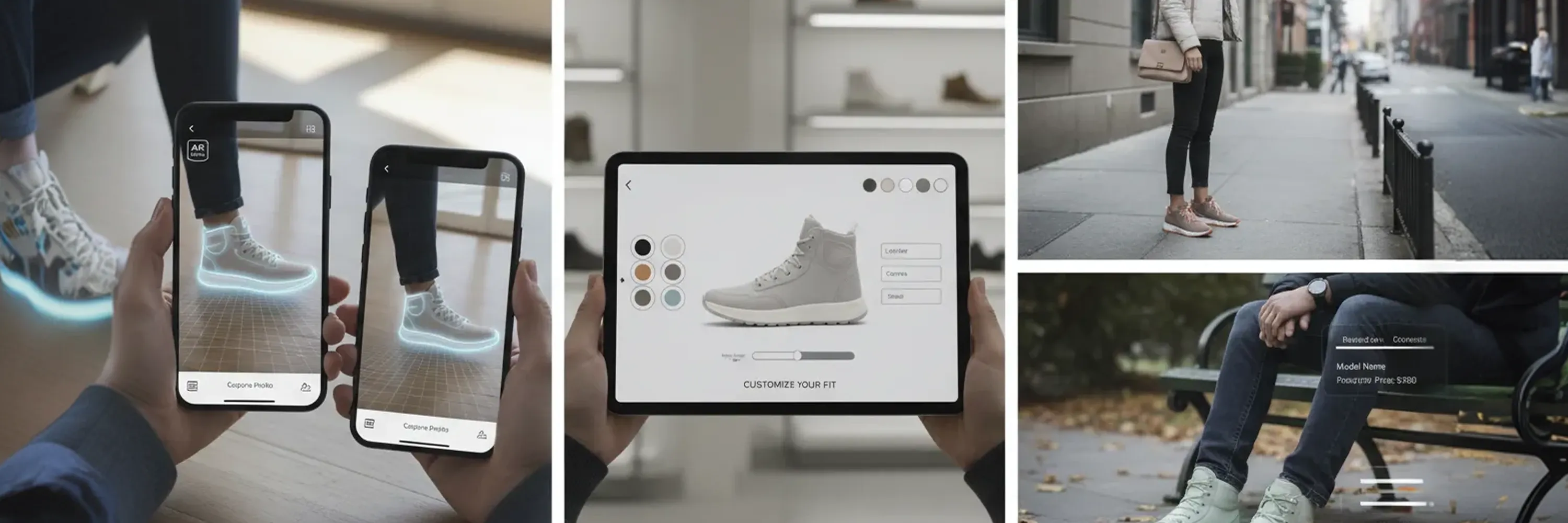
Platforms like WEARFITS solve this problem by automating the optimization pipeline. This software ensures that your 3D asset generation process produces files ready for immediate use in Virtual Try-On (VTO) and Augmented Reality (AR) applications. This capability allows you to offer an immersive shopping experience where customers can see how a shoe fits or how a sofa looks in their room. The technology handles the technical requirements, so you can focus on selling.
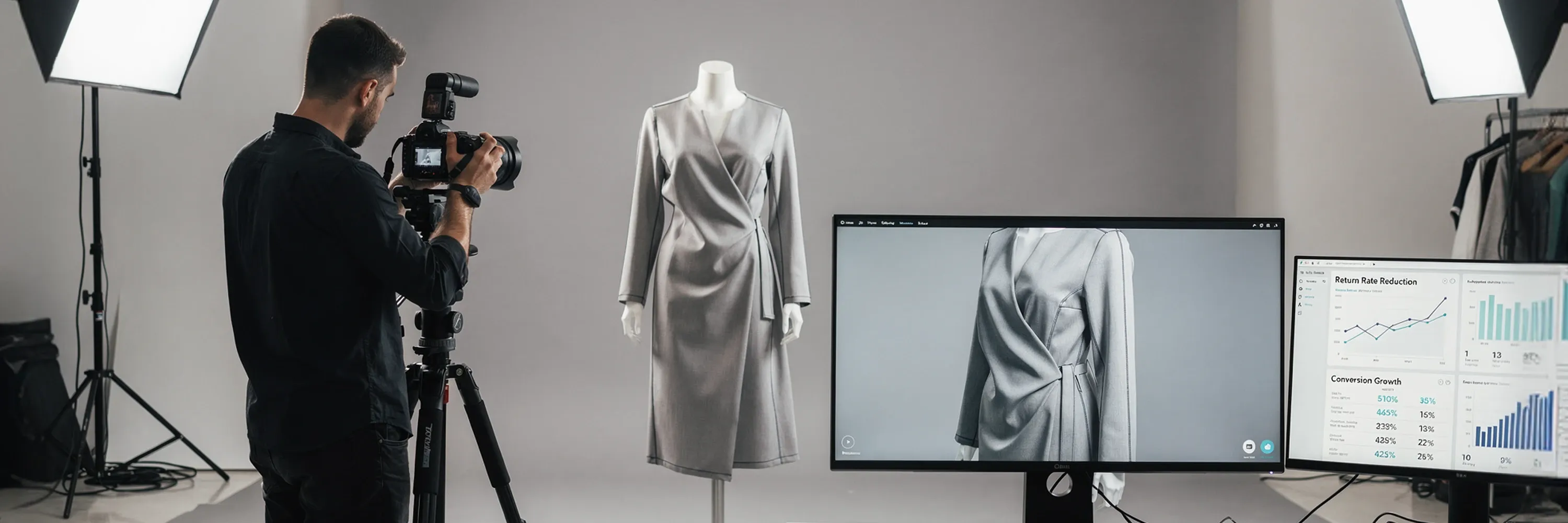
Integrating optimized assets impacts your bottom line. Retailers who implement these tools see significant returns. For example, product pages with AR content show that shoppers are 2.7 times more likely to purchase than those without. Additionally, Houzz reported that shoppers who view 3D product images are 11 times more likely to purchase. These numbers prove that optimized, interactive content drives conversions.
Scaling Your Catalog with a Hybrid Workflow
Digitizing a single product is simple, but digitizing a catalog of 5,000 items requires a strategy. You can't rely on a single method for every type of product. A hybrid workflow works best for most mid-sized retailers. This means you assign different digitization methods to different product categories based on their material properties. Your internal team can use mobile apps to scan rigid items like shoes, bags, and hard goods right on the warehouse floor. Meanwhile, you can use AI automation tools to handle complex soft goods like apparel that require draping and movement.
You should implement batch processing to speed up this process. Set up a consistent lighting environment, such as a turntable with fixed LED lights, and pass items through this station rapidly. This consistency reduces the time your team spends editing the scans later. This method allows you to move from ad-hoc scanning to a production line model.
Large retailers have already proven that this model works. Target created 2,000 photorealistic 3D models using similar techniques, and they reduced costs by 70% versus traditional photography. Furthermore, Target cut their go-to-market time by 75% using 3D visualization instead of relying on slow, manual photo shoots. By adopting affordable 3D product digitization, you can achieve similar efficiency and scale your visual assets without expanding your budget.
Conclusion
The transition to 3D commerce doesn't require you to replace professional artistry entirely, but rather to make it commercially viable for the mass market. By adopting the tools discussed in this article, you can bypass the traditional barriers of cost and technical complexity. The goal is to create a digital catalog that serves your customers better, and offers them the clarity and confidence they need to make a purchase.
Don't wait for a "perfect" time to begin this process. The market moves quickly, and your competitors are already using the technology to secure significant advantages. If you delay, you risk falling behind in an industry where affordable 3D product digitization is fast becoming the standard. We encourage you to pick just one category of your catalog to pilot this workflow today. Start small, prove the ROI, and then scale up to transform your business for the future of retail.
Frequently asked questions
Quick answers to the questions teams ask most about this topic.
The shift to low-code software and mobile scanning has lowered costs significantly. Previously, brands needed expensive hardware and engineering teams, but now they can use affordable 3D product digitization tools on standard devices. This evolution allows merchants to allocate budgets to marketing rather than technical production.
Yes. You can use modern smartphones to capture high-fidelity product models directly from your floor. Devices with LIDAR sensors and apps like Polycam allow you to scan rigid objects in minutes without industrial equipment. This accessible technology lets store owners digitize inventory using hardware they already own.
Generative AI converts standard 2D photographs into 3D models that predict fabric drape and texture. WEARFITS uses this technology to create accurate 3D assets for footwear, bags, and apparel that support virtual try-on experiences. This approach solves the challenge of scanning fabric, which often looks unnatural when using rigid scanning methods.
Online retail assets do not need cinema-level detail because speed and interactivity matter more. High-polygon models cause slow load times on mobile browsers, which frustrates shoppers who want to rotate products instantly. You should focus on lightweight formats like GLB and USDZ that balance visual quality with performance.
A hybrid workflow that combines mobile scanning for hard goods and AI for apparel works best. You can speed up production if you set up a consistent lighting station and batch-process items to reduce editing time. This strategy allows you to assign specific methods to different product categories for maximum efficiency.