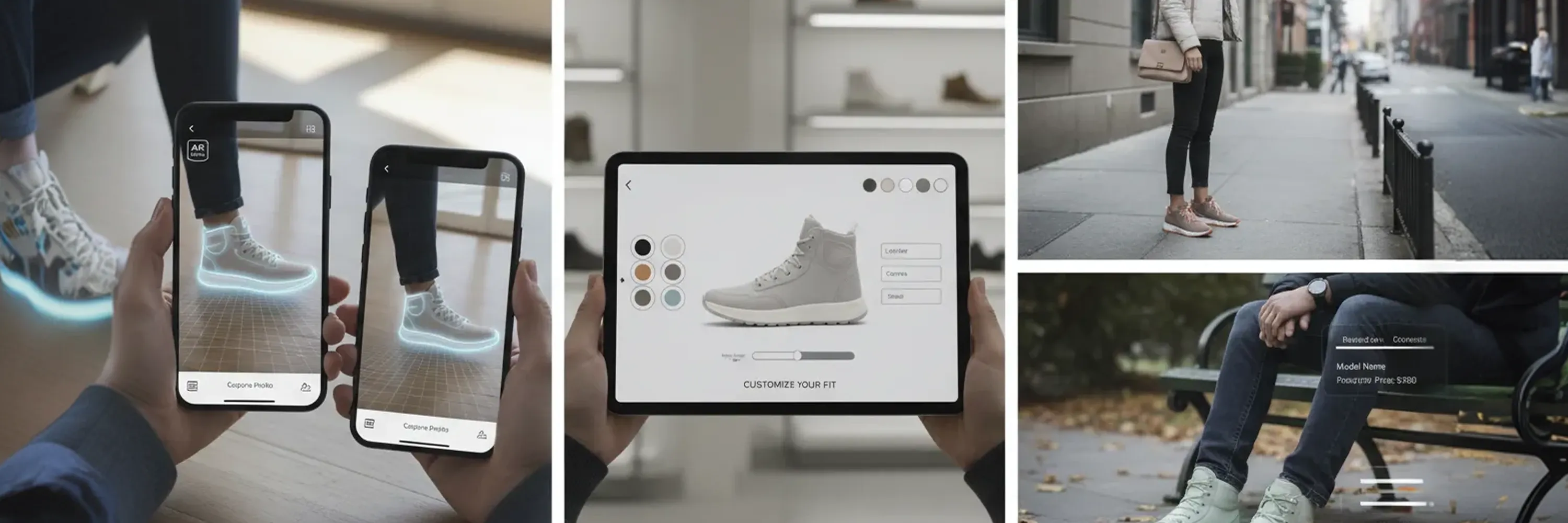
Implementing Affordable AR Try-On for Shoes: A Cost-Effective Integration Guide

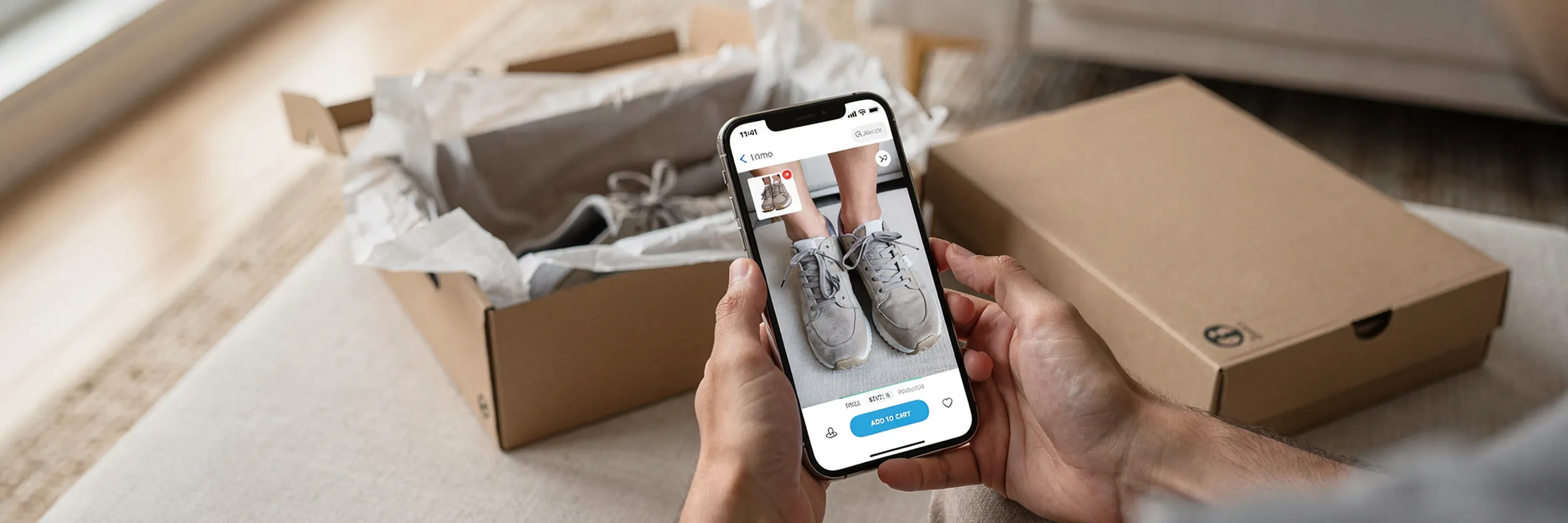
In this article, we discuss how to select and integrate budget-friendly virtual try-on solutions for footwear businesses. We explain the process of measuring the return on investment through reduced return rates and improved conversion metrics.
Introduction
Augmented Reality (AR) has become a standard tool for footwear retailers to help customers visualize products before they buy. Major brands like Nike have used this technology to engage shoppers for years, while smaller retailers watched from the sidelines. Small business owners often struggle with high return rates. These rates remain as high as 30-40% for many online retailers. These retailers want to lower those numbers but often fear the high costs associated with custom software development.
Recent industry shifts have changed this dynamic because technology providers now offer scalable tools that don't require an enterprise budget. You risk losing customers to competitors who offer a more interactive shopping experience if you don't adapt to these accessible technologies. Ignoring these tools hurts your profit margins because you continue to pay for avoidable returns. This guide explores how to implement affordable AR try-on for shoes without breaking the bank.
Landscape of Affordable AR Try-On for Shoes
Most small business owners assume AR requires a custom enterprise budget. However, the market now offers accessible options. You don't need to hire a development team to build a proprietary system from scratch, which could cost tens of thousands of dollars. Instead, you can select SaaS plugins that install directly into your online store.
These tools replace high upfront costs with manageable monthly subscriptions. To find the right fit for your business, it is crucial to compare tiered pricing models and hidden costs like digitization fees. Below is a breakdown of current vendors for 3D AR shoes and bags, ranging from entry-level to premium enterprise solutions:
-
License: From $59/month
-
Digitization: Depends on custom quote per SKU
-
Quality: High
-
Integration: Built integration with catalogue
-
License: From $499/month
-
Digitization: FREE (up to 1200 SKUs)
-
Quality: High
-
Integration: Built integration with catalogue
-
License: From $90/month
-
Digitization: FREE
-
Quality: Low
-
Integration: Manual operations
-
License: From $888/month
-
Digitization: Depends on custom quote per SKU
-
Quality: Medium
-
Integration: Manual operations
-
License: From $5,000/month
-
Digitization: Depends on custom quote per SKU
-
Quality: Medium
-
Integration: Manual operations
This comparison highlights a critical differentiator, which is automation. While several options are available, only Fittingbox and WEARFITS offer built-in integration with your product catalogue. The other platforms rely on manual operations, which can increase the administrative burden as your inventory grows.
These tools act as a strategy to reduce ecommerce returns because they ensure the customer orders the right product initially. You must address the technical requirements to get the system running once you select the platform that best balances cost, quality, and workflow automation.
Technical Integration Barriers
Modern AR applications function as plug-and-play solutions that eliminate the need for complex coding or technical expertise. You might worry that integrating this software requires a computer science degree. It doesn't. Most apps automatically handle difficult tasks like camera permission requests and device compatibility checks. This makes the integration process simple for the merchant. You simply install the app from your platform's marketplace. It injects the necessary code into your product pages. This ease of use is crucial for mobile conversion optimization because it ensures the feature works smoothly on the smartphones your customers use.
The biggest hurdle usually involves creating the 3D models of your footwear. However, new AI tools have simplified this step significantly. Google AI can now generate 360-spin product images from just 5 high-resolution product photos. This removes the need for expensive photogrammetry studios. NeRF AI technology can create 3D footwear models in 20 minutes if you need full 3D models. Manual creation takes 1-2 days. You can upload these files easily because Shopify accepts GLB 3D files as a standard format for product visualization. This intuitive workflow allows you to launch a budget AR try-on experience quickly. You will see how these tools directly influence buyer behavior and confidence after you solve the technical integration.
Enhancing Customer Experience with Virtual Tools
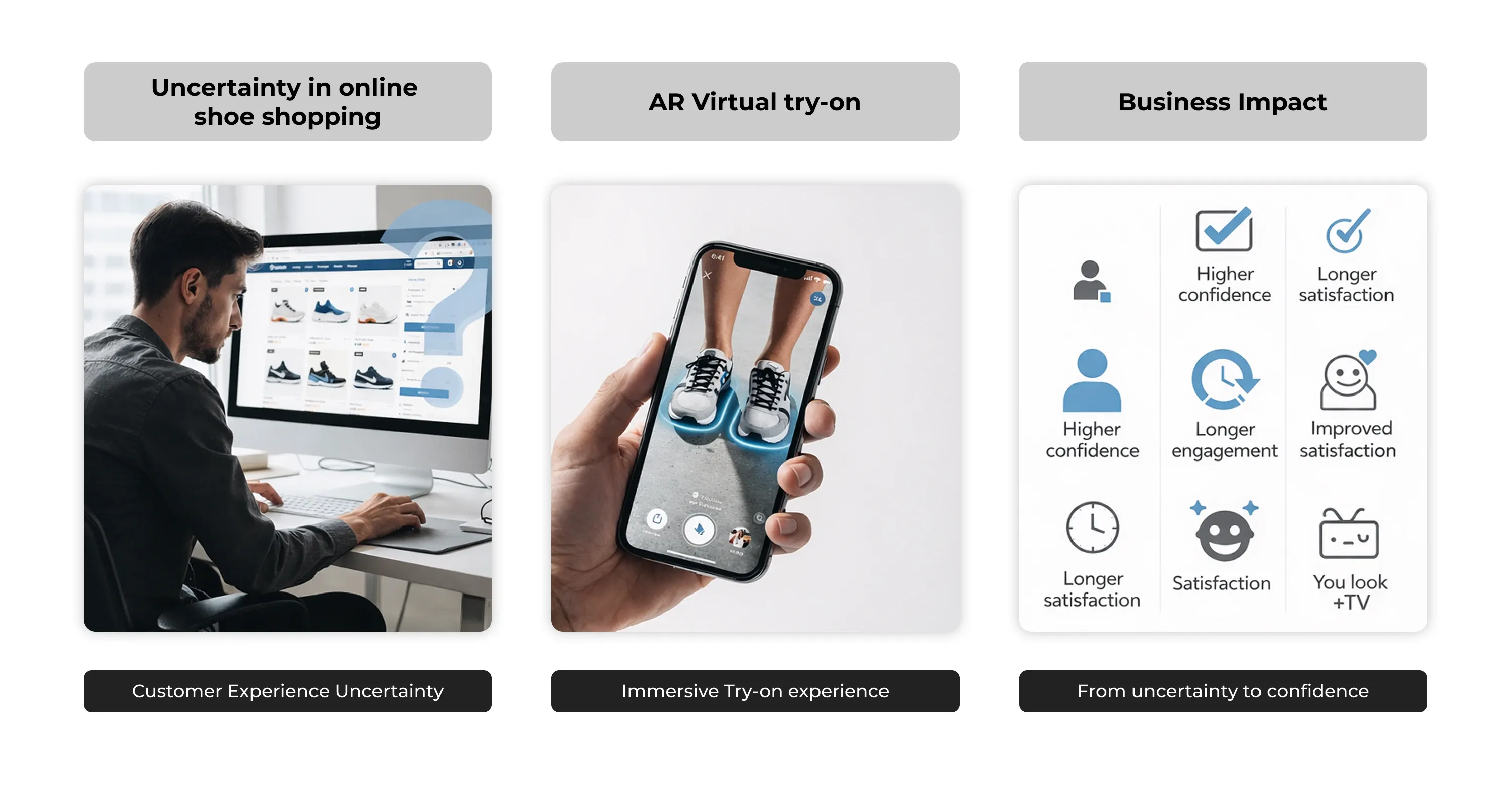
Virtual shoe fitting tools significantly increase buyer confidence because they remove the guesswork from online shopping. Shoppers often hesitate to buy footwear online because they can't physically inspect the product. They also can't judge how it will look on their feet. AR bridges this gap effectively. Their confidence in the purchase decision grows when customers see exactly how a sneaker looks on their foot via their phone screen. This visual confirmation mimics the in-store fitting room experience.
The data supports this shift in consumer behavior. Over 90% of American shoppers use AR or are open to using it for shopping. This is not just an American trend. 44% of European consumers have used Virtual Try-On while shopping online. You increase engagement on your product pages if you provide these tools. Customers spend more time interacting with the brand. This creates a stronger connection to the product.
These interactions lead to sales. 98% of shoppers who tried AR found it helpful in making purchase decisions. You convert hesitant browsers into satisfied buyers by improving customer experience with these interactive elements. These engagement metrics translate directly into financial gains through higher conversion rates and fewer returns.
Calculating True ROI: Returns vs. Conversion
You need to measure the financial impact of your new technology to ensure it justifies the monthly subscription cost. Many retailers focus only on the expense line item. However, the real value appears when you calculate the savings from avoided returns and the revenue from increased sales. Returns drain your profitability because you pay for shipping, restocking, and potential product damage. Fortunately, Shopify data on returns shows that 3D/AR product media lowers them by 40%. This directly saves you money on every order. Preventing just four returns covers the cost of many entry-level AR tools if your store processes ten returns a week at a cost of $20 each.
You should also look at how this technology drives new revenue. Customers buy more when they feel sure about the fit and look of a product. Data shows that virtual try-on reduces returns by up to 60% and increases average order value by 33%. This dual benefit means you save money on logistics while you earn more from each customer. For example, a footwear brand from the Session AI case study realized $200k incremental revenue in one week using AR try-on technology. These numbers prove that affordable AR try-on for shoes pays for itself quickly if you implement it correctly.
You must monitor the return rate for products that have AR enabled versus those that don't to track this success. This specific metric will highlight the performance gap between the two product types. The tool works if the return rate drops for your AR-enabled shoes. You should also consult a guide on analyzing retail metrics to understand how these improvements affect your overall business health. You can focus on getting more customers to use the feature once you confirm the return on investment.
Strategic Implementation
Your investment yields results only if customers actually see and use the virtual try-on button. Shoppers will miss the feature if you hide it in a sub-menu or place it below the fold. Consequently, your adoption rates will suffer. You must place the virtual shoe fitting call-to-action prominently near the "Add to Cart" button to capture attention immediately. This visibility is critical because 90% of sessions are anonymous. These sessions benefit from personalized AR try-on experiences. Since you can't email these anonymous visitors later, you have to engage them the moment they land on your product page.
You should also prioritize WebAR solutions over apps that require a download. Barriers to entry reduce usage, so you want a solution that works directly in the mobile browser. Research shows that WebAR experiences can reach 2-3 times more users than equivalent app-based AR experiences. More customers interact with the product when you remove friction. This leads to better sales numbers. For instance, Gunner Kennels achieved 40% higher conversion rates with a 5% reduction in AR returns after implementing a similar strategy. You ensure that your store reaps the full financial benefits of the technology by making your budget AR try-on tool easy to find and use.
Conclusion
We have analyzed the costs, integration steps, and financial benefits of adopting AR technology. This technology safeguards your profit margins because it directly addresses the costly problem of product returns. Affordability in AR is no longer about sacrificing quality. It's about choosing the right scale of solution for your business. Businesses that provide these interactive experiences will secure a loyal customer base as customer expectations evolve.
They will remain competitive in a digital-first market. Refusing to adapt is riskier than the cost of the software in a market where 25% of shoppers expect AI agents and interactive tools. You position your brand for sustainable growth if you invest in affordable AR try-on for shoes. Calculate your current monthly cost of returns today to establish a baseline before you select one of the recommended low-cost tools.
Frequently asked questions
Quick answers to the questions teams ask most about this topic.
Many providers offer affordable AR try-on for shoes through tiered subscription models that start around $60 per month. You can begin with a small selection of your best-selling items to test the impact on sales before you upgrade to a plan that covers your full catalog. This approach protects your cash flow while you validate the technology.
You can automate the creation process with AI tools that convert standard 2D images into high-quality 3D assets. WEARFITS provides a specialized converter that transforms a set of studio photographs into realistic models without requiring traditional CAD files. This technology eliminates the need for expensive manual modeling and speeds up your product launch.
Most modern AR platforms function as plug-and-play extensions that require zero coding knowledge. You install the application from your ecommerce dashboard, and the software automatically injects the viewer code into your product template. If you use a custom theme, the provider's support team usually handles the minor code snippets for you.
You typically see changes in engagement metrics, such as time-on-page, within the first few days of implementation. Sales data takes longer to accumulate, but many retailers report reduced return rates within the first full month of using the technology. You should track these metrics weekly to spot trends early.
Web-based AR solutions run directly in mobile browsers like Chrome and Safari without requiring customers to download a separate app. This accessibility removes friction for shoppers and helps you reach a wider audience immediately. You simply ensure your ecommerce platform supports the necessary file formats to deliver this experience.