How to Implement 2D to 3D Generator for Footwear in Your Digital Supply Chain

This article discusses the operational workflow to convert standard product photography into interactive 3D assets and improve e-commerce integration. We explain how this pipeline helps brands increase conversion rates and reduce return costs because it creates high-fidelity digital assets.
Introduction
Modern shoppers shifted their focus from impulse buying to value-driven decisions, and they became more selective about the products they choose to keep. For years, brands relied on static 2D images to sell their products. However, these flat images often fail to convey the texture, volume, and fit of a shoe, and this failure leads to hesitation at the checkout button.
The spatial web offers a solution where physical items exist as digital twins. If you don't adapt to this shift, you risk losing customers who demand to know exactly what they are buying before the package arrives. A 2D to 3D generator for footwear solves this and bridges the gap between a flat photo and a tangible experience. Evidence suggests that 60% of consumers always search for visual content before they commit to a purchase, which proves that visual confidence drives sales.
The Mechanics of Conversion
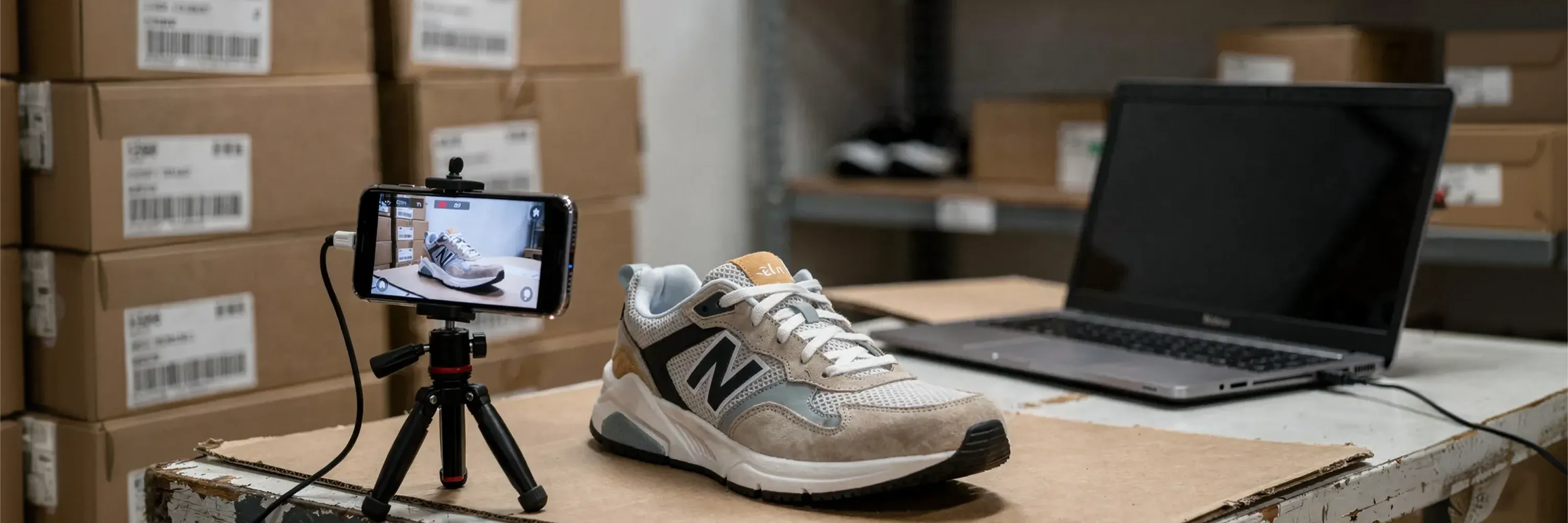
Converting flat images into spatial assets begins when designers define the geometry of the physical shoe. They often use photogrammetry to analyze multiple photographs taken from different angles. This method triangulates specific points on the shoe to build a rough digital shape. While photogrammetry provides a starting point, professional designers usually rely on Computer-Aided Design (CAD) software to ensure the final model meets industrial standards.
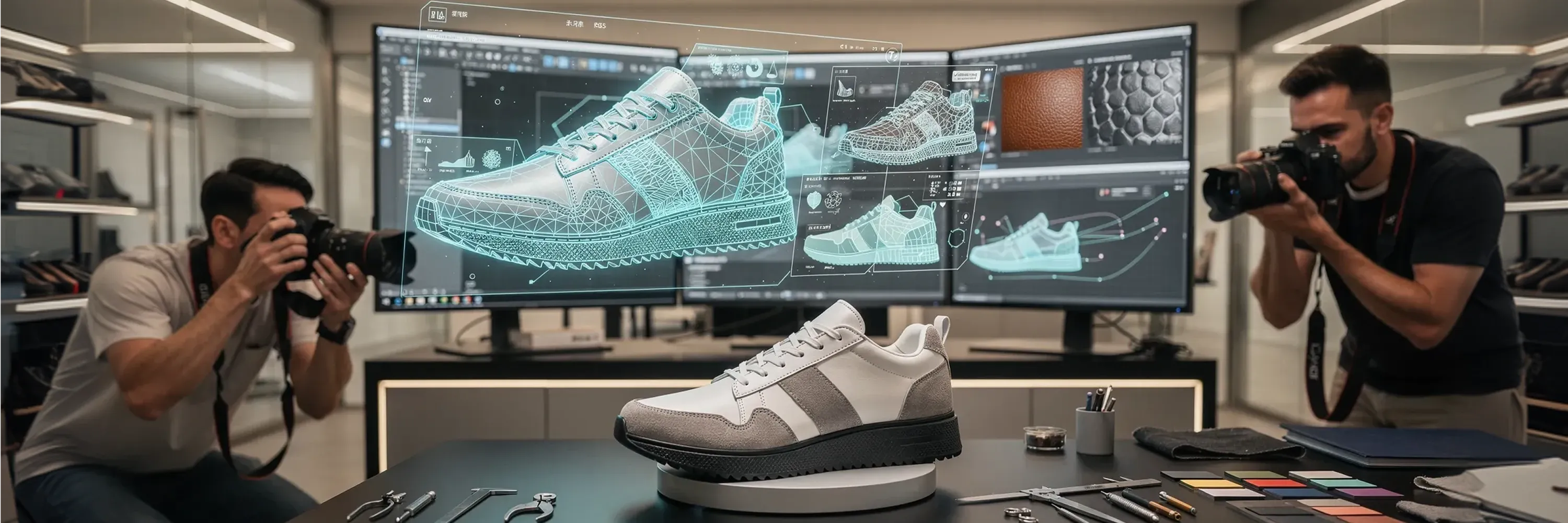
Designers use these tools to build mesh structures manually based on the reference images. For example, Rhino is the most popular general-purpose CAD software shoemakers use because it offers superior control over complex curves and surfaces. This manual approach requires manual precision to capture the subtle nuances of the shoe, such as the stitching on a leather upper or the tread pattern on a rubber sole. Large manufacturers recognize the value of this accuracy. In fact, major footwear companies like Adidas and Nike use 3D modeling software including Rhino and 3ds Max to create their digital catalogs.
The footwear 3D conversion process demands a high level of craftsmanship to ensure the digital twin looks exactly like the physical product. Designers trace the reference photos to create a wireframe and loft surfaces over that frame to create volume. This method produces a cleaner topology than automated 3D modeling alone. Once the shape exists, the next step involves refining the surface for digital display.
Optimization and Asset Clean-up
Raw 3D models often contain geometric errors that prevent them from functioning correctly on web platforms. Designers must clean the mesh during this phase to ensure it's watertight, or manifold. They close any gaps in the geometry and remove stray vertices that don't contribute to the shape. After designers fix errors, they reduce the number of polygons in the mesh. This reduction lowers the file size significantly and allows the model to load instantly on a customer's mobile device without sacrificing visual fidelity.
Texture baking plays a critical role in this stage. Designers take the high-resolution details from the original scan or photo references and project them onto the optimized low-poly model. This technique ensures visual clarity in the final result, as materials like canvas, suede, or leather appear realistic even on small screens. The market data supports the need for high-fidelity visuals. For instance, 90% of online shoppers consider photo quality as an important factor in their purchase decisions.
The process requires careful refinement to balance beauty with performance. If a model looks fake or low-quality, customers will lose trust in the product. Research shows that professional product images increase sales by up to 300% compared to standard photography. After the model looks perfect and loads quickly, brands can integrate these assets into their broader sales strategy to improve operations.
Strategic Integration for Efficiency
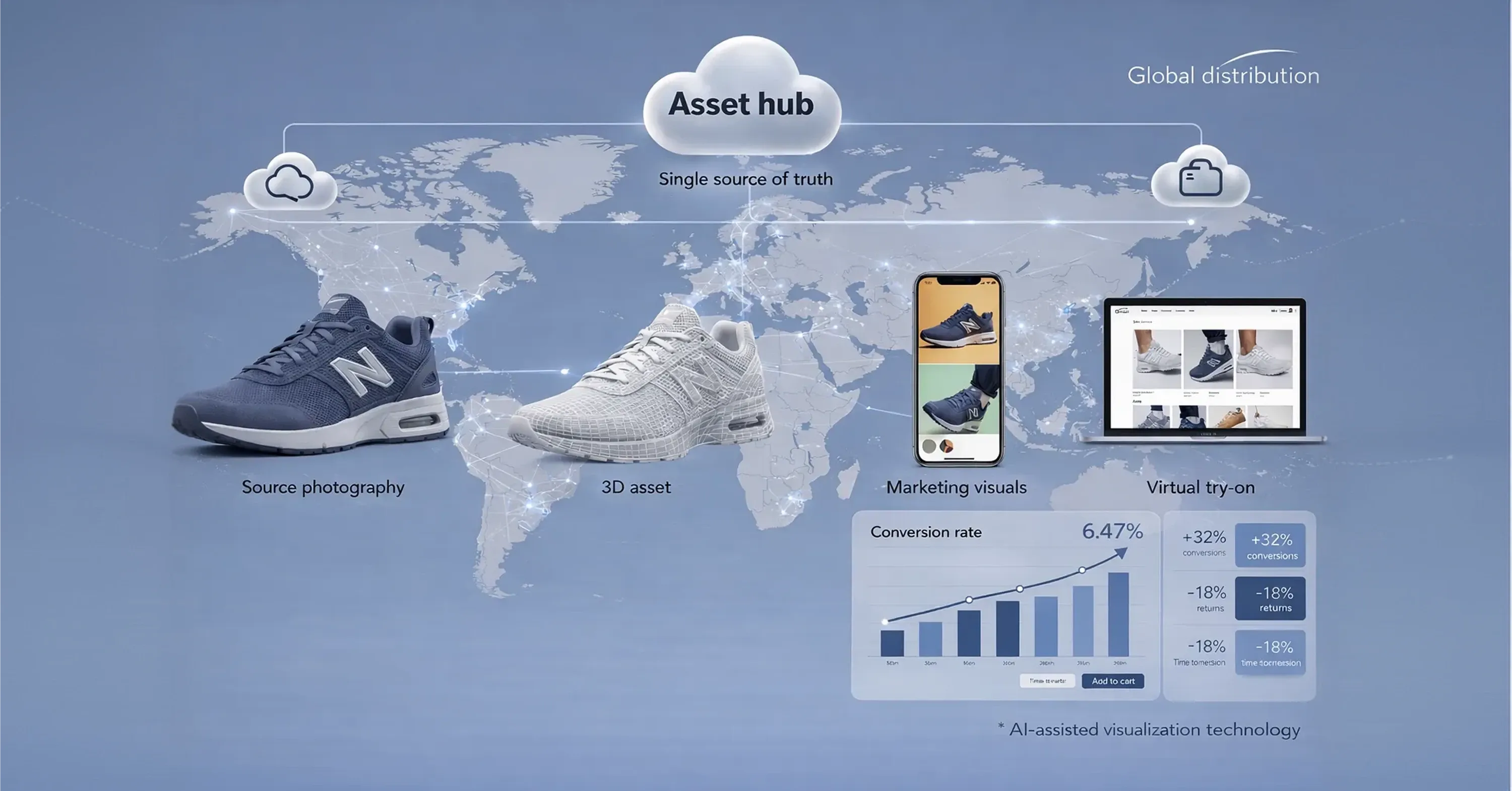
Digital assets offer business advantages that extend far beyond simple product display pages. Brands use 3D models to conduct "virtual photography." This process generates unlimited marketing images from a single digital file. This approach eliminates the need to manufacture physical samples for every colorway and saves money while speeding up time-to-market. Companies notice immediate results when they adopt this strategy. For example, brands that switch from traditional photography to 3D renders saw a 40% increase in conversion rates.
We apply this same logic at WEARFITS when we prepare assets for virtual try-on experiences. We balance the visual quality with strict file size limits to ensure customers on 4G networks can interact with the product instantly. A 2D to 3D generator for footwear helps automate this pipeline. When customers can view a product from every angle, they feel more confident about their purchase. Data supports this observation, as Rebecca Minkoff reports consumers 65% more likely to purchase when brands present products with 3D visualization.
This technology offers scalability for brands that want to grow their online presence without increasing their physical footprint. By integrating these assets, companies also address the costly issue of returns. You can read more about how accurate visualization aids in reducing ecommerce returns. These optimized and integrated models prepare the brand for the final leap into virtual try-on technology.
From Static Model to Virtual Try-On
A static model looks realistic, but it lacks the ability to bend or flex like a real shoe. To fix this, designers add a digital skeleton to the mesh in a process called rigging. This step defines how the shoe deforms when a user walks or moves their foot. While manual rigging offers specific control, recent advancements in automated 3D modeling allow brands to apply standard skeletal structures to their assets quickly. WEARFITS uses these rigged assets to project shoes realistically onto the user's foot.
When the digital shoe creases and flexes just like the physical material, the user experiences a deeper level of interaction with the product. This realism directly impacts how shoppers feel about buying the item. According to a 2025 McKinsey Digital Survey, virtual try-on users report 78% increase in confidence in their purchase decisions. This buyer confidence helps bridge the gap between expectation and reality.
Consequently, retailers see fewer items come back to the warehouse. An Accenture report highlights that virtual try-on technology reduces online apparel return rates by approximately 20-30% when brands implement it properly. You can learn more about how this technology impacts your bottom line by exploring the specific virtual try on benefits for your business. Once the footwear 3D conversion is complete and the asset functions correctly, brands must consider the long-term value of these files.
Future Proofing the Supply Chain
Adopting a 3D workflow creates value that lasts longer than a single season. The shift toward spatial commerce indicates that digital assets will soon become the primary way consumers experience products. Grand View Research estimates the global virtual try-on market at $9.17 billion in 2023, and they project it to reach $46.42 billion by 2030. This growth suggests that brands without spatial assets will struggle to compete. A 2D to 3D generator for footwear streamlines footwear 3D conversion and prepares your supply chain for this demand.
When you digitize your catalog now, you make a strategic investment that secures your place in the market. The data proves that this technology drives results immediately. Retail studies show that 3D visualization increases customer engagement by 19% and conversion rates by 94%. These metrics demonstrate why a forward-looking approach to asset creation is necessary for survival. The transition to 3D serves as a practical step toward a more efficient and profitable business model.
Conclusion
In this article, we discussed the essential steps to turn flat catalogs into dynamic assets. This technology is no longer a futuristic concept reserved for tech giants. It is an accessible tool that protects your bottom line. As the market evolves, the "try-on" experience will happen almost exclusively in the digital space before any product leaves the warehouse. Integrating a 2D to 3D generator for footwear into your supply chain ensures you're ready for this shift. Evaluate your current digital assets today and start the conversion process to secure your place in the spatial commerce market.
Frequently asked questions
Quick answers to the questions teams ask most about this topic.
Photogrammetry rarely produces a production-ready model on its own because it creates messy geometry. Professional designers use the scan only as a reference point to build a clean mesh structure manually. This manual work ensures the final asset meets industrial standards and captures specific details like stitching or tread patterns that automated scanning often misses.
A 2D to 3D generator for footwear reduces returns by bridging the gap between customer expectation and reality. When shoppers interact with a spatial model, they understand the texture, volume, and fit of the product before they buy it. This clarity increases purchasing confidence and ensures the customer receives exactly what they expected, which significantly lowers the likelihood of a return.
WEARFITS balances visual fidelity with strict file size limits to ensure smooth performance on mobile networks. The company uses advanced texture baking techniques to project high-resolution details onto low-poly meshes. This process creates lightweight assets that load instantly on 4G networks while maintaining the realistic look of materials like leather or canvas, so customers get a fast and accurate experience.
Designers use CAD software like Rhino because it offers superior control over complex curves and surfaces. While scanning provides a base shape, it often results in geometric errors and heavy files that slow down websites. CAD tools allow creators to build precise, watertight meshes that function correctly in virtual try-on environments and load quickly for the end user.
Virtual photography saves money because brands do not need to manufacture and ship physical samples for every colorway. A single 3D master file allows the marketing team to generate unlimited image variations and marketing materials digitally. This efficient workflow eliminates studio rental costs and logistics fees, and it significantly speeds up the time-to-market for new product collections.