Real-Time Virtual Try-On: Engineering Customer Engagement With Technical Precision


In this article, we explain how advanced real-time rendering and body tracking technologies directly increase user engagement and purchase confidence. We discuss the technical infrastructure required to eliminate the expectation gap between digital images and physical reality. We move beyond novelty to essential retail engineering.
Introduction
A persistent disconnect separates the flat product image on a screen from the customer's imagination of that product in the physical world. This expectation gap creates hesitation because shoppers struggle to translate pixels into a sense of fit, texture, and scale. We often rely on high-resolution photography to bridge this divide, but static images cannot convey how a fabric drapes or how a frame sits on a specific face shape.
Real-time virtual try-on matured from a marketing novelty into a critical infrastructure layer that solves this psychological friction. We no longer view this technology as a fun feature. It functions as a precision engineering tool that builds purchase confidence through accurate physics and sub-second feedback.
We dismantle the technical complexity behind real-time rendering to see how latency, lighting, and tracking accuracy drive measurable business results. For instance, high friction and uncertainty contribute significantly to the average cart abandonment rate of 70.22%. Technical precision can directly address this figure.
Expectation Gap in Digital Retail
Modern e-commerce creates a fundamental disconnect between the flat image a customer sees and the physical product they receive. We define this psychological mismatch as the expectation gap. Studio photography, no matter how high the resolution, lacks the depth and scale required to convey how a product truly fits or behaves in three-dimensional space. This uncertainty creates friction during the buying process, and this causes shoppers to hesitate or abandon their carts entirely.
Technical fidelity in visualization bridges this divide. Real-time virtual try-on technology replaces static guesswork with visual certainty because it allows the customer to assess scale and fit instantly. This digital asset calibration to physical reality directly impacts the bottom line.
According to Mordor Intelligence, virtual try-on technology reduces returns by 17% and increases purchase probability by 27%. When we deploy a live product preview that accurately reflects the physical item, we remove the primary barrier to purchase and transform the user's hesitation into confidence. However, this confidence disappears instantly if the visualization lags behind the user's movements.
Low Latency Requirements
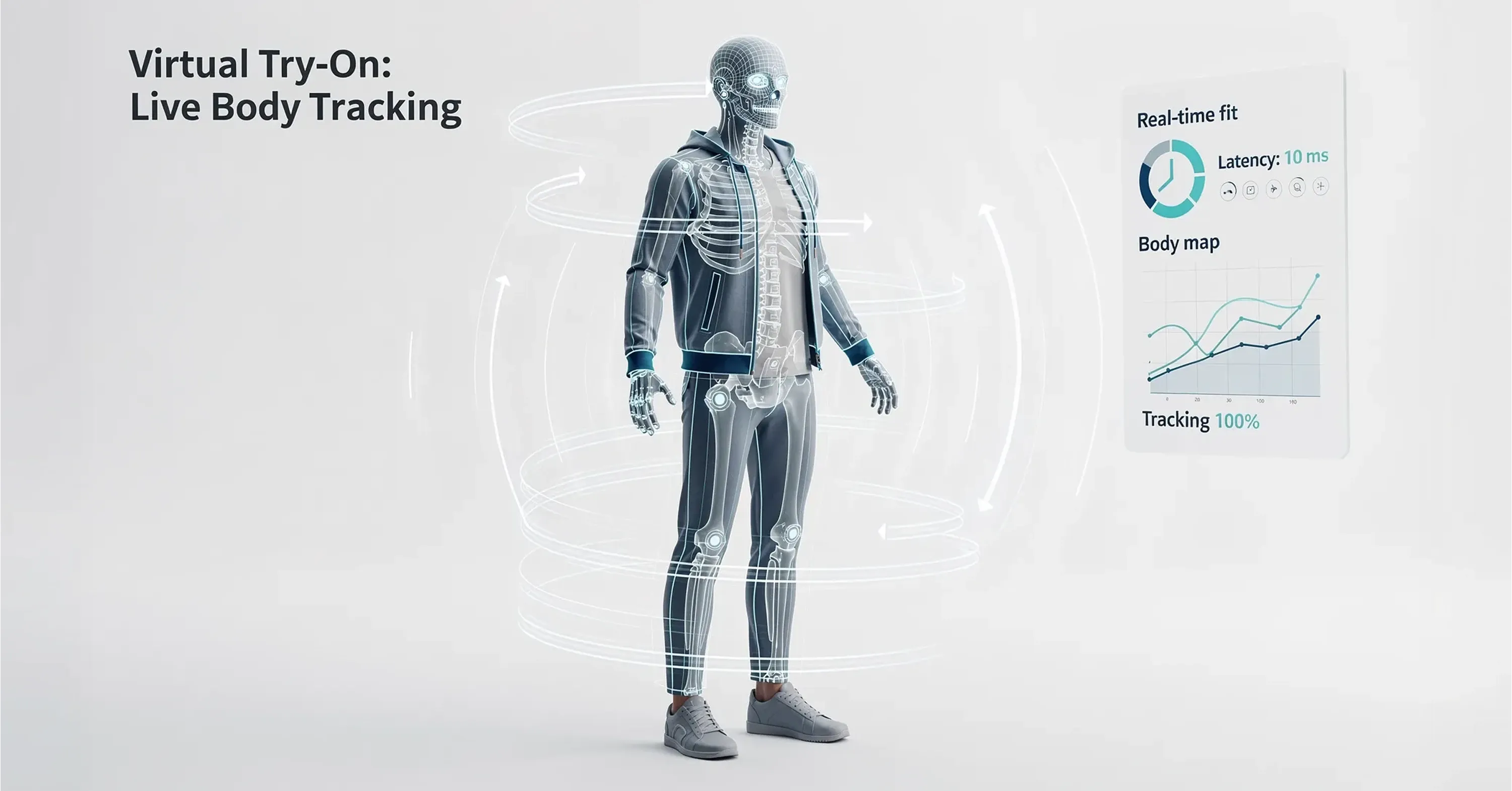
Speed defines the success of any immersive feature. We consider low latency a psychological requirement rather than just a technical specification. If the digital overlay lags behind the user's movement even slightly, the brain rejects the illusion of reality, and the sense of presence vanishes. The real-time virtual try-on experience must react instantly to the user's motion to maintain engagement. We must engineer this responsiveness into the core infrastructure of the shopping platform.
Human sensitivity to visual delay is acute. Research from the Simula Research Laboratory indicates that users can detect 26-40 millisecond delays. Even though the average shopper is not a competitive gamer, this sensitivity means that any perceptible lag in an instant AR fitting creates distrust in the tool. This distrust translates directly to lost revenue.
Amazon demonstrated the financial impact of speed when they found that every 100 milliseconds of added page load time costs 1% in revenue. Therefore, we prioritize keeping response times below the 500ms threshold to prevent engagement drop-off, and we ensure the footwear generator or apparel tool feels like a natural extension of the physical world. Yet, speed means little if the digital object does not behave like a physical one.
Simulation Mechanics
Visual accuracy demands more than just a high-resolution 3D model. It requires complex calculations that simulate how light and matter interact in the real world. We use these simulations to create assurance that the digital representation behaves exactly like the physical product. When a live product preview lacks accurate physics, it looks like a sticker pasted onto the screen. However, when the lighting matches the environment and the fabric moves correctly, the brain processes the image as a real object.
This level of integration challenges web performance, so optimization is critical. Multi-resolution 3D models improve rendering speeds by 46% compared to standard formats according to a study on Web AR. Platforms enforce strict constraints to maintain this performance. For instance, Snap’s Lens Studio allows effect creation within strict asset limits of 10 MB local and 100 MB remote to ensure smooth experiences.
We balance high-quality assets with these technical limits and deliver AR try-on experiences that feel immersive without crashing the user's browser. This technical balance allows us to simulate complex textures, such as fabric, with high fidelity.
Algorithmic Cloth Simulation
Static overlays fail to communicate the quality of a garment. We solve this problem with algorithmic cloth simulation that calculates physical properties such as drape, stiffness, and weight in real-time. This technology moves beyond simple 2D image superimposition. Instead, it creates a dynamic mesh that reacts to the user's body movements.
If a customer turns quickly, a silk dress creates fluid ripples, while a heavy denim jacket creates sharp, rigid creases. This dynamic interaction makes the digital fabric feel tangible to the user. It allows the shopper to understand how the material behaves in motion, and this provides the visual data necessary to judge the quality and fit of the item before purchase. But even perfect fabric movement looks artificial if the lighting fails to match the environment.
Image-Based Lighting Integration
A digital object often looks fake because its lighting does not match the user's environment. We solve this through image-based lighting integration. This technique captures the lighting conditions of the user's actual surroundings, whether they are in a sunny park or a dimly lit bedroom, and applies those reflections and shadows to the virtual product.
This anchors the product in the physical world. Without this step, the item appears to float artificially on top of the camera feed. We alter the user's perception when we synchronize the digital lighting with the physical world. The product stops being a digital graphic and becomes a believable part of their immediate reality. Yet, realistic lighting cannot save the experience if the product slides off the user's body during movement.
Precision Alignment and Body Maps
We measure the quality of a real-time virtual try-on experience by how well the digital item sticks to the user in motion. Simple 2D overlays often slide off the user's face or body when they move, and this breaks the illusion. To solve this, advanced systems use Simultaneous Localization and Mapping (SLAM) technology. This creates a detailed 3D map of the user and the environment so that the product anchors firmly to the physical world.
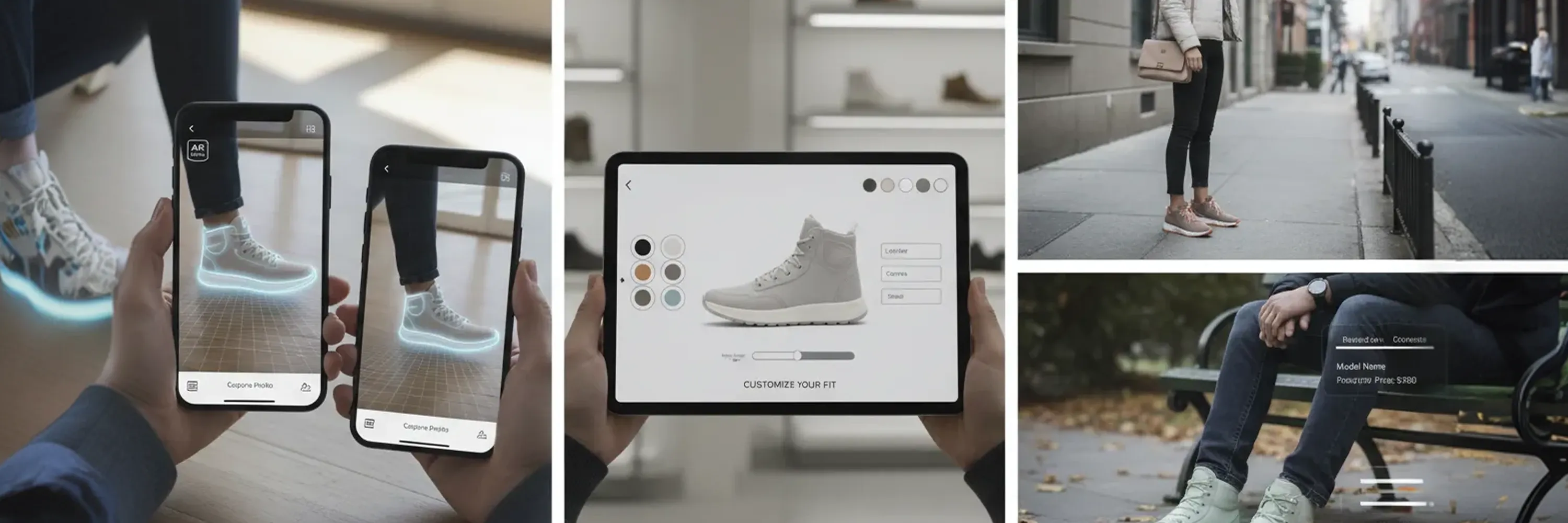
The industry demand for this precision drove Perfect Corp to acquire fashion tech innovator Wannaby. This acquisition expanded their capabilities beyond makeup into categories like shoes, bags, and accessories, where spatial awareness is critical. For example, brands can now offer shoe virtual try-on ideas that rely on complex foot tracking rather than simple images.
High-stakes luxury items require even more reliability. A slight misalignment in a $500 pair of glasses can cause a customer to abandon the cart. To address this, Perfect Corp recently partnered with Tom Ford Fashion to deliver an instant AR fitting experience that calculates exact pupillary distance. This ensures the digital frames fit the user's face exactly as the physical frames would, and this builds the necessary trust for a high-value purchase. To maintain this trust, the system must detect the user's physical features the moment the camera turns on.
Instant AR Fitting Accuracy
To make an instant AR fitting feel natural, the software must identify key body parts in milliseconds. Landmark detection drives this process and involves the rapid calculation of dozens of points on the face, hands, or body. If the software takes too long to find the nose or the wrist, the user notices a delay.
Modern algorithms identify these landmarks immediately when the camera opens. This allows the digital mesh to snap onto the user instantly. Stability matters as much as speed. The tracking must handle rapid movements and keep its lock on the user. When the tracking remains stable even as the user turns their head or waves their hand, the brain accepts the digital object as part of the physical reality. This technical stability creates the foundation for a broader retail strategy.
Deployment Strategies for Modern Retail
Success depends on the deployment strategy a brand chooses. Retailers must decide whether to focus on high-fidelity web experiences or high-volume social media interactions. Major players demonstrate three distinct approaches to execute real-time virtual try-on and live product preview tools within their ecosystems:
-
Global Luxury Integration: High-end brands prioritize consistency across regions and platforms. Perfect Corp partnered with Louis Vuitton to launch virtual services across 33 countries that support web, mobile apps, and WeChat. This approach ensures that a customer in Paris receives the same premium experience as a customer in Shanghai.
-
Social Commerce Volume: Accessibility drives engagement for mass-market beauty brands. MAC Cosmetics used Snapchat Shopping Lenses to achieve 1.3 million virtual try-ons, and this significantly increased purchases among women. This proves that meeting customers on platforms they already use reduces friction.
-
High-Efficiency Ad Spend: The cost of engagement drops when users interact with the product voluntarily. Ulta Beauty found that Snapchat users generated 30 million product trials at a cost of less than $0.01 per trial. This efficiency drove $6 million in purchases and a 56% higher return on ad spend compared to non-shopping formats. These successful deployments prove that advanced visualization generates revenue.
ROI of Technical Fidelity
Investing in high-quality rendering and tracking provides a measurable return. When customers trust the live product preview, they buy more and return less. The data supports the business case for advanced virtual fitting infrastructure. We see clear financial benefits when brands prioritize technical fidelity:
-
Increased Conversion Rates: Shoppers who can visualize the product on themselves are more likely to complete the checkout process. Data from Fittingbox shows that VTO technology boosts eyewear sales with up to 18% higher conversion rates and reduces cart abandonment by 22%.
-
Reduced Return Rates: Accurate visualization helps customers make better decisions before the product ships. Virtual try-on reduces eyewear product returns by up to 28% because shoppers gain confidence that the item fits their face and style.
-
Higher Return on Ad Spend: Interactive ads perform better than static ones. BrandXR reports that the augmented reality shopping market generates a 460% return on ad spend on platforms like Snapchat and TikTok.
This outcome confirms that bridging the expectation gap is a financial necessity, not just a creative exercise. This data confirms that technical precision drives business success.
Conclusion
To summarize, real-time try-on has graduated from an experimental feature to a standard expectation for modern e-commerce. The value of this infrastructure comes not just from how it allows customers to see a product, but from the psychological confidence that accurate physics and mobile-ready visualization provide.
When we eliminate the gap between the digital image and physical reality, we remove the primary barrier to purchase. Brands that audit their current 3D capabilities and prioritize technical accuracy prepare their digital strategy for the future. We can focus on latency and tracking precision to deploy a real-time virtual try-on experience that engages customers and helps the business grow.
For brands ready to close the expectation gap, WEARFITS provides the 3D digitization and virtual try-on infrastructure to deploy photorealistic, low-latency experiences without the engineering overhead of building it from scratch.
Frequently asked questions
Quick answers to the questions teams ask most about this topic.
Static product images often fail to convey depth, texture, and scale effectively to the online shopper. This disconnect creates psychological friction because customers cannot translate pixels into a sense of physical fit. High-fidelity visualization bridges this divide and replaces guesswork with certainty during the buying process.
A delay between user movement and digital reaction destroys the illusion of reality and causes consumer distrust. Research shows that users detect delays as short as 26 milliseconds in a real-time virtual try-on experience. Engineers must keep response times below 500 milliseconds to ensure the interaction feels natural.
Algorithmic cloth simulation calculates physical properties like drape, stiffness, and weight to react to body movements. This technology creates a dynamic mesh that ripples or creases just like actual fabric would in motion. Shoppers gain visual data to judge quality and fit before they purchase the item.
Yes, accurate visualization helps customers make better decisions before the product ships to them. Data indicates that this technology reduces return rates by up to 28 percent while increasing conversion rates. Shoppers buy more and return less when they trust that the digital item fits their face or body.
Retailers integrate these tools through APIs or SDKs that connect directly with existing e-commerce systems. WEARFITS provides virtual try-on solutions for footwear and apparel that transform standard product photos into 3D models. This technology allows customers to see shoes on their feet or bags on their body through smartphone cameras.