Backpacks Try On AR: How Virtual Fit Solves Online Retail's Top Size Problem

In this article, we explain why physical sizing complexities make outdoor packs difficult to sell over the internet. We explore how immersive rendering addresses these specific fit mechanics and protects profit margins across e-commerce platforms.
Introduction
Experienced backpackers routinely tell newcomers to visit a physical store, load a pack with real weight, and walk around before they buy anything. Despite this advice, most outdoor equipment sales now happen online. In this digital environment, customers lack the physical feedback necessary to evaluate torso alignment, strap tension, and hip belt placement. This limitation creates a significant business problem.
We see that traditional size charts, detailed product photography, and static fit guides do not communicate how a pack interacts with a specific body shape. We rely on direct interview data that reveals the high volume of returns that poor fit generates. Fortunately, backpacks try on AR translates complex physical mechanics into a digital environment. This tool maps realistic dimensions directly onto the shopper's silhouette and replicates the experience of a physical store.
Why backpacks are difficult to size online
Digital replication becomes necessary because backpacks present complex sizing challenges that differ from other product categories. Apparel size relies on simple circumference measurements, but backpack fit depends on an interaction of torso length, hip width, and frame structure. When we buy shirts online, a standard size chart provides enough information for us to buy with confidence.
However, size charts fail us when we shop for outdoor equipment because these charts do not capture spatial dimensions. We cannot accurately measure our own torso lengths without assistance at home. We also encounter inconsistent size standards across different product lines, and an improper fit causes physical injuries rather than just aesthetic discomfort.
A study on ergonomics shows that poorly fitted packs create musculoskeletal strain and posture damage. Because a bad fit leads to physical pain, we need assurance before we complete a transaction. Standard product photography cannot communicate how a rigid frame interacts with our specific body shapes.
We see that virtual try-on technology solves similar structural problems for daily accessories. For technical outdoor gear, backpacks try on AR maps these dimensional variables directly onto our bodies. This visualization technology translates rigid frame measurements into personalized fit data that static images lack.
What online backpack shoppers lose when they cannot try before they buy
We create a financial burden for online retailers when we lack personalized fit data and cannot physically test a backpack. Experienced outdoor enthusiasts explicitly advise us to visit a store and walk around with a weighted pack. This conventional wisdom damages e-commerce conversion rates because we represent a lost online sale when we require a physical store visit to gain certainty about our purchase. When we cannot digitally verify fit, our behavior patterns harm retail profit margins:
-
We abandon our shopping carts when we feel unsure about torso measurements.
-
We order multiple sizes of the same pack with the intention to return the ones that do not fit.
-
We return used equipment after we experience physical discomfort during our first hike.
-
We shift our loyalty to local brick-and-mortar stores that offer in-person fit services.
Retailers absorb shipping and restocking costs because of our behaviors. Industry data indicates that fit uncertainty drives most e-commerce returns in apparel and accessories categories. A high return volume lowers our lifetime value as loyal customers, so e-commerce platforms must provide better digital fit tools to rebuild trust. A virtual backpack preview technology gives us the visual evidence we need to complete our purchases at home. This capability prevents us from moving to physical competitors.
How AR try-on addresses backpack fit variables
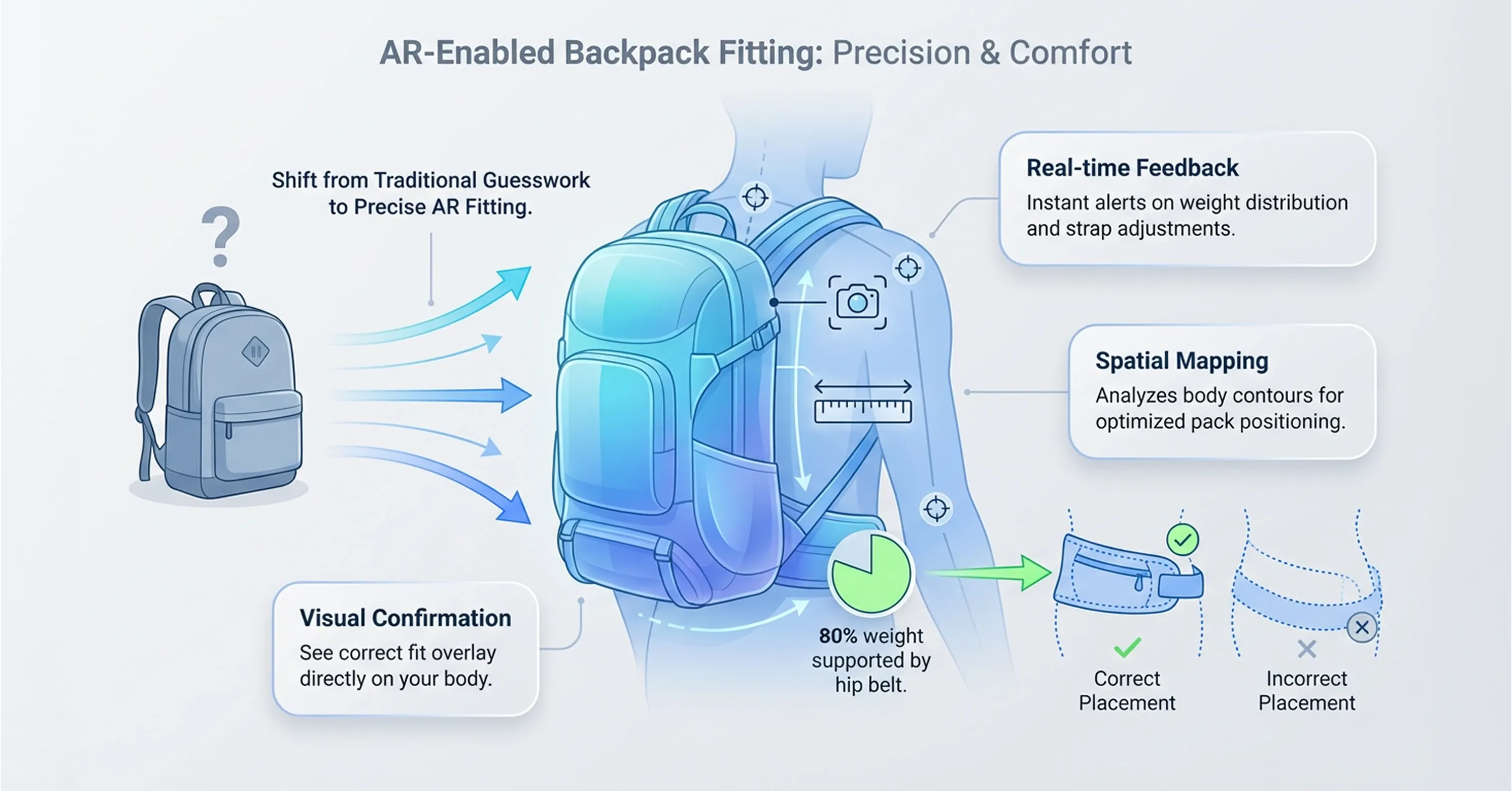
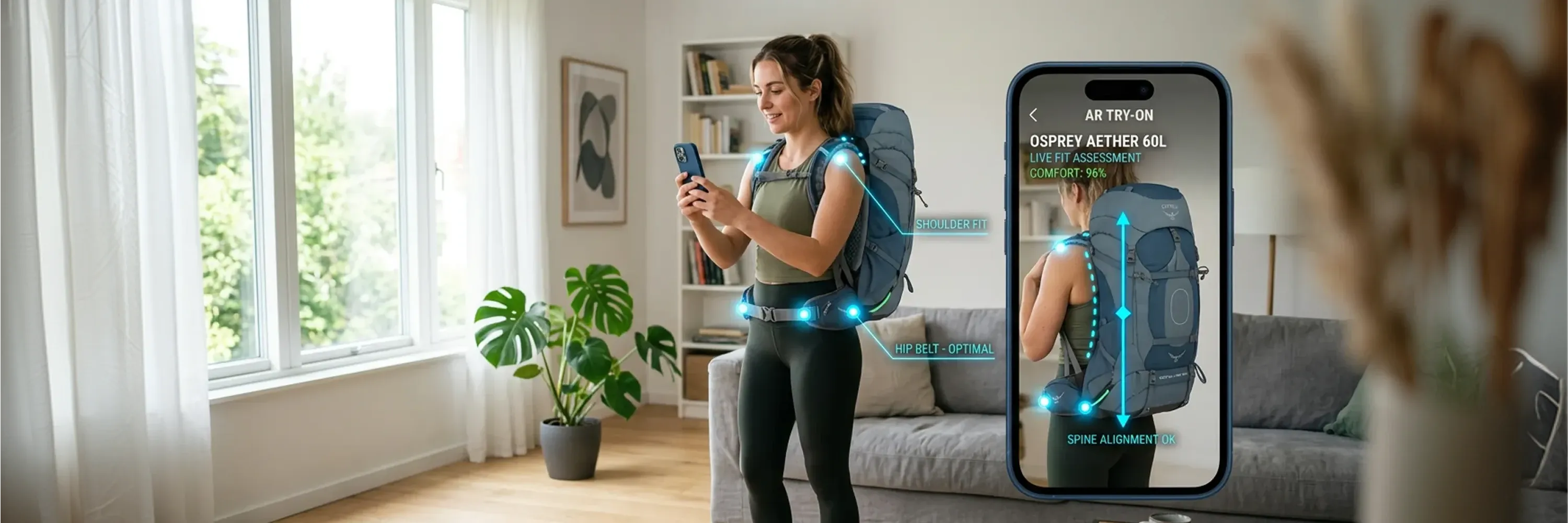
Digital rendering prevents us from moving to physical competitors because it translates physical fit mechanics into visual data that we can easily understand. Static images and text descriptions fail to show how a specific pack contours to our spines. We know that a reliable fit depends on multiple contact points that align simultaneously across our bodies. Without this alignment, the pack shifts during movement and causes friction. When we use backpacks try on AR, we replace measurement guesswork with precise spatial mapping.
The software analyzes our camera feed to detect specific anatomical landmarks, and it then projects a 3D model of the pack onto our silhouettes. This visualization lets us see where the hip belt rests and how the shoulder straps drape. We can study how a Try-On API improves online shopping to understand backend integration.
The API processes the dimensions of the rigid pack frame and matches them against our proportions. We gain confidence when we see the structural components align properly with our own bodies on the screen. This real-time feedback connects physical testing with digital browsing.
How augmented reality for backpacks resolves torso length alignment
This real-time feedback primarily helps us evaluate torso length. Torso length dictates the entire foundation of a proper backpack fit. A pack that sits too high strains our necks, while a pack that sits too low pulls us backward. During augmented reality backpack fitting, the software identifies the C7 vertebra at the base of the neck and measures the distance down to the iliac crest at the top of the hip bones.
This measurement determines the back panel size we need. The system then visually overlays the rigid frame onto this specific vertical space. We receive immediate visual assurance that the frame length matches our anatomical measurements. This digital map prevents us from ordering a pack that bruises our lower backs.
Dynamic frame placement through body scans
After the digital map secures the proper torso length, we must evaluate the upper body frame placement. The angle of the load lifter straps determines how weight transfers from our shoulders to our hips. If these straps sit flat, they pull the pack away from our bodies. A virtual backpack preview technology calculates the trajectory from the top of the pack frame to our collarbones. The software visualizes how the shoulder harness curves around our upper torsos, and it highlights the contact points where the padding rests against our chests.
We can see if the harness creates an uncomfortable gap above our shoulders. This visual feedback gives us the confidence to select a frame that contours naturally to our upper body shapes. The digital model proves that the suspension system functions correctly.
Load lifter angle with shoulder harness contact
While the suspension system functions correctly for the upper body, the hip belt must support eighty percent of the pack's total weight to prevent shoulder exhaustion. The digital rendering illustrates where the padded belt wraps around our pelvic bones. The system highlights the center of the belt to confirm it rests over the iliac crest. If the belt sits too low, it restricts our leg movement during steep climbs. If it sits too high, it compresses our stomachs and restricts our breathing.
This visual confirmation proves that the pack offers reliable weight distribution capabilities for long hikes. We can verify that the foam padding cups our hip bones correctly before we complete our online orders. This precise placement prevents painful chafing on the trail.
Where backpacks try on AR stands today
Even though precise placement prevents painful chafing on the trail, the outdoor equipment category sits at the beginning of a technological shift. We do not see many augmented reality backpack fitting deployments in the market yet. Most retailers still rely on static size charts and generic fit guides that fail us. This lack of options allows early adopters to reach more customers. Brands can establish new standards for our digital shopping experience.
We can look at adjacent retail categories to model the expected financial outcomes of this technology. Case studies demonstrate that immersive visualization tools improve sales metrics in the footwear sector. Footwear brands report conversion lifts and return volume reductions after they implement digital fit tools. Backpack retailers can expect similar results because both product categories share structural fit requirements.
When we can visualize a technical product on our own bodies, we buy with greater certainty. Digital fit tools remove the hesitation that causes cart abandonment and drives us to competitors. Brands build lasting trust with us when they fix the most complicated size problem in the outdoor industry. Retailers who deploy these solutions now protect their profit margins from the rising costs of reverse logistics.
Virtual backpack preview technology limitations and importance for business
Although early deployment protects profit margins, businesses must understand the limitations of virtual backpack preview technology. Digital visualization solves dimensional sizing problems, but it cannot replicate the physical sensation of carrying a loaded pack. Shoppers need to feel how weight distributes across their hips and shoulders.
Augmented reality backpack fitting maps the frame to the body, but it doesn't simulate strap tension or load feel during movement. Because software cannot reproduce these sensory details, retailers usually position the technology as a reliable complement to physical trials rather than a complete replacement.
At present, mapping technical outdoor equipment serves as a niche application area within the broader e-commerce landscape. Brands that recognize this limitation can set accurate customer expectations before the customer completes a purchase. Shoppers gain assurance that the frame length matches their torso, but they still need to understand how the padding compresses under a heavy load on a steep trail.
We suggest using scalable integration strategies to help merchants implement these visual tools and avoid overpromising the physical experience. This balanced approach protects brand credibility and solves the initial sizing errors that cause the majority of online returns.
Business case for early technology adoption
This balanced approach to solving sizing errors strengthens the business case for early technology adoption. The current lack of spatial visualization tools in the outdoor equipment market presents an opportunity for early adopters. Most brands still force customers to guess sizes using flat images and text charts.
This hesitation drives shoppers away from e-commerce platforms and toward local physical stores. Retailers capture these lost sales when they implement backpacks try on AR before their competitors do. Retailers who deploy augmented reality backpack fitting early build customer loyalty because they solve a frustrating pain point that plagues the entire industry.
Analysts cannot project specific market data for 2026 because the technology has only recently entered the technical outdoor sector. Despite this lack of long-term forecasting, we know that shoppers crave certainty when buying expensive gear. When brands provide this certainty, they reduce the financial strain of processing returned items. Retailers follow specific steps to capture these operational benefits:
-
Retailers calculate the current cost of reverse logistics linked to returned oversized packages.
-
They identify the specific backpack models that generate the highest return rates due to fit issues.
-
They deploy digital fitting tools on those specific product pages to build shopper confidence.
-
They measure the decrease in return volume to justify further expansion across the entire catalog.
Companies that adopt these tools early often establish stronger relationships with their customer base.
Requirements for credible digital fitting implementation
Companies that want to establish stronger relationships must meet specific requirements for credible digital fitting implementation. Successful digital fitting initiatives demand precise infrastructure and careful planning from retail teams. Brands first create accurate 3D models of their physical products. Technical packs possess rigid frames, thick padding, and complex strap systems that require more detailed rendering than standard clothing. E-commerce managers capture these structural elements accurately to establish trust with their shoppers.
The software also needs specific body measurement inputs from the user to scale the pack correctly. The system uses the smartphone camera to detect anatomical landmarks, and the platform functions well across different mobile operating systems and web browsers.
We suggest using cost-efficient modeling strategies to manage the initial production expenses and maintain quality. A reliable virtual backpack preview technology translates complex physical dimensions into clear visual feedback. When brands commit to high-quality 3D assets and accurate body tracking, they build a tool that helps customers make better purchasing decisions. This commitment changes a basic e-commerce website into an interactive fitting room.
Conclusion
This transformation into an interactive fitting room leads us to our final thoughts. To summarize our major points, we recognize that the outdoor equipment category stands at a critical point because static sizing limits customers, and digital visualization tools offer a clear path forward. We know that physical fitting variables severely complicate online purchases, and this complexity drives costly returns.
We observe that shoppers who lack fitting confidence either abandon their carts entirely or purchase multiple sizes with the intent to return them. When we deploy backpacks try on AR, we provide the exact visual confirmation customers need to make accurate decisions without leaving their homes.
Retailers who want to reduce return volumes and give shoppers the fitting confidence they need can try the WEARFITS virtual try-on platform to see how precise 3D rendering transforms complex outdoor gear into a product customers buy with certainty.
Frequently asked questions
Quick answers to the questions teams ask most about this topic.
You only need a standard smartphone camera or a computer webcam to use these tools. The software runs directly in your web browser or through the store's mobile app, and it doesn't require special depth sensors. This setup lets you scan your body proportions with the devices you already own.
Retailers use specialized software to convert standard product photographs into dimensional assets. Technology companies like WEARFITS offer a converter that transforms thirty studio photographs of a product into a 3D model. This process removes the need for expensive design files and maintains realistic visual proportions.
You can use backpacks try on AR even if your shoulders or hips sit unevenly. The software maps independent anatomical points across your silhouette, and it doesn't assume you have a symmetrical shape. This technology adapts to your specific measurements to show how the frame will fit.
Stores delete your camera feed and body measurements after you close the application. E-commerce platforms process this visual data locally on your device to match the frame size, and they don't store your personal images on their servers. You can shop safely, and you don't risk your privacy.
Stores maintain their standard return windows even when you use digital sizing software and buy equipment. Retailers understand that virtual tools solve structural sizing problems, but they can't simulate how heavy loads feel during a hike. You can still return the pack if it feels uncomfortable on the trail.