Return Rate Reduction with Cost-Efficient 3D Modeling Strategies

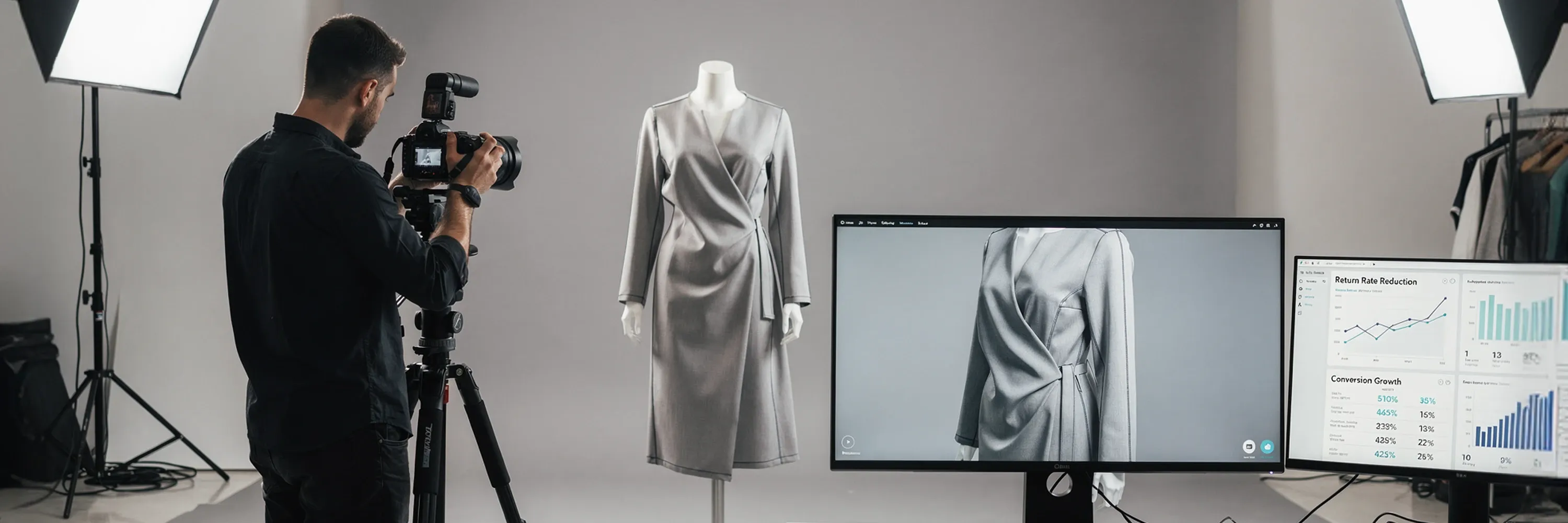
In this article, we explain how cost-efficient 2D-to-3D conversion workflows help fashion retailers reduce fit-related returns. We discuss the financial impact of visual uncertainty and provide a guide for implementing modeling strategies.
Introduction
Fashion e-commerce translates physical products into digital experiences to give customers confidence. Returns remain a difficult metric in the industry and often average between 30-40% for online purchases because customers cannot gauge fit and scale accurately. Shoppers order multiple sizes or abandon carts because they cannot visualize the item on themselves.
3D visualization offers a solution, but the high cost of manual asset creation previously prevented widespread use. New cost-efficient 3D modeling technologies change this dynamic and turn 2D content into high-quality 3D models. We explore how these tools function and protect profitability.
High Cost of Visual Uncertainty
The gap between digital representation and physical reality erodes profit margins in fashion e-commerce. Static photography limits a shopper's ability to understand how a garment behaves in three-dimensional space. A flat image cannot convey the weight of the fabric or how it drapes over different body types. This lack of information forces customers to guess, so they often resort to bracket shopping. They buy multiple sizes of the same item to return the ones that do not fit.
Industry data from the Jay Group indicates that poor fit drives returns for 75% of consumers who purchase apparel online. This statistic indicates that shoppers want to keep the product but lack the visual confirmation needed to choose the right size initially.
We must also consider how consumers process information. Research indicates that 65% of people are visual learners, and they understand products better when they see them spatially rather than just reading descriptions. Static photography lacks the precision required to judge scale accurately. Limiting the visual experience to 2D images creates confusion.
We solve this with real-time virtual try-on precision that provides the visual clarity shoppers need to make confident decisions, and this ultimately prevents the return before the sale even happens. However, the high cost of manual asset creation previously prevented retailers from implementing this solution.
Break Cost Barrier with Automation
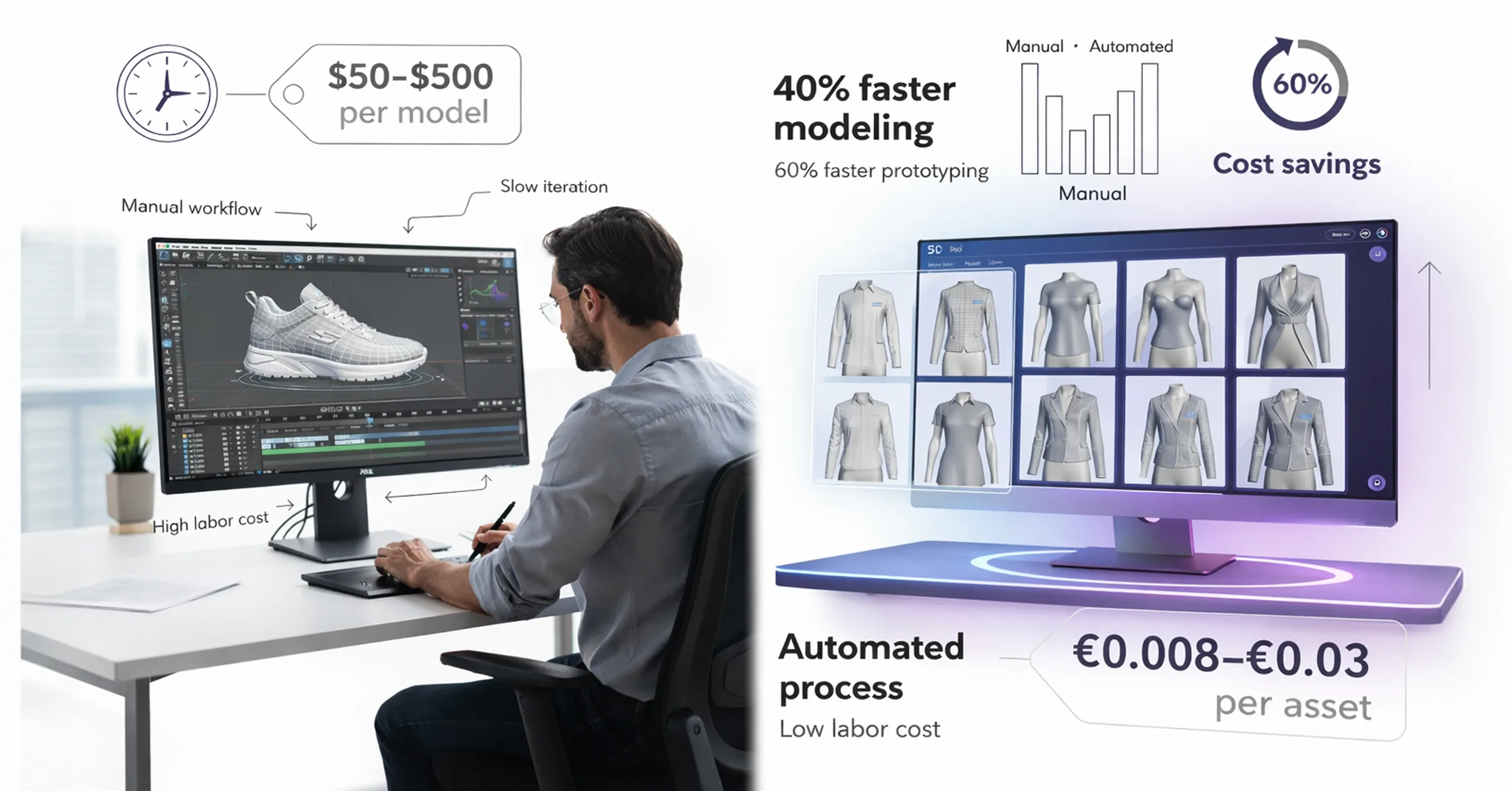
High-fidelity 3D assets remained out of reach for most companies for years because manual creation processes cost too much. Professional 3D artists traditionally spend hours sculpting, texturing, and rigging a single item. This manual labor pushes the price per model to between $50 and $500, and this makes it impossible to digitize a catalog with thousands of SKUs. Companies reserved 3D visualization for flagship products or marketing campaigns, while the rest of the inventory relied on standard photography.
New automated technologies changed this economic equation. Modern software now generates models for as little as €0.008 to €0.03 per asset. This drastic reduction in price allows us to implement cost-efficient 3D modeling across entire product lines rather than just a few select items. The shift from manual artistry to automated processing ensures accessibility for companies of all sizes.
Speed improves alongside cost. Automated tools reduce modeling time by 40% for simple tasks and cut prototype creation time by 60% in professional settings. This efficiency solves the scalability problem that previously stalled digitization efforts. We can now deploy budget-friendly 3D assets that match the speed of fast fashion cycles.
This 3D product automation empowers companies to provide better visual experiences without draining their operational budgets. When we implement 2D to 3D generators for footwear and apparel, we turn a luxury feature into a standard operational process. This accessibility encourages companies to integrate 3D generation into their daily routines, even though some teams worry about the technical requirements.
Cost-Efficient 3D Modeling Workflows
Operational teams often hesitate to adopt new visualization tech because they fear it requires specialized engineering teams. However, modern cost-efficient 3D modeling relies on software that fits into existing photography workflows. We do not need CAD engineers to manage this process. We simply need to establish a standard protocol to capture the initial visual data. The software handles the geometric mesh, and this ensures reliability in the final output.
The speed of this workflow contrasts sharply with traditional methods. Traditional product photography and manual modeling cycles can drag on for 4-6 weeks, but automated conversion completes the task in just 1-2 days. This speed allows companies to maintain consistency across their digital channels. We recommend the following workflow to integrate 3D product automation effectively:
-
Capture Standardized Photos: Photographers take high-resolution images of the garment from multiple angles against a neutral background.
-
Upload to Conversion Engine: The digital team uploads these image sets to the processing platform.
-
Automated Reconstruction: The software analyzes the visual data to build a geometric mesh and apply textures.
-
Quality Assurance Review: A team member checks the digital asset for accuracy against the physical sample.
-
Web Integration: Developers deploy the glb or usdz file to the product detail page for scalable virtual try-on.
This deployment succeeds only when the workflow begins with high-quality source material.
Prepare Inputs for Budget-Friendly 3D Results
The quality of the final 3D model depends entirely on the quality of the photos we feed into the system. This adheres to the strict “garbage in, garbage out” principle because low-quality input images inevitably yield poor 3D models. Photographers must prioritize high resolution and even lighting to achieve budget-friendly 3D results that look professional. Shadows obscure the details that the software needs to interpret depth and texture.
We advise studios to use soft, diffuse lighting that eliminates hard shadows and highlights the fabric's true texture. The background should remain solid and distinct from the product colors to help the software separate the object from its environment. When we control these variables, the automated algorithms detect the geometry accurately.
This attention to quality at the start of the funnel prevents rework later and ensures the automated tools perform at their best capacity. Once the photographer captures these optimized images, the software takes over the structural processing.
Automate Mesh Reconstruction
The software receives the visual data and begins the complex task of mesh reconstruction. The system identifies thousands of reference points across the 2D images to calculate depth and volume. It then connects these points to form a polygon mesh, which serves as the digital skeleton of the product. This automated process removes the need for manual rigging because an artist does not need to define the structure by hand.
This technological leap clears the bottleneck that usually slows down digitization. Instead of waiting days for an artist to model a single shoe or handbag, the software processes batches of SKUs simultaneously. This speed allows retailers to digitize a new seasonal collection over a weekend rather than months. The technology wraps the original photo textures onto the new mesh and creates a photorealistic digital twin ready for the web. These digital assets move beyond aesthetic appeal to drive measurable financial improvements.
ROI of Visual Certainty
Retail brands often track engagement metrics like time-on-page, but we must focus on the financial health of the business to understand the true value of 3D visualization. We prioritize profitability over vanity metrics. When a customer can visualize a product accurately, they buy with conviction rather than hope. This confidence reduces the likelihood of a return and protects the net margin.
Data supports the financial impact of providing visual clarity. Fytted reports that virtual try-on reduces apparel return rates by 20% to 30% after brands implement it correctly. This reduction happens because the shopper understands the fit before purchasing. Similarly, IKEA used this strategy to reduce furniture return rates by 23% and increase conversion by 14%. These examples show that cost-efficient 3D modeling pays for itself because it prevents costly reverse logistics.
We see similar results in accessories. For instance, virtual try-on for bags helps shoppers judge size and scale, and this prevents customers from returning items that looked different in static photos. We recommend tracking specific outcome-based metrics that measure the success of budget-friendly 3D initiatives and 3D product automation:
-
Net Return Rate tracks the percentage of items returned specifically due to fit or style issues.
-
Conversion Rate Lift measures the increase in sales for product pages that feature 3D assets compared to those that do not.
-
Average Order Value (AOV) shows the change in basket size as customers feel more secure adding multiple items.
-
Cost Savings per SKU highlights the reduction in photography and sample production costs.
These operational efficiencies save money, but they also position companies to meet emerging environmental standards.
Sustainability, Regulatory Compliance
The fashion industry faces new pressure to operate sustainably, and digital assets play a crucial role in meeting these demands. We view cost-efficient 3D modeling not just as a sales tool, but as a mechanism for responsibility. Regulatory bodies now demand transparency about how products are made and their environmental impact. The EU Digital Product Passport will become mandatory for all textiles sold in the region by late 2026 or early 2027. This EU Digital Product Passport requires brands to provide detailed digital records of a product's lifecycle.
Digital twins from budget-friendly 3D workflows serve as the foundation for this compliance. They allow brands to document materials and construction details, and this prevents excessive physical waste. The environmental benefits extend to the design phase as well.
Style3D notes that virtual sampling reduces physical waste by 90% compared to traditional prototyping methods. Designers can iterate on a digital model dozens of times, and they do not need to sew a single piece of fabric or ship samples across the globe.
We adopt 3D product automation and reduce the carbon footprint of returns. Every returned package involves transportation emissions, packaging waste, and often the destruction of unsellable inventory. We help the planet and the bottom line simultaneously when we prevent these returns through better visualization. This alignment of financial and environmental goals ensures that the business remains viable in a regulated future. This viability proves that 3D visualization now serves as a core operational requirement.
Conclusion
We have seen that 3D modeling evolved from a luxury marketing add-on into essential infrastructure for retail profitability. The cost of ignoring returns and reverse logistics exceeds the investment needed to implement cost-efficient 3D modeling across a catalog. Early adopters see that precise visualization leads to results that improve the bottom line through lower return rates.
We view this technology as a standard requirement for business in a market that demands visual certainty. WEARFITS helps fashion retailers convert standard product photography into interactive 3D try-on experiences, bridging the gap between what shoppers see on screen and what arrives at their door. If reducing fit-related returns is a priority, explore how WEARFITS fits into your workflow.
Frequently asked questions
Quick answers to the questions teams ask most about this topic.
3D visualization provides the visual clarity shoppers need to judge fit and scale accurately before they buy. This precise understanding prevents customers from guessing their size or ordering multiple items to try on at home. Data shows that providing spatial context significantly decreases returns caused by poor fit.
Automation technology has replaced the expensive manual labor previously required to build digital models. This shift allows retailers to implement cost-efficient 3D modeling across entire product lines for a fraction of the traditional price. Software can now generate high-quality assets in days rather than weeks, which makes full catalog digitization financially viable.
You must prioritize high-resolution images with soft, diffuse lighting to eliminate hard shadows. Shadows hide the details that the software needs to interpret depth and texture correctly during the conversion process. Using a solid, distinct background also helps the algorithms separate the product from its environment for a cleaner geometric mesh.
You can adopt these tools easily because modern platforms fit directly into your standard photography processes. Companies like WEARFITS offer 2D-to-3D converters that transform standard photos into ready-to-use models without requiring complex CAD knowledge. This accessibility allows your existing digital team to manage the workflow and deploy assets to your website.
Digital twins serve as the foundation for documenting a product's lifecycle and materials to meet transparency regulations. This digital record helps brands comply with upcoming mandates like the EU Digital Product Passport. Additionally, using virtual samples instead of physical prototypes significantly reduces material waste and transportation emissions during the design phase.