Custom Shoe Sizing at Scale: From Smartphone Foot Scanning to Bespoke Footwear Production

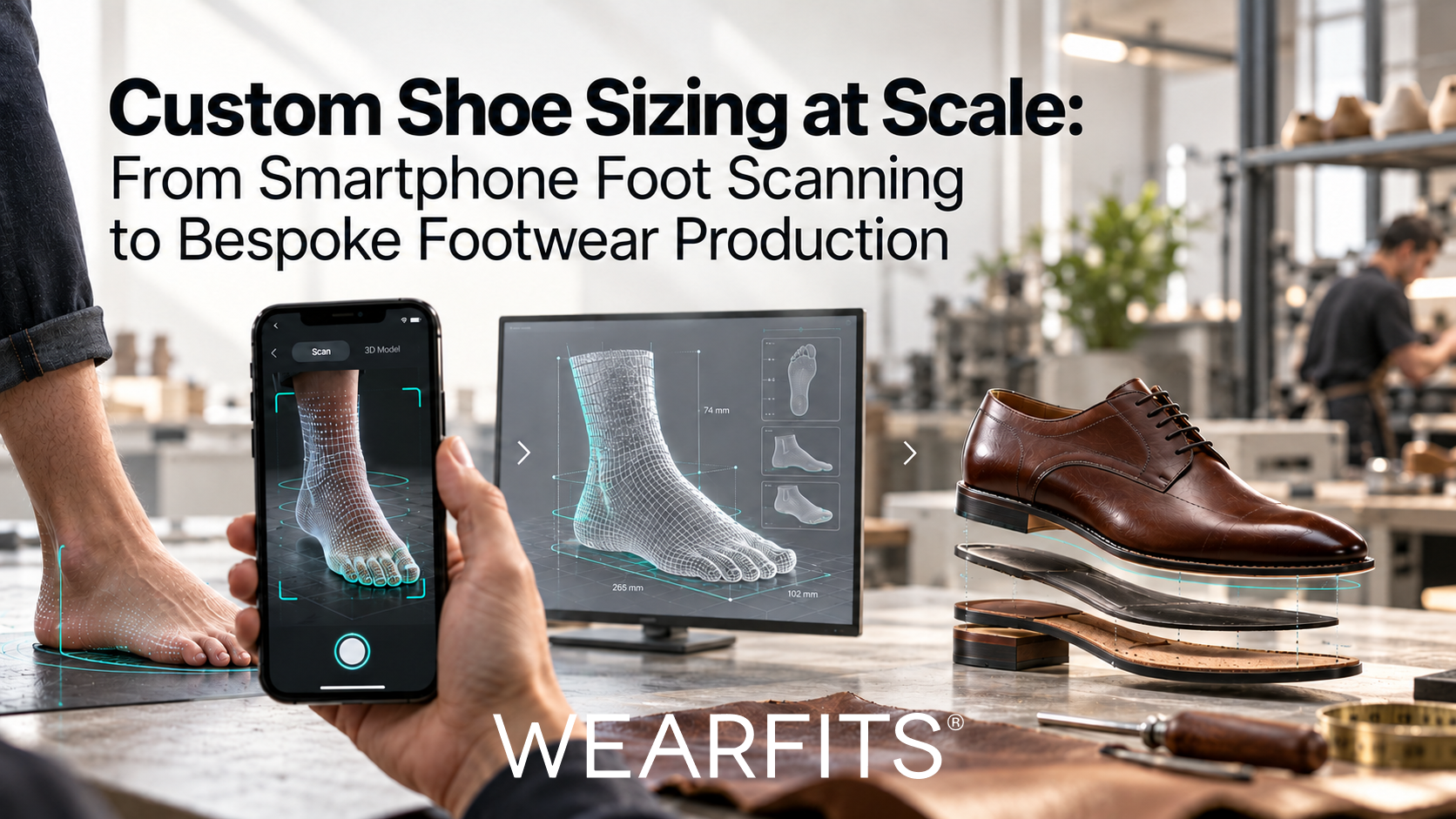
The future of premium footwear is becoming increasingly personal. Today's customers want more than attractive designs and high-quality materials. They expect shoes that reflect their individual preferences and fit the unique shape of their feet. For footwear brands, meeting these expectations requires a new approach to sizing, customization, and manufacturing.
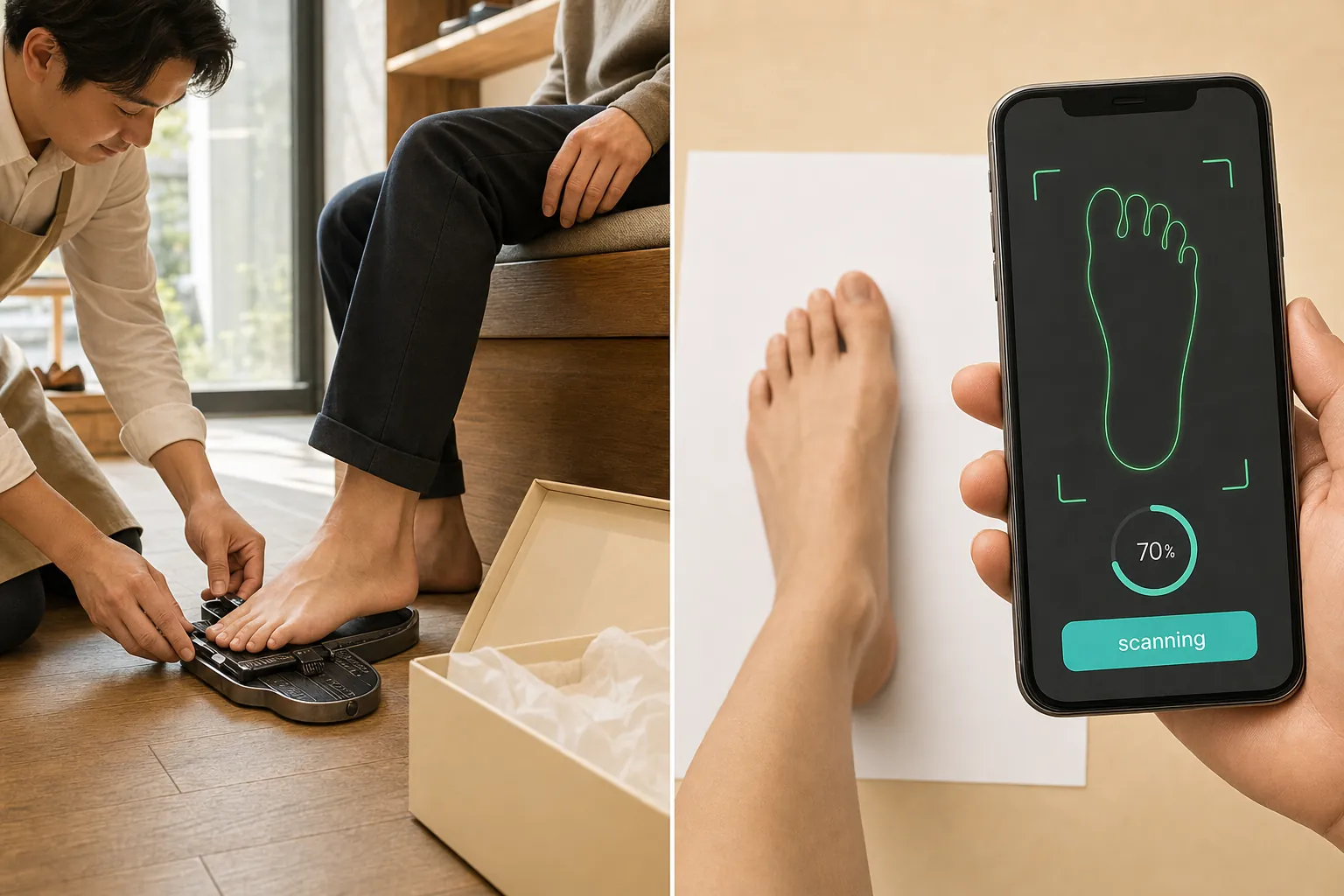
Traditional bespoke shoemaking relies on craftsmanship, physical measurements, and multiple fitting appointments. While this approach delivers exceptional personalization, it is difficult to scale across international markets and digital sales channels.
At WEARFITS, we believe advanced 3D foot scanning technology, artificial intelligence, and digital manufacturing workflows can help overcome these limitations. By transforming smartphone-based foot measurements into structured digital data, footwear brands can build a foundation for more efficient made-to-order production.
In this article, we explore how digital foot measurements can support the entire custom footwear journey, from the first interaction in an online store to the preparation of manufacturing specifications.
1. Ready-to-Wear Sizing vs. Bespoke Footwear: Understanding the Difference
Before exploring the technology, it is important to distinguish between traditional shoe size recommendations and measurement-driven bespoke footwear production.
In conventional ready-to-wear (RTW) e-commerce, customers choose from predetermined sizes. A sizing algorithm compares their foot measurements with the dimensions of existing footwear and recommends the closest available option.
For example, a shopper might be advised to purchase EU 42 instead of EU 43. However, both sizes are based on standardized shoe lasts that cannot be individually modified.
Made-to-order and bespoke footwear follow a different principle: the customer's anatomy becomes an input into the manufacturing process rather than simply a reference for selecting an existing size.
This creates several possibilities:
- Customized shoe lasts: Digital measurements can guide modifications to width, instep volume, heel shape, and other geometric features.
- Individual width selection: Manufacturers can identify suitable fitting categories or develop adjusted width profiles.
- Personalized components: Measurement data can inform the selection of insoles, structural reinforcements, and other construction elements.
- Adapted upper patterns: Digital pattern-making systems can use foot dimensions to adjust the shape of leather or textile components.
Instead of limiting shoppers to a predefined size chart, brands can use 3D foot data to support a more individualized manufacturing process.
2. Why Accurate Foot Measurement Requires More Than Length
Foot length is the most familiar measurement in footwear retail, but it tells only part of the story.
Two customers can have identical foot lengths while differing significantly in forefoot width, instep height, circumference, or arch profile. These differences influence comfort, pressure distribution, and the way shoes interact with the foot.
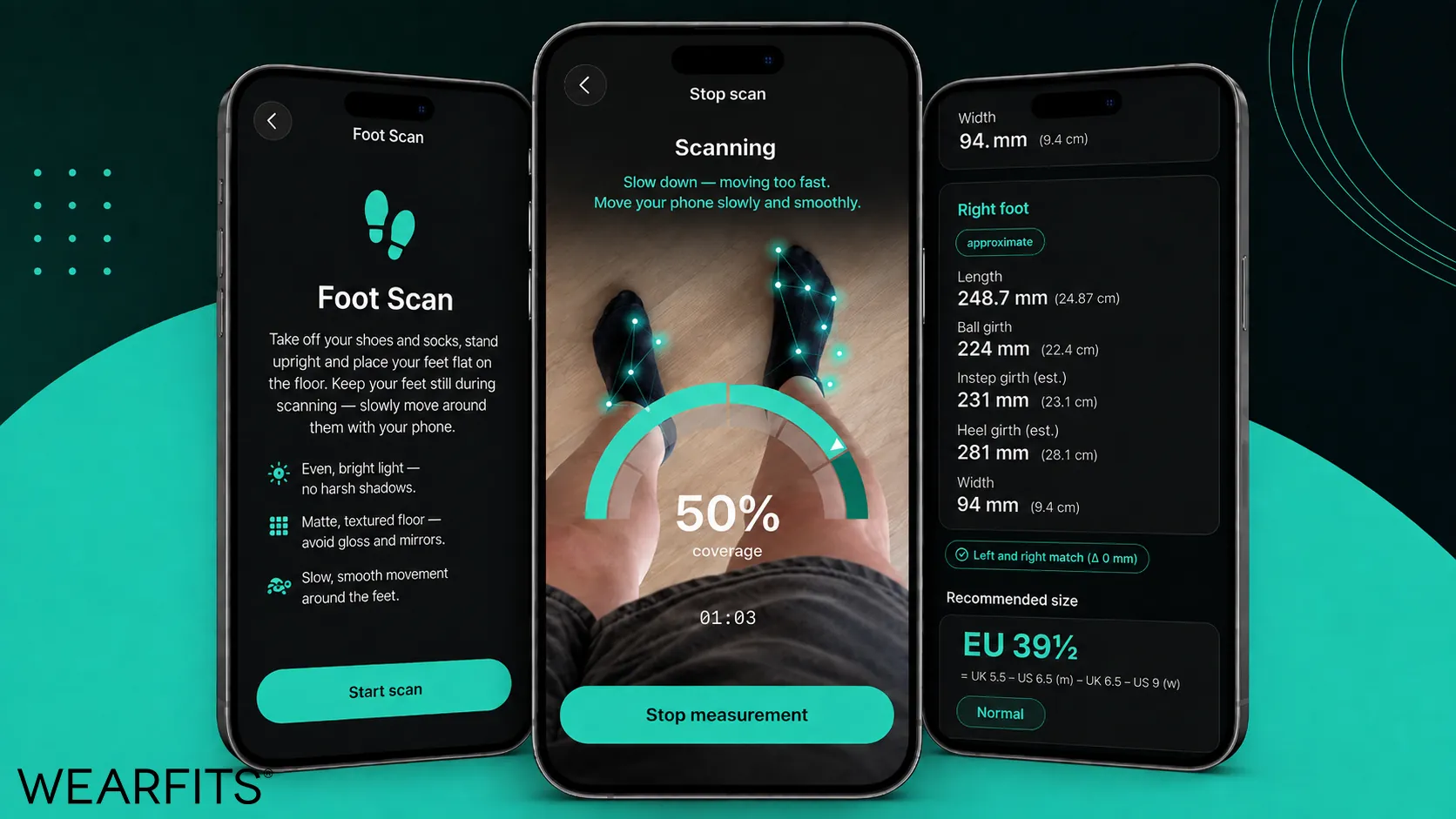
At WEARFITS, we develop digital fitting technologies that help brands move beyond conventional size charts. Our AI-based approach uses smartphone scanning and computer vision to capture relevant foot measurements and support more informed fitting decisions.
Our AI footwear sizing technology is designed to make precise measurement more accessible within digital shopping experiences.
For customized footwear, several anatomical dimensions are especially valuable.
Foot Length
The distance between the heel and the longest toe establishes the fundamental length reference. It helps determine the dimensions of the shoe last while allowing manufacturers to incorporate appropriate toe clearance.
Ball Width
Measured across the widest part of the forefoot, ball width influences the shape of the outsole and the internal space available around the metatarsal region.
Ball Girth
Ball girth describes the circumference around the forefoot. It is particularly important because two feet with similar widths may require different internal volumes.
Instep Height
The height of the upper midfoot affects how comfortably a shoe accommodates the instep, especially in structured leather footwear, boots, and lace-up designs.
Arch Profile
The shape and height of the longitudinal arch can provide useful information when developing personalized footbeds or adapting internal support components.
Left and Right Foot Differences
Human feet are rarely perfectly symmetrical. Differences in length, width, or volume can influence how each shoe feels.
Digital measurement creates an opportunity to evaluate both feet individually rather than assuming they require identical specifications.
For bespoke manufacturing, this information could support separate adjustments to the left and right shoe lasts, offering a level of personalization that standard retail sizing rarely provides.
3. Turning 3D Foot Measurements Into Shoe Last Geometry
Obtaining accurate foot measurements is only the beginning. The next challenge is converting anatomical information into a shape that can actually be used to manufacture footwear.
A shoe last is not an exact reproduction of the foot. It is a carefully engineered form that determines the shoe's structure, proportions, appearance, and internal fit.
Manufacturers must balance anatomical requirements with movement, material behavior, construction methods, and the aesthetic identity of the brand.
In a digital custom footwear workflow, measurement data can be passed to a last geometry system that applies the manufacturer's technical rules.
Several parameters are especially important.
Toe Allowance
Shoes require additional space beyond the measured length of the foot. The appropriate allowance depends on the footwear category, toe shape, and design.
A practical design range may be approximately 10–18 mm in certain applications, although the correct value must be established for each model.
Research into computer-aided customization of shoe lasts also highlights how toe allowance and last geometry must be considered together.
Toe Spring and Heel Lift
The curvature of the front section of the last and the position of the heel influence the shoe's construction and walking characteristics.
These parameters must be adapted to the intended product, whether it is a formal Oxford shoe, an everyday sneaker, or a boot.
Material Properties
Soft calf leather, suede, rigid leather, and technical textiles behave differently during production and wear.
Digital last customization should therefore account for the properties of the selected material rather than relying exclusively on foot measurements.
Parametric Last Modification
CAD software can modify a base last using defined geometric rules. Widths, girths, cross-sections, and selected contours can be adjusted without rebuilding the entire model manually.
The resulting geometry may then be prepared for compatible CNC milling equipment or additive manufacturing systems.
This is where 3D foot scanning for bespoke shoes becomes more than a measurement tool: it provides information that can contribute directly to digital product development.
4. Connecting Online Foot Scanning With Footwear Manufacturing
For large-scale personalization to become commercially viable, footwear brands need more than precise scanning technology.
They also require efficient communication between their online storefront, order management tools, product databases, and manufacturing systems.
At WEARFITS, our approach to digital fitting and e-commerce integration demonstrates how customer-facing technologies can become part of a broader connected retail environment.
Our WEARFITS technical documentation describes solutions for 3D visualization, AR virtual try-on, foot measurement, and digital size recommendations.
A comprehensive made-to-order manufacturing architecture can extend this foundation through four stages.
Step 1: Customer Configuration and Digital Measurement
The shopper begins by choosing a footwear model and customizing available options, including color, material, sole, and design details.
Next, a smartphone-based measurement experience captures relevant foot dimensions.
The goal is to simplify a process that would traditionally require an in-person appointment, allowing customers to provide measurement information remotely.
Step 2: Creating a Structured Measurement Profile
The captured dimensions are organized into a digital profile that can include length, width, girth, instep measurements, and differences between the two feet.
In a suitably configured manufacturing integration, these measurements can be represented as structured data and associated with an individual order.
Step 3: Connecting Measurements With Order Management
A production management system combines the customer's design choices with the corresponding measurement profile.
This creates a digital production specification containing information about the selected model, materials, fitting requirements, and any individual adjustments.
Depending on the manufacturer, this information can be integrated with ERP, PIM, or order management software.
Step 4: Preparing Data for CAD/CAM Production
Manufacturing software interprets the approved specification and prepares the necessary design or production files.
These may include customized last geometry, adjusted cutting patterns, or instructions for equipment used in footwear manufacturing.
The result is a connected digital workflow that can reduce repetitive administrative tasks and unnecessary manual data entry.
For premium footwear brands, the objective is straightforward: make individualized production more efficient without sacrificing the craftsmanship that defines the product.
5. Quality Control: Combining AI Automation With Human Expertise
Automated measurements can improve consistency, but high-end footwear production still requires careful quality management.
At WEARFITS, we recognize that individual anatomy, unusual foot proportions, and imperfect scanning conditions can create situations requiring additional attention.
Our published footwear sizing methodology describes measurement accuracy within approximately ±2 mm under the reported comparison conditions.
However, even precise digital measurements should not automatically replace expert judgment in complex bespoke manufacturing.
A practical solution is a human-in-the-loop quality control process, combining automated screening with specialist review.
Automated Production Path
Orders involving measurements within a manufacturer's accepted ranges may proceed through a standardized digital workflow.
The system can validate measurement completeness, verify compatibility with production constraints, and prepare the data for subsequent manufacturing stages.
Expert Review Path
More complex orders can be flagged for manual evaluation.
Possible triggers include:
- Significant differences between the left and right foot.
- Unusually high or low instep measurements.
- Foot proportions outside established manufacturing tolerances.
- Potential anatomical irregularities requiring specialist assessment.
- Incomplete measurements or insufficient scan quality.
When a review is required, an experienced shoemaker or appropriately qualified specialist can examine the available measurements, request additional information, and recommend suitable adjustments.
This approach preserves an essential advantage of traditional bespoke footwear: professional expertise.
Rather than replacing artisans, digital technology can help them focus on the cases where their knowledge creates the greatest value.
6. WEARFITS and Hockerty: Bringing Custom Footwear Into Digital Commerce
An example of how digital technology can improve the customized footwear buying experience is our collaboration with Hockerty, a brand specializing in personalized fashion.
Hockerty allows customers to configure footwear according to individual style preferences, selecting materials, colors, and design elements online.
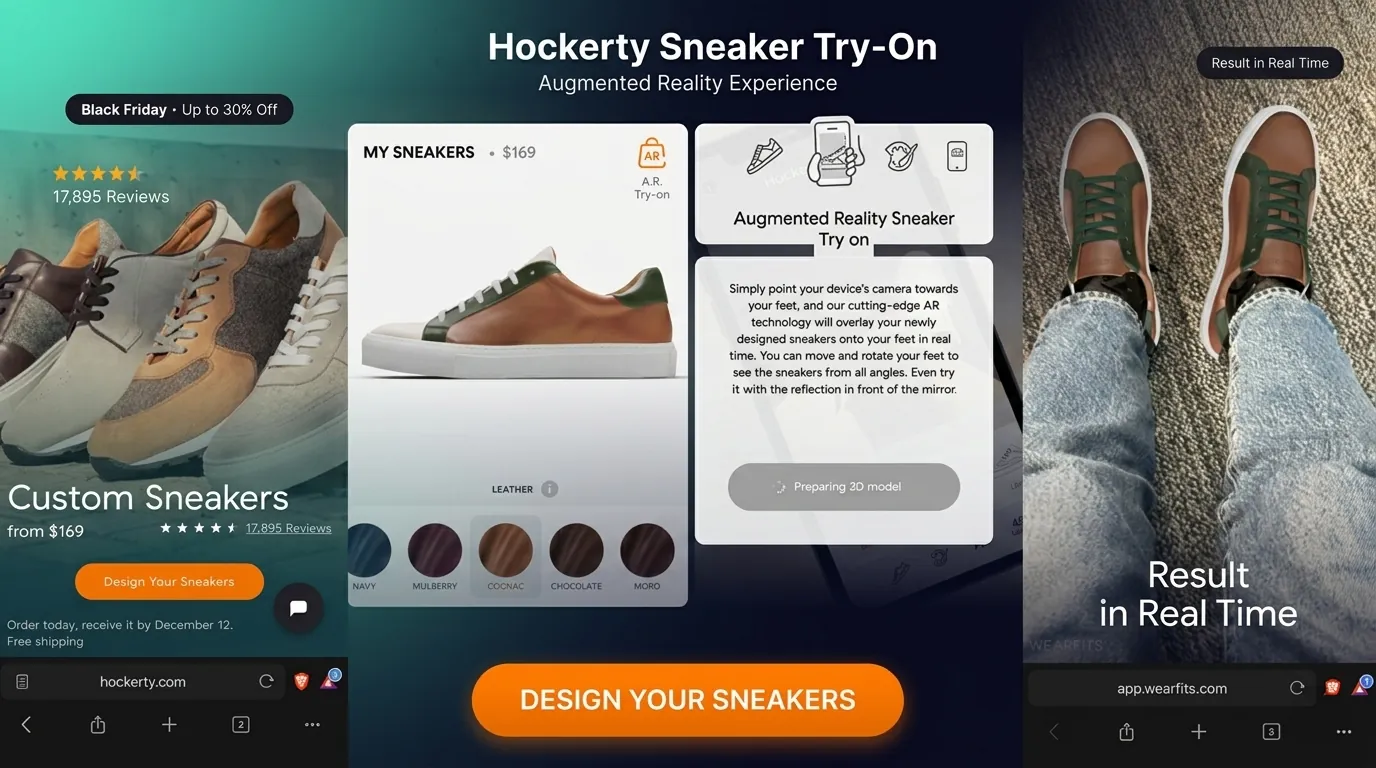
Together, we introduced an augmented reality shoe visualization experience integrated with Hockerty's customization environment.
As detailed in our WEARFITS and Hockerty case study, shoppers can visualize their selected shoe designs on their feet before completing a purchase.
This experience helps bridge a fundamental gap in footwear e-commerce: customers want to understand what a customized product will look like before ordering something that has not yet been manufactured.
The integration demonstrated improvements in customer engagement, purchase confidence, and conversion performance.
Although virtual try-on and measurement-driven bespoke manufacturing serve different functions, they can complement one another within a unified digital shopping strategy.
AR visualization helps customers evaluate appearance, while accurate foot measurement provides the basis for improved fit decisions.
Together, these technologies illustrate how footwear brands can create more interactive, personalized, and confidence-building online purchasing experiences.
7. Business Benefits of Digital Foot Measurement for Premium Brands
Adopting digital foot measurement can support several important objectives for footwear manufacturers and retailers.
Greater Customer Confidence
Choosing custom footwear online involves uncertainty. Customers may hesitate when they cannot physically try on a product.
Digital measurement and interactive visualization provide additional information that helps customers make more confident decisions.
Fewer Sizing-Related Returns
Incorrect sizing is a recurring challenge in footwear e-commerce.
By using measurements rather than assumptions based on conventional size labels, brands can work toward reducing avoidable fit-related returns and exchanges.
Actual results depend on product design, measurement quality, and the implementation of the fitting process.
More Efficient Custom Production
Structured measurement data can reduce the need to repeatedly collect and manually transfer customer information.
When integrated with production systems, this can support faster order preparation and more consistent communication between retail and manufacturing teams.
More Scalable Personalization
Traditional bespoke processes depend heavily on direct customer appointments.
Smartphone-based scanning makes remote measurement more accessible, creating opportunities for premium footwear brands to serve customers across geographical markets.
Stronger Customer Relationships
A personalized measurement profile may also support future purchasing experiences, subject to customer consent and appropriate data protection practices.
Returning shoppers can benefit from a more convenient journey, while brands gain opportunities to deliver consistent, individualized service.
8. The Future of Bespoke Footwear Is Digital and Connected
Mass customization is reshaping the possibilities for premium footwear e-commerce.
What once required repeated physical appointments and manual coordination can increasingly be supported by digital measurements, intelligent software, and connected manufacturing systems.
At WEARFITS, we see smartphone-based 3D foot scanning and AI-powered shoe fitting as important building blocks of this transformation.
The next opportunity lies in connecting accurate customer measurements with the technical requirements of made-to-order production, from last development to component selection and digital manufacturing preparation.
For footwear brands, this means moving beyond the traditional question of which standard size a customer should purchase.
The more valuable question is: how can we use precise digital measurements to create footwear that better reflects the individual customer?
By combining advanced fitting technology with established manufacturing expertise, brands can develop personalized shopping experiences while building more efficient and scalable operations.
Build a More Personalized Footwear Experience With WEARFITS
At WEARFITS, we help footwear brands embrace digital innovation through AI-based sizing, 3D visualization, and augmented reality shopping experiences.
Whether your goal is to improve online size recommendations, strengthen customer confidence, or explore measurement-driven customization workflows, we can help you identify the right technological approach.
Ready to take footwear personalization further?
Contact the WEARFITS team to discuss how our technology can support your e-commerce strategy and create new opportunities for personalized footwear experiences.
Related posts