Why Over 60% of People Wear the Wrong Shoe Size—and How AI Is Changing Footwear Fitting

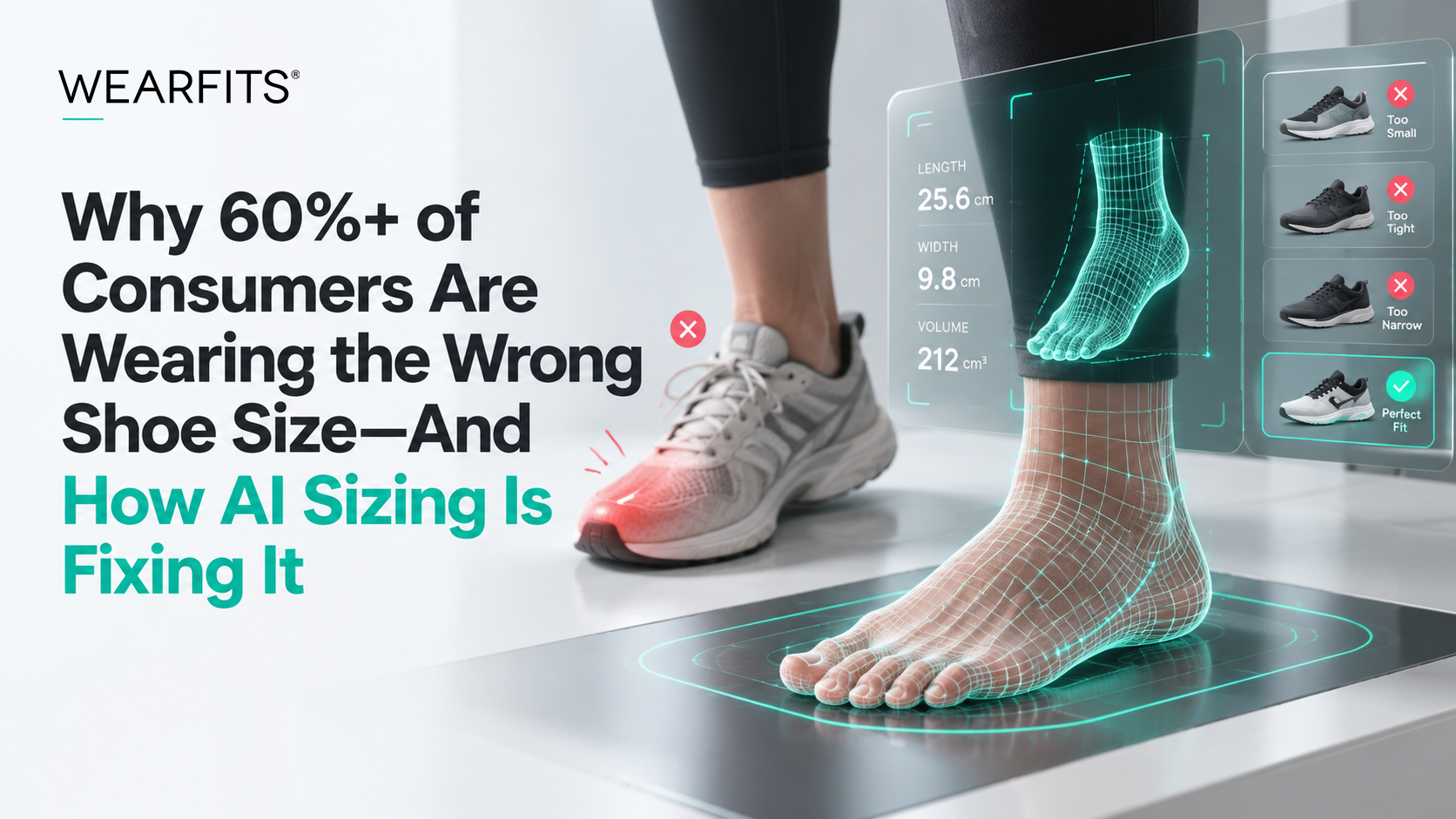
The Shoe Sizing Problem Most People Don't Know They Have
Millions of people put on their shoes every morning without realizing that their footwear may not actually fit. A familiar size on the label creates a sense of certainty, but the number rarely tells the complete story.
When Nike introduced its digital sizing solution, Nike Fit, in 2019, the company estimated that approximately 60% of people were wearing incorrectly sized shoes, as reported by WIRED in its coverage of the technology.
Scientific findings point to a similarly widespread issue. A systematic review published in the Journal of Foot and Ankle Research found that between 63% and 72% of participants in several studies wore footwear that did not adequately accommodate their foot length or width.
Although these findings come from different populations and should not be interpreted as a single global measurement, they reveal a fundamental weakness in how consumers choose shoes.
At WEARFITS, we see this challenge as an opportunity to rethink footwear shopping. Through artificial intelligence, 3D foot measurement, and augmented reality, we are working toward a shopping experience where recommendations reflect individual foot anatomy rather than assumptions about standard sizes.
Understanding why traditional sizing produces so many mismatches is the first step toward finding a better solution.
Why Traditional Shoe Sizing Doesn't Work for Everyone
A Shoe Size Cannot Describe the Entire Foot
Conventional shoe sizing reduces a complex anatomical structure to a simple numerical label. Yet two individuals with identical foot lengths can have dramatically different fitting requirements.
A comfortable shoe needs to accommodate several important measurements:
- Foot length: The distance from the heel to the longest toe.
- Foot width: The horizontal space across the broadest part of the forefoot.
- Instep height: The vertical dimension across the upper middle section of the foot.
- Arch height: The elevation of the foot's natural arch.
- Ball girth: The circumference surrounding the widest region of the forefoot.
Traditional measuring devices can provide useful information, particularly about length and width. However, these measurements alone may not fully describe the three-dimensional geometry that determines how a particular shoe feels.
Someone with a high instep might experience uncomfortable pressure despite selecting the correct length. Another shopper with a wider forefoot may choose a larger size simply to create additional room, only to discover that their heel slips during walking.
This is why accurate shoe fitting requires more than knowing your usual size. The relationship between foot shape, internal shoe volume, and footwear construction matters just as much as the number printed on the box.
Different Brands Use Different Shoe Shapes
A size 42 running shoe does not necessarily fit like a size 42 leather boot. Even two models from the same manufacturer may feel noticeably different.
The explanation lies partly in the shoe last, the three-dimensional form used to define a shoe's shape during design and production.
Last geometry influences toe-box dimensions, heel width, instep space, and overall internal volume. Manufacturers develop different lasts according to their intended customers, materials, and product categories.
Consequently, converting between EU, UK, and US sizes does not guarantee consistent fit.
The American Podiatric Medical Association's footwear guidance specifically advises consumers not to rely exclusively on the size of their previous shoes, noting that shoe lasts differ and feet may change over time.
For online shoppers, this creates a frustrating situation: a familiar size can work perfectly in one product and feel completely wrong in another.
Shopping Habits Reinforce Sizing Mistakes
Many consumers continue purchasing the same shoe size for years without checking whether their feet have changed.
Foot dimensions can evolve with age, pregnancy, weight changes, and other physiological factors. Feet may also swell throughout the day, making measurements taken in the morning less representative of the fit experienced later.
Nevertheless, shoppers frequently rely on previous purchases instead of evaluating each new pair.
This habit becomes even more problematic in e-commerce, where customers cannot physically examine the interior shape of a shoe or test its comfort before ordering.
The result is a recurring cycle of guesswork, discomfort, exchanges, and returns.
The Real Consequences of Wearing the Wrong Shoe Size
Poorly Fitting Shoes Can Affect Foot Health
Incorrect footwear is more than a minor inconvenience. Shoes that are too narrow, too short, or poorly shaped can contribute to discomfort and aggravate existing foot problems.
The research review on incorrectly fitted footwear and foot disorders identified associations between unsuitable shoe dimensions, foot pain, corns, calluses, and toe deformities.
Several potential problems deserve particular attention.
Toe compression and deformities: Narrow toe boxes may place excessive pressure on the toes, contributing to discomfort and potentially aggravating conditions such as bunions or hammertoes.
Friction and skin irritation: Excessive movement inside loose footwear can create rubbing, while tight shoes may concentrate pressure on sensitive areas.
Nerve-related discomfort: Inadequate space around the forefoot or instep may contribute to tingling, numbness, or irritation in susceptible individuals.
Walking discomfort: Footwear that does not adequately accommodate foot shape can affect comfort and movement, particularly during prolonged standing, walking, or exercise.
Not every foot condition is caused by incorrect sizing, and shoe fit alone cannot prevent every musculoskeletal problem. However, selecting footwear that accommodates natural foot anatomy remains an important part of foot care.
Incorrect Sizing Creates Expensive E-Commerce Returns
For footwear retailers, the consequences extend directly into business operations.
The National Retail Federation's 2025 Retail Returns Landscape report estimated that 19.3% of online sales would be returned during 2025, with total US retail returns reaching approximately $849.9 billion.
These figures cover the wider retail industry rather than footwear alone, but they demonstrate the scale of the challenge.
Fit uncertainty is especially relevant to fashion and footwear, where customers must evaluate how products interact with their bodies.
A 2025 Rithum report on retail returns found that poor fit was mentioned by 61% of surveyed consumers as a reason for returning purchases.
Each returned pair can create additional shipping, handling, inspection, and inventory-management expenses. Products may also lose resale value if packaging is damaged or the item cannot immediately return to stock.
Why Shoppers Order Multiple Sizes
One particularly costly response to sizing uncertainty is known as bracketing.
Instead of choosing one size, customers purchase two or three variations of the same product, try them at home, and return the unwanted pairs.
This behavior effectively transfers the fitting room from the physical store to the customer's home.
According to the NRF and Happy Returns' 2024 consumer research, 51% of Gen Z respondents reported engaging in bracketing when shopping for apparel or footwear, compared with 36% of Gen X consumers.
Although this practice provides reassurance for customers, it increases return volumes and complicates forecasting for retailers.
More reliable sizing guidance could reduce the need to order multiple pairs while helping shoppers make decisions with greater confidence.
How AI Foot Measurement Makes Shoe Sizing More Personal
Traditional size charts begin with a product label. AI-powered shoe sizing begins with the customer's actual feet.
Instead of assuming that everyone purchasing a particular size shares the same anatomy, intelligent fitting systems analyze individual measurements and compare them with product-specific information.
At WEARFITS, our approach brings together three complementary technologies: AI foot scanning, brand-specific size matching, and augmented reality visualization.
1. Measuring Foot Geometry With a Smartphone
Modern computer vision makes it possible to estimate foot dimensions using images captured with an ordinary smartphone camera.
Rather than requiring a visit to a specialist fitting station, customers can complete the measurement process within a digital shopping journey.
WEARFITS uses AI-powered foot reconstruction to evaluate dimensions such as length, width, instep height, arch height, and ball girth.
Our virtual shoe sizing technology is designed to complete a phone-based scan in under 60 seconds. WEARFITS reports typical measurement accuracy of approximately ±2 mm under its described operating conditions, although accuracy can depend on capture quality and should be assessed separately from the accuracy of a final fit recommendation.
This additional anatomical information helps identify fitting requirements that conventional length-based sizing may overlook.
For example, a customer might discover that the discomfort experienced in standard sneakers comes from a high instep rather than insufficient shoe length.
That distinction can change which footwear model or size is most appropriate.
2. Matching Measurements to Specific Footwear Models
Knowing the dimensions of a foot is only half the challenge. The next step is understanding how those measurements relate to the shoe being purchased.
A generic size conversion table cannot fully account for differences between footwear lasts, materials, and styles.
WEARFITS addresses this through product-specific sizing recommendations that incorporate brand information and available shoe geometry data.
As explained in our overview of AI foot measurement and brand-specific size matching, the system is designed to compare the customer's measured profile with relevant footwear specifications rather than relying solely on universal size conversions.
Consider someone shopping for both running shoes and formal footwear. Their ideal size may differ across the two categories because the interior shapes and construction methods are not identical.
AI sizing can account for these differences and offer recommendations tailored to the selected product.
The goal is not to assign a permanent shoe size to every customer. It is to determine which size is most likely to fit that person's feet in a particular model.
3. Combining Fit Predictions With Augmented Reality
Even when shoppers receive a sizing recommendation, another question remains: how will the footwear look when worn?
Augmented reality helps address this uncertainty by displaying a digital representation of the selected shoe on the customer's foot through a smartphone camera.
WEARFITS combines virtual shoe visualization with intelligent sizing guidance in one shopping experience.
Depending on the product integration and available footwear data, a visual fit heatmap can indicate areas where the predicted fit may be tighter or more comfortable.
Shoppers can also compare available sizes and explore how the predicted fit changes between them.
Importantly, these heatmaps are visual predictions based on measurement and model data, not clinical measurements of pressure inside a physically worn shoe.
By connecting sizing recommendations with realistic visualization, retailers can help consumers evaluate both appearance and likely fit before purchasing.
Building Better Footwear Knowledge Through Technology
One of the most valuable benefits of AI foot measurement is its potential to improve what we call fit literacy: understanding how individual foot characteristics influence footwear selection.
Instead of memorizing a single size, shoppers can begin making choices based on their actual anatomy.
Your Feet Are Not Necessarily Identical
Many people have differences in length, width, or shape between their left and right feet.
This can create an uncomfortable compromise when shoes are selected according to measurements from only one side.
The American Podiatric Medical Association recommends fitting shoes to the larger foot, since the two feet are rarely precisely the same size.
Digital measurement can make these differences easier to identify and help shoppers understand why one shoe may feel tighter than the other.
Width and Instep Can Matter as Much as Length
Some consumers repeatedly purchase longer shoes when the real issue is insufficient width or depth.
For example, someone with a broad forefoot may experience pressure in their usual size even when there is adequate space in front of the toes.
Moving up an entire size might relieve this pressure but introduce unwanted movement at the heel.
A multidimensional assessment can help distinguish whether a shopper needs more length, a wider fit, or footwear with greater instep volume.
This knowledge encourages more informed shopping decisions instead of repeated trial and error.
Different Shoe Categories Require Different Fitting Considerations
Running shoes, boots, casual sneakers, and formal footwear are constructed for different purposes.
Flexible textile uppers may accommodate certain variations in foot shape, while more structured materials can provide less room for expansion.
Fastenings, cushioning, heel construction, and intended activity also influence how footwear should fit.
AI-based recommendations can help account for these product characteristics, but customers should still assess comfort, movement, and the intended use of their shoes.
Technology works best when it complements practical fitting knowledge rather than replacing it.
What AI Sizing Means for Footwear Brands and Online Retailers
For footwear businesses, better sizing technology has implications beyond customer convenience.
An effective digital fitting experience can influence purchase confidence, returns management, and customer satisfaction.
Reducing Avoidable Size-Related Returns
When customers receive recommendations informed by their foot measurements and the selected shoe's specifications, they have more information before placing an order.
This creates an opportunity to reduce returns caused by incorrect size selection.
WEARFITS discusses potential return reductions of around 20% in its virtual try-on and fit prediction overview. Such figures should be understood as company-reported performance estimates rather than guaranteed outcomes for every retailer.
Actual results depend on product categories, implementation quality, customer adoption, and the retailer's existing return patterns.
Improving Confidence at the Point of Purchase
Uncertainty can discourage shoppers from completing a purchase, particularly when buying unfamiliar footwear brands.
An integrated experience that answers both "Will this fit?" and "How will it look?" can remove two important sources of hesitation.
WEARFITS' approach combines these decisions within the product shopping experience instead of requiring customers to navigate separate measurement tools and visualization applications.
For brands, the potential benefit is a clearer path from product discovery to checkout, supported by personalized fitting information.
Supporting More Efficient and Sustainable Commerce
Every unnecessary shipment and return requires transportation, packaging, and processing resources.
By helping customers identify a suitable size before ordering, digital fitting technologies may reduce avoidable reverse-logistics activity.
This does not mean AI sizing can eliminate all footwear returns. Customers may still return shoes because of material preferences, comfort, appearance, or expectations that cannot be fully assessed digitally.
Nevertheless, improving sizing decisions represents a practical opportunity to address one recurring source of e-commerce waste.
The Future of Shoe Shopping Is Based on Individual Fit
For decades, buying footwear has involved adapting individual feet to standardized size categories.
Yet research consistently demonstrates that this approach leaves many people with shoes that do not properly accommodate their anatomy.
The growing availability of AI foot measurement, 3D reconstruction, and augmented reality offers a different direction.
Instead of asking shoppers to guess which size might work, technology can evaluate their measurements, consider differences between footwear models, and provide more personalized guidance.
At WEARFITS, we believe the next generation of online footwear shopping should combine accurate sizing information with realistic product visualization. Our mission is to make digital fitting more accessible, intuitive, and useful for both consumers and footwear brands.
The future of shoe sizing is not about finding one universal number. It is about finding the right fit for each foot and each shoe.
And with AI-powered fitting technology, that future is becoming increasingly achievable.
Related posts
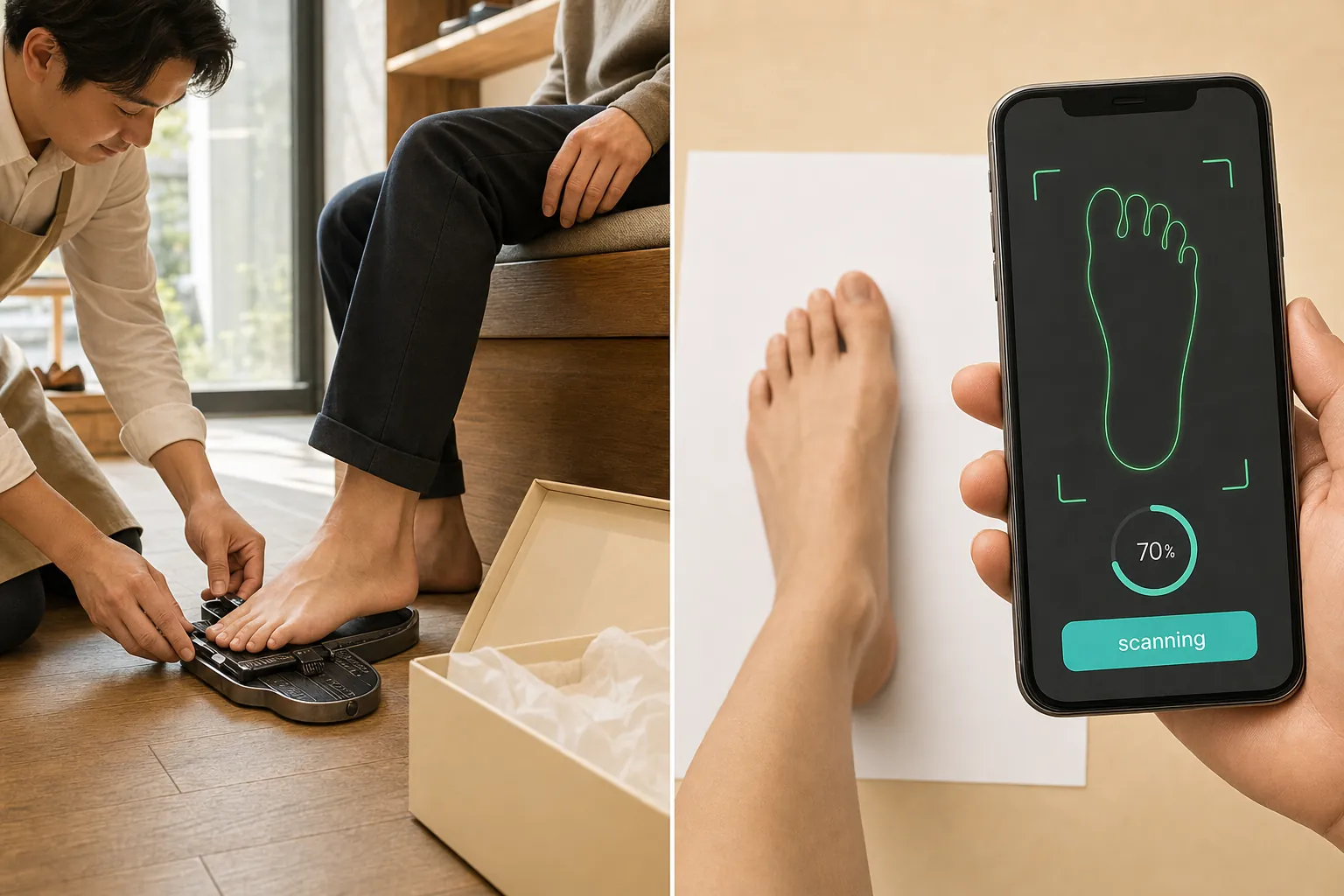
The Two-in-One Problem: How AI Foot Measurement, Brand-Specific Size Charts, and AR Try-On Eliminate Online Shoe Returns
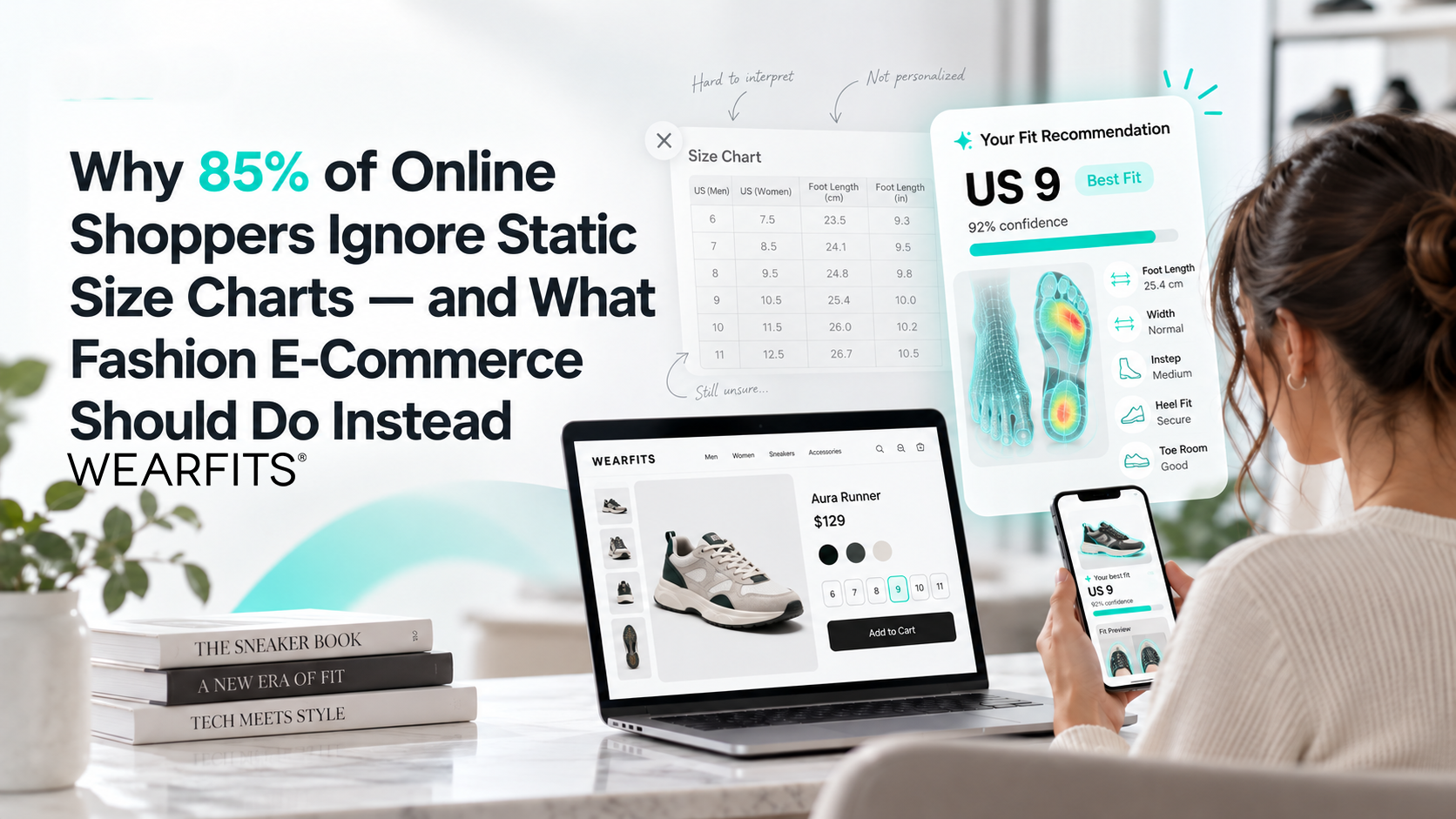
Why 85% of Online Shoppers Ignore Static Size Charts — and What Fashion E-Commerce Should Do Instead
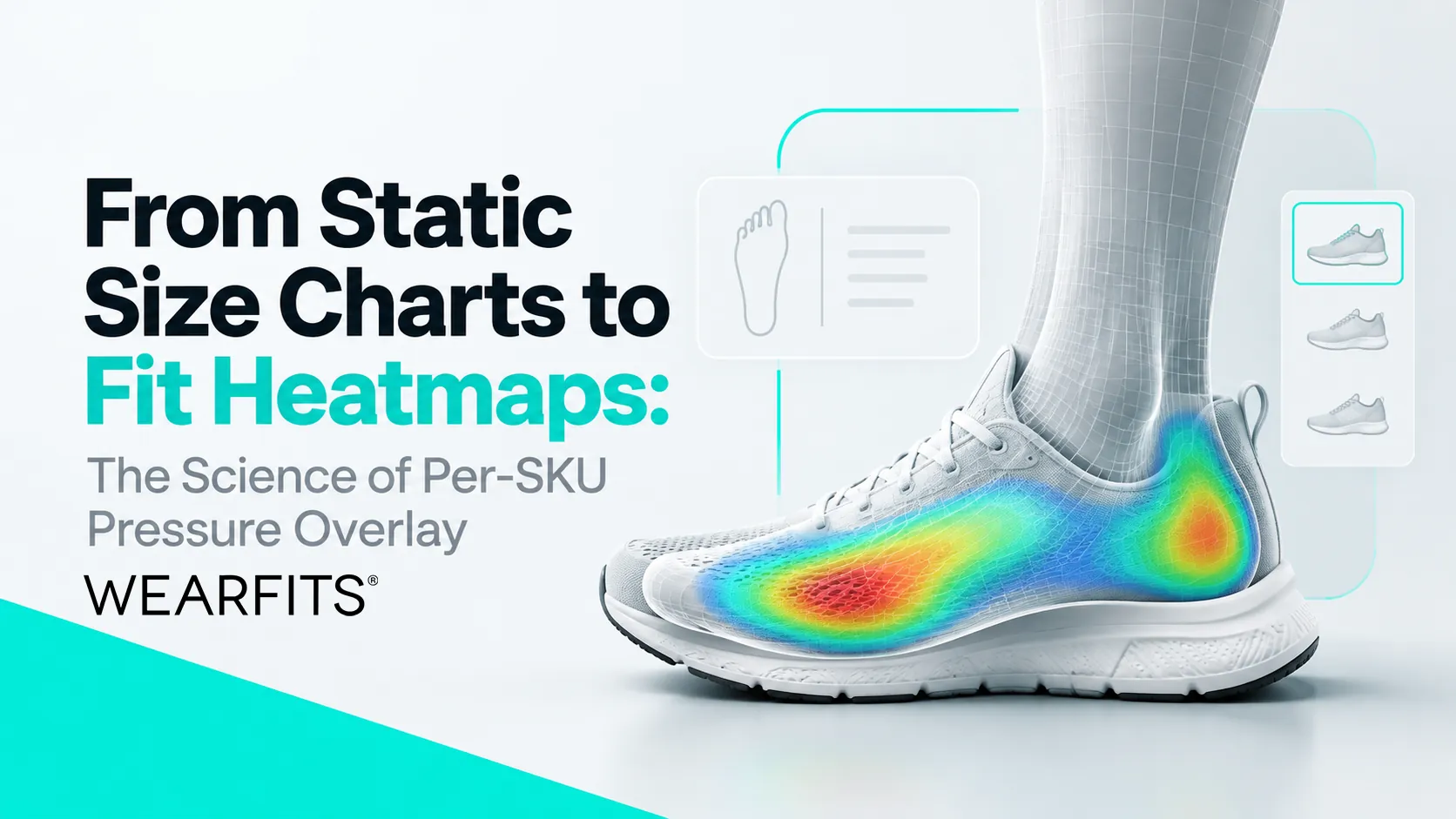
From Static Size Charts to Fit Heatmaps: The Science of Per-SKU Pressure Overlay
