The Economy of Returns in Footwear and Bags: Strategic Guide to Protecting Profit Margins

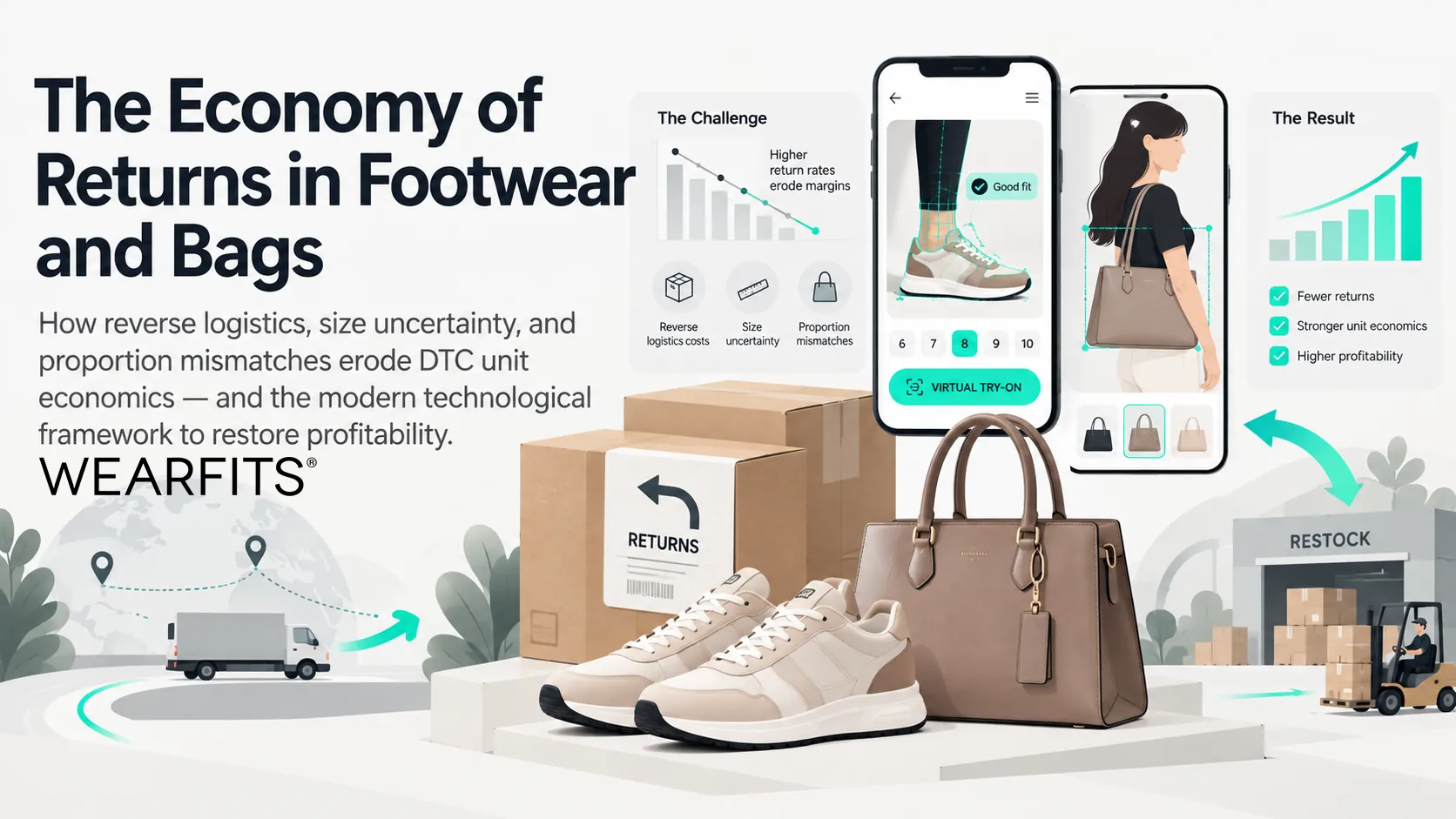
How reverse logistics, size uncertainty, and proportion mismatches erode DTC unit economics — and the modern technological framework to restore profitability.
1. The High Cost of Returns in Online Footwear & Accessories
In fashion e-commerce, customer acquisition cost (CAC) dominates marketing discussions. Yet, for direct-to-consumer (DTC) footwear and handbag brands, the most aggressive profit drain occurs after the customer clicks checkout. According to industry analyses by the National Retail Federation (NRF) and Capital One Shopping, total retail returns in the U.S. reached an unprecedented $743 billion to $890 billion annually, with online purchases suffering return rates 2 to 3 times higher than brick-and-mortar stores (15%–22% online versus 5%–8% in stores).
While general retail averages around 16.5% return rates, footwear and fashion accessories sit at the sharp end of the spectrum. Online footwear returns run at a baseline of 18% to 25%, with peak-season categories like women's shoes climbing as high as 29% to 30% (Returnalyze / Statista). For a growing $1M footwear or bag brand, an 18% return rate means shipping back $180,000 worth of merchandise every year — creating an operational tailwind that drags down gross margins and cash flow.
Table 1: Financial Anatomy of Returns for DTC Footwear & Bag Brands
|
Metric / Cost Center |
$1M DTC Brand Baseline |
$5M DTC Brand Scaling |
Industry Benchmark / Source |
|
Annual Gross Revenue |
$1,000,000 |
$5,000,000 |
WEARFITS Benchmark Model |
|
Returned Product Value (18%-20%) |
$180,000 (1,380 pairs) |
$1,000,000 (6,000 pairs) |
ICSC / Ringly E-Com Data |
|
Direct Reverse Logistics ($15-$25/pair) |
$20,700 - $34,500 |
$90,000 - $150,000 |
3PL & Restocking Costs |
|
Unresellable & Discounted Stock (20-30%) |
$10,800 - $16,200 |
$60,000 - $90,000 |
Damaged boxes / wear / markdowns |
2. The Anatomy of Reverse Logistics: Why a Return Costs Far More Than a Refund
Many e-commerce leaders view a returned order merely as a lost sale. In reality, a return is a multiplier of expense that quietly drains cash flow across four distinct operational vectors:
- Two-Way Freight & Processing Fees: The merchant pays forward shipping plus return label fees, 3PL receiving, inspection, cleaning, and restocking charges. Reverse logistics costs range from $15 to $25 per pair/item.
- Inventory Depreciation & Unsellable Stock: According to industry data, 20% to 30% of returned shoes and leather bags cannot be resold at full price due to box damage, minor creasing, or seasonal delays. Total return processing can eat up to 65% of the item's original retail price.
- Working Capital Liquidity Trap: Returned items spend an average of 14 to 21 days in transit and reprocessing, locking up capital during critical sales windows.
- Environmental & ESG Footprint: Over 8 billion pounds of returned merchandise end up in U.S. landfills annually, generating millions of metric tons of excess CO2 emissions from unnecessary transportation.
3. Sizing & Proportion Mismatches: The Root Causes of E-Commerce Returns
Why do shoppers return shoes and bags online? Research by PowerReviews and Mailmodo shows that 52% of fashion returns stem directly from sizing and fit issues, while another 28% occur because the physical product did not match the customer's visual expectations.
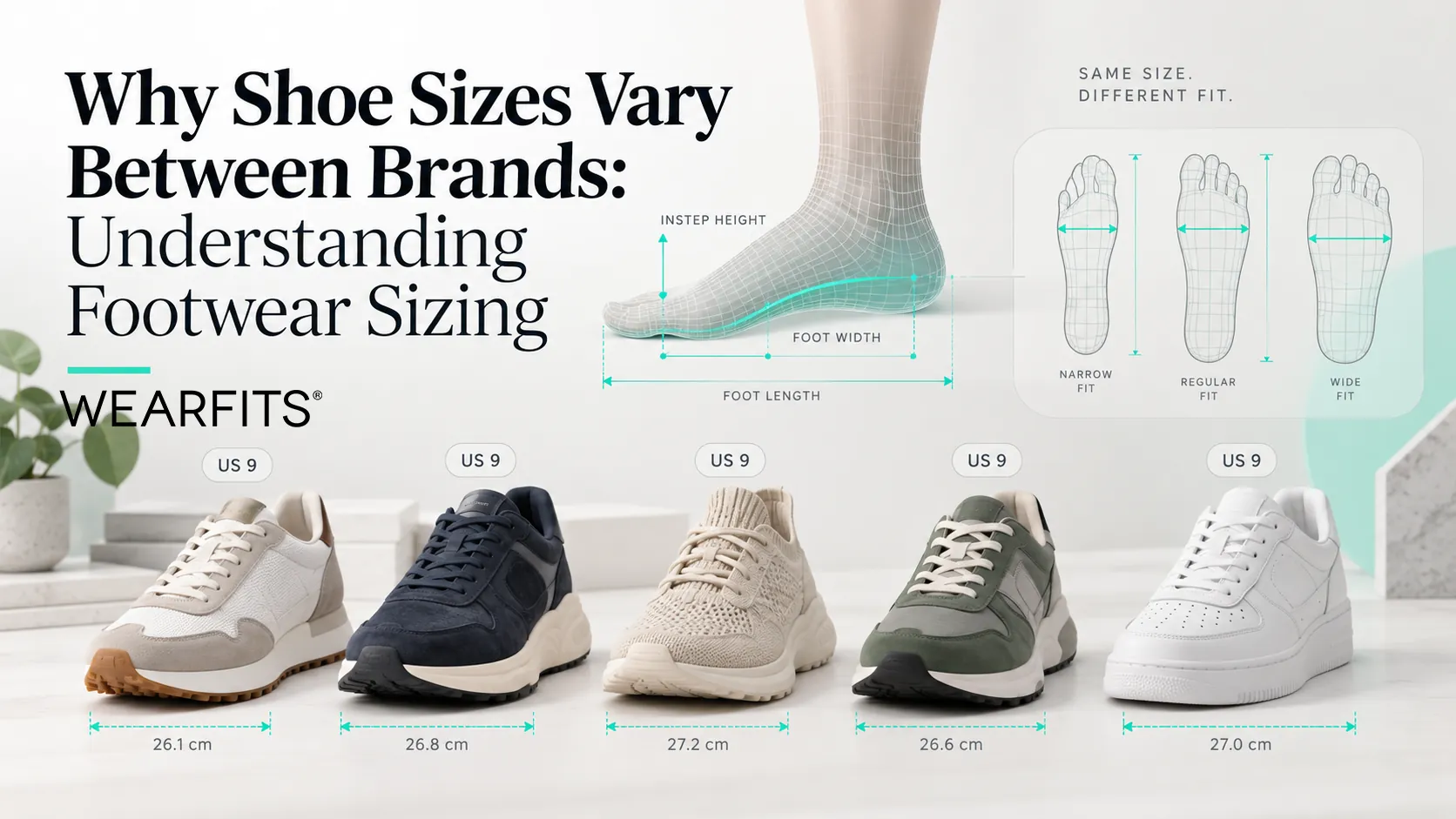
In footwear, fit is multi-dimensional. A standard 2D size chart converts length (e.g., US 9 = EU 42), but completely ignores width across the ball of the foot, instep height, arch profile, and ball girth. Furthermore, shoe lasts (the 3D foot forms used in manufacturing) vary wildly across brands — a Nike Air Force 1 last fits completely differently from an Adidas Stan Smith or a bespoke leather boot last. Less than 15% of online shoppers open static size charts before buying, leading to guesswork.
In handbags and backpacks, the issue is scale, proportion, and carry-style context. A static product photo against a plain white studio background obscures how a tote or crossbody bag looks against a shopper's specific height and frame. Shoppers cannot gauge whether a bag will sit comfortably on their shoulder, look oversized, or lack visual presence when carried handheld.
This uncertainty gives rise to bracketing — where 63% of fashion consumers admit to ordering multiple sizes or colors with the explicit intention of returning what doesn't fit. Bracketing effectively transforms the customer's home into a temporary fitting room at the brand's expense.
4. Why DTC Footwear Economics Are Structurally Harder Than Apparel
Footwear unit economics face a structural hurdle compared to apparel: lower repeat purchase frequency. While apparel shoppers purchase 3 to 5 times per year, footwear customers average only 1.4 to 1.8 orders per year. With customer acquisition costs (CAC) rising 7% year-over-year on major ad networks, footwear LTV-to-CAC ratios settle around 2.2x to 3.5x — noticeably below apparel medians (3.6x+).
Because footwear brands have fewer repeat purchase opportunities to recoup CAC over the customer lifetime, the profitability of the first purchase carries disproportionate weight. Eliminating return leaks on first orders is the highest-leverage operational improvement an e-commerce team can make.
5. Strategic Playbook: Modern Technology Levers to Eliminate Returns
To fix returns without alienating shoppers or restricting return policies, leading brands focus on the product decision moment. By substituting guesswork with digital fitting, brands build confidence before checkout.
Advanced Footwear Sizing: Edge-AI & Last Matching
Modern solutions like WEARFITS Virtual Try-On & Sizing combine three integrated layers to solve footwear fit:
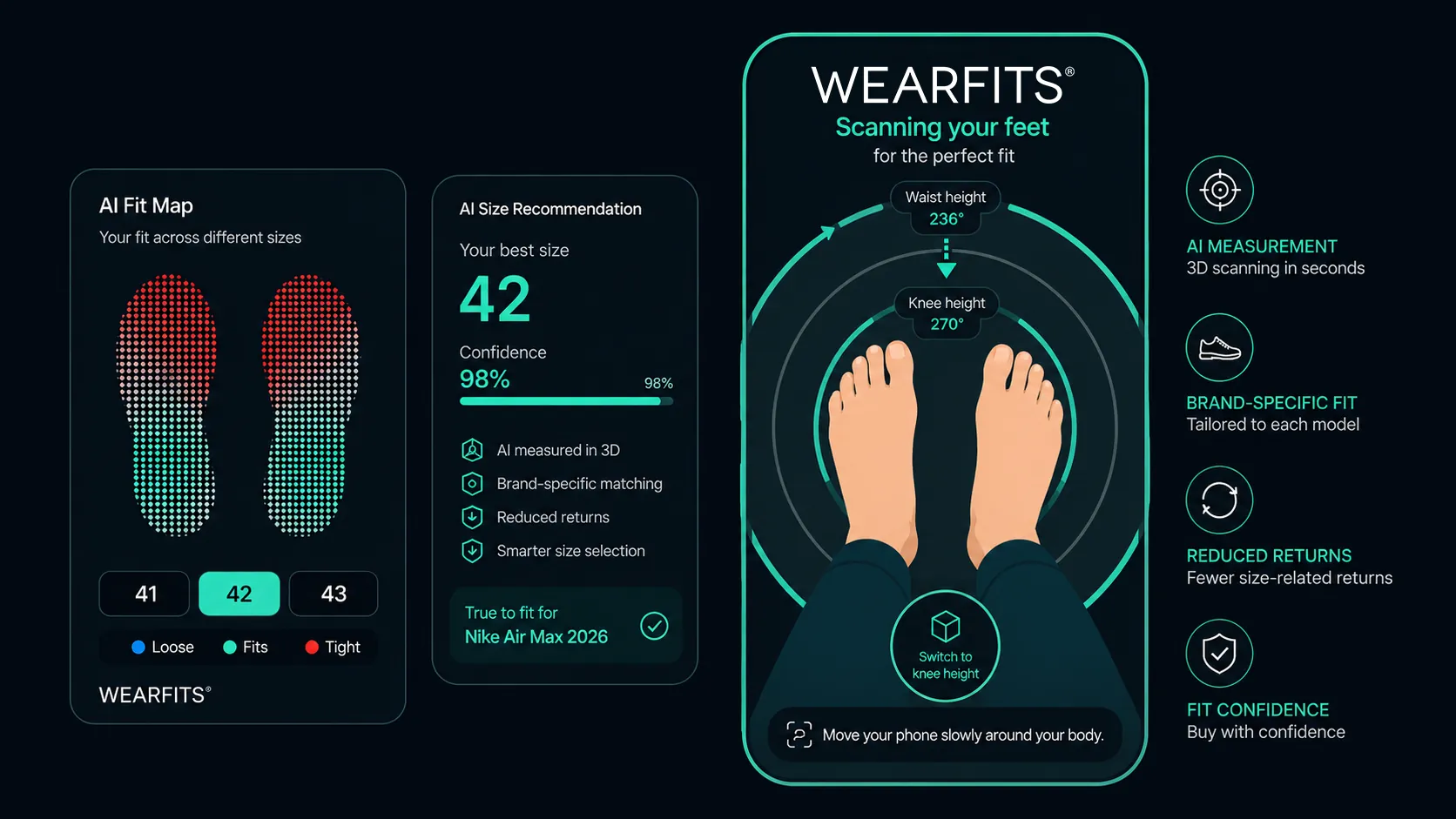
- Edge-AI 5D Foot Measurement: Runs a sub-60-second scan on any smartphone camera (capturing length, width, instep, arch height, and ball girth) with 99% accuracy (~2mm), requiring no special hardware or app downloads.
- Brand-Specific Last Matching: Ingests the brand's internal manufacturing lasts rather than relying on generic conversion tables, providing precise, SKU-specific size recommendations.
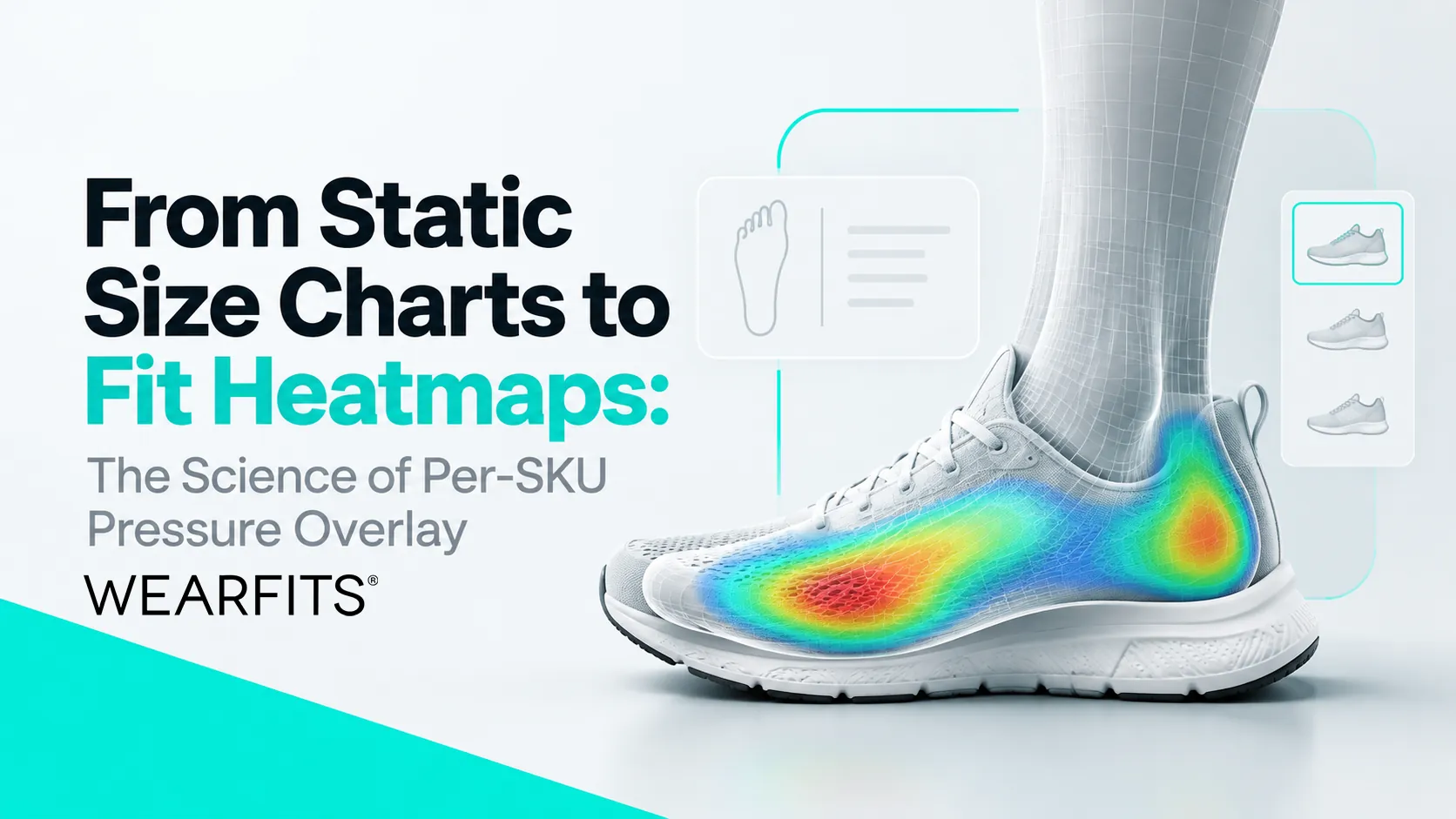
- AR Visual Confirmation & Thermal Heatmaps: Renders the recommended shoe in photorealistic AR on the shopper's foot with a color-coded pressure heatmap (teal for comfortable, coral for tight) and an instant Fit Confirmed verdict.
Proportion & Scale Matching for Bags and Handbags
For handbags, backpacks, and leather accessories, proportion visualization eliminates scale uncertainty:
- Body-Relative Scale Visualization: AR try-on dynamically scales bag silhouettes against the shopper's body frame, allowing them to instantly evaluate real-world dimensions.
- Interactive Carry-Mode Switching: Shoppers can toggle between handheld, shoulder, and crossbody carry styles within the same session, verifying how the bag drapes and fits their lifestyle.
6. The Bottom Line: Protecting Margins & Unlocking Profitability
Implementing an integrated virtual try-on and fit solution is not merely a marketing upgrade — it is pure margin protection. Case studies across footwear and fashion brands demonstrate:
- 20% to 30% Reduction in Return Rates: Directly cutting reverse shipping and restocking expenses while preserving full-price inventory.
- Up to +30% PDP Conversion Lift: Building buyer confidence and eliminating decision delay on product pages.
- +5% Increase in Average Order Value (AOV): Driven by higher cross-category engagement and reduced cart abandonment.
- Substantial Annual P&L Impact: Yielding up to $54,000–$63,000 in net profit impact for a $1M brand, and up to $250,000 for a $5M brand, with payback periods measured in days.
In an e-commerce landscape defined by rising acquisition costs and tight margins, the brands that win will be those that transform passive product pages into confident digital fitting rooms.