Why Shoe Sizes Differ Between Brands: The Science Behind Footwear Sizing

Have you ever ordered shoes in the size you normally wear, only to discover that they feel completely different from another pair carrying exactly the same number?
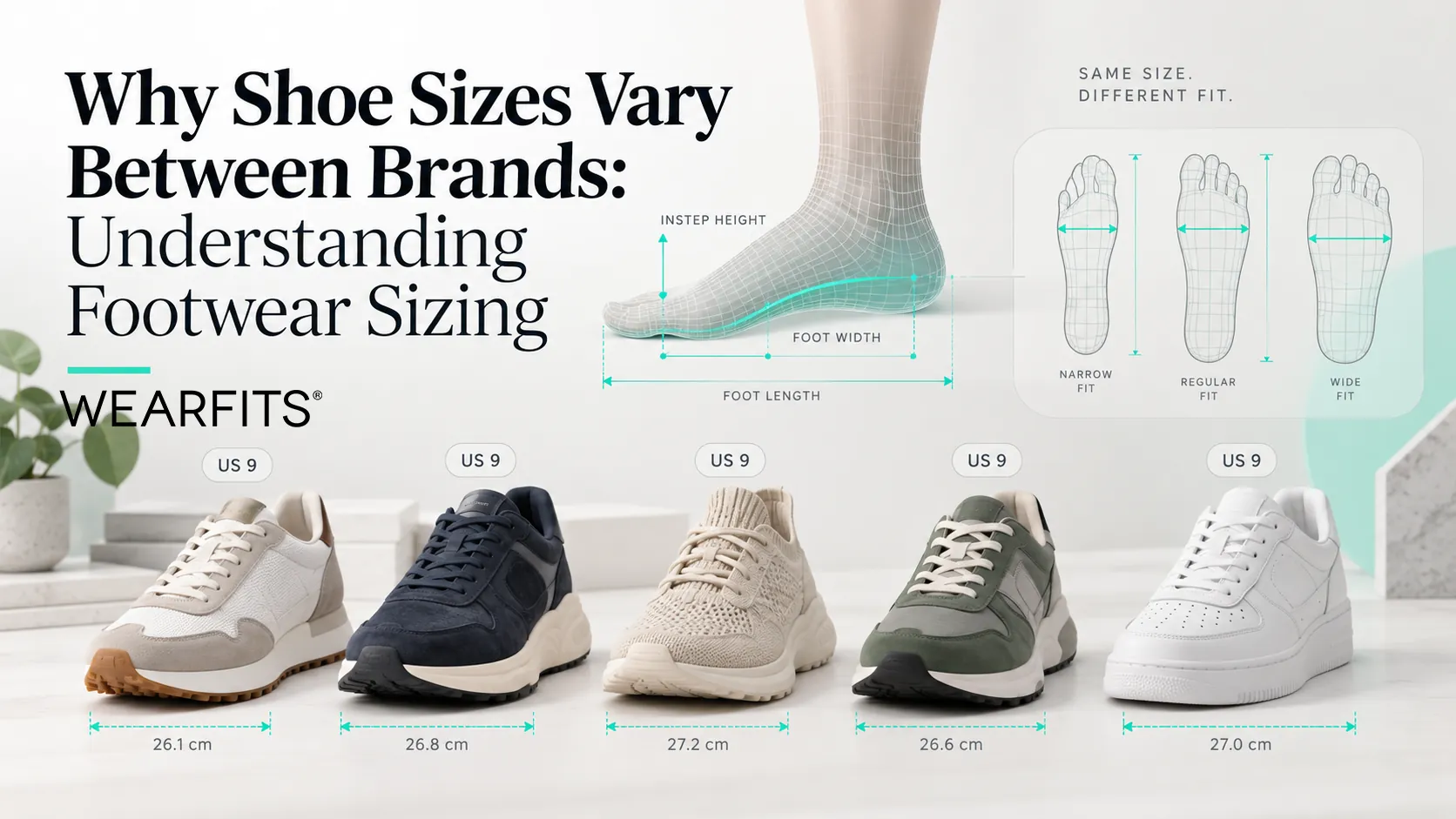
A size EU 42 or US 9 can feel comfortable in one brand, too narrow in another and surprisingly loose in a third. One model may put pressure on the toes, while another slips at the heel. A different shoe could have enough length but still feel uncomfortable around the instep.
This does not necessarily mean that your feet have changed. The real problem is that shoe sizing is far less standardized than most shoppers assume.
Traditional footwear sizing tries to describe a complex, three-dimensional object — the human foot — with a single number. Brands also use different shoe lasts, construction methods, materials and design philosophies. As a result, the size printed on a box provides only part of the information required to determine whether a shoe will actually fit.
Understanding why shoe sizes vary between brands is becoming particularly important in e-commerce, where customers cannot physically try footwear on before buying it. Modern technologies such as biometric foot measurement, artificial intelligence and augmented reality are therefore being developed to make online shoe sizing more personal and accurate.
Why Foot Length Alone Cannot Determine the Perfect Shoe Fit
Most sizing systems start with foot length. It is an important measurement, but it does not describe the entire shape of the foot.
The human foot and ankle contain 26 bones, 33 joints and more than 100 muscles, tendons and ligaments. Feet also differ considerably in width, volume, arch shape, heel dimensions and toe structure.
For footwear fit, several measurements can matter:
-
Foot length — the distance from the heel to the longest toe.
-
Ball girth — the circumference around the widest part of the forefoot.
-
Foot width — particularly around the metatarsal area.
-
Instep height and volume — which influence how tightly the upper sits across the middle of the foot.
-
Heel width — an important factor in preventing unwanted heel movement.
-
Arch position and height — which affect where the foot bends inside the shoe.
-
Toe shape — feet may have tapered, rounded or relatively square toe profiles.
This explains why two people whose feet are both 265 mm long may need completely different footwear.
One person may have a wide forefoot and low arch, while another has a narrow heel and high instep. Although conventional size charts could recommend the same size for both people, the actual fit may be dramatically different.
That is one of the fundamental limitations of traditional shoe sizing: feet are three-dimensional, while conventional sizes are largely based on one-dimensional measurements.
What Is a Shoe Last — and Why Does It Affect Sizing?
Another major reason shoe sizes differ between brands is the shoe last.
A shoe last is the three-dimensional form around which footwear is designed and manufactured. Historically, lasts were commonly made from wood. Modern production frequently uses plastic, metal or digitally developed forms.
The geometry of a last influences many characteristics of the finished shoe, including:
-
internal length,
-
forefoot width,
-
toe-box shape and height,
-
heel cup dimensions,
-
instep volume,
-
arch contour,
-
and the overall silhouette.
Most importantly, there is no single universal shoe last used by every footwear company.
Each manufacturer develops its own lasts according to its customer profile, product category, aesthetic requirements and intended use. An athletic performance shoe may be designed around a relatively close-fitting last to improve foot lockdown. A casual sneaker may have a more generous forefoot, while a fashion shoe may prioritize a slim silhouette.
Consequently, two shoes labelled EU 42 can have noticeably different internal dimensions.
Shoe Grading Creates Additional Differences
Once a footwear company has developed a base size, that design must be scaled into other sizes. This process is known as grading.
Increasing the shoe size does not simply add the same amount of space in every direction. Manufacturers use specific grading rules to determine how length, width and volume change between sizes.
The original geometry of the last therefore continues to influence the entire size range. If the base last is relatively narrow, moving to a larger numerical size may increase length without providing the ideal amount of additional width for every customer.
This is one reason shoppers sometimes buy a larger size simply to gain more room across the forefoot.
Research Shows How Difficult Conventional Shoe Sizing Can Be
Recent research from RMIT University illustrates the scale of the problem.
Researchers studied 107 adult women and compared their foot measurements with conventional US and European shoe sizing.
The study found that 72% of participants using US sizing and 65% using European sizing wore a shoe size that differed from the size indicated by their measured foot length.
Researchers also found that 59% under US sizing and 52% under EU sizing wore a larger size than their foot length alone would suggest.
One possible explanation is width.
A person whose correct length corresponds to one particular size may find that size too narrow. Choosing the next size up creates additional internal space, but it also changes other aspects of fit, including heel position and where the foot flexes inside the shoe.
The RMIT research provides another particularly important insight: among women assigned the same shoe size according to foot length, ball-girth measurements differed by as much as 40 mm under the US sizing system.
This demonstrates why relying on length alone can be problematic. People with almost identical foot lengths can still have very different three-dimensional foot shapes.
The study also highlights broader questions about whether established sizing systems adequately represent the diversity of modern consumers.
Why Inconsistent Shoe Sizing Is a Major E-Commerce Problem
In a physical footwear store, customers can try several sizes before deciding which pair feels best.
Online, that process becomes much more complicated.
A customer sees a size selector containing numbers such as 40, 41, 42 and 43, but often has little information about the actual internal geometry of the shoe.
Previous experience may not solve the problem either. Knowing that someone usually wears EU 42 does not guarantee that EU 42 will fit correctly in another brand — or even in another model produced by the same brand.
This uncertainty can lead to bracketing.
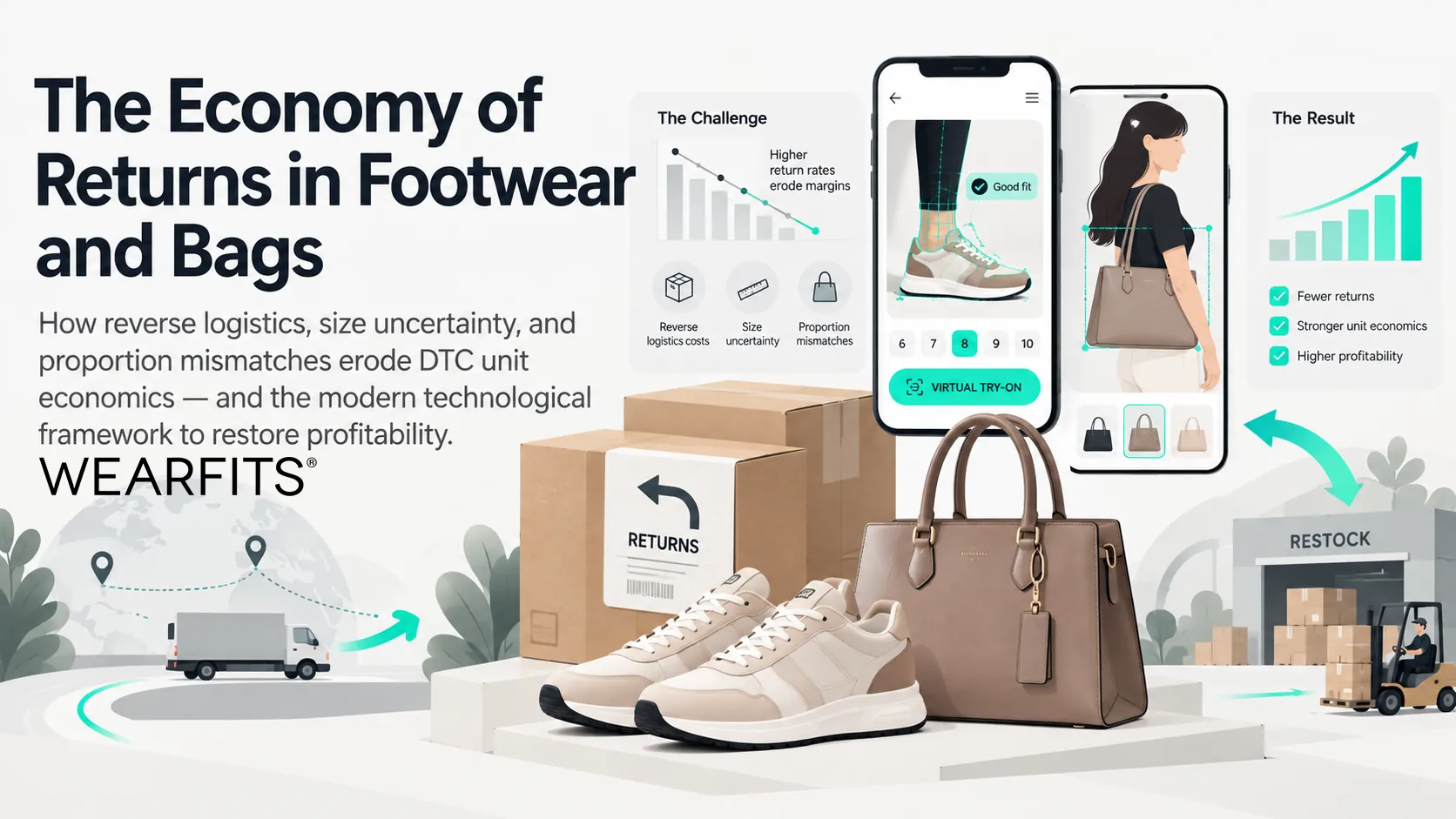
Bracketing occurs when shoppers deliberately order the same product in several sizes, planning to keep one and return the others. For example, a customer who is unsure whether to select 41, 42 or 43 may purchase all three.
From the shopper's perspective, this reduces the risk of choosing incorrectly. For the retailer, however, it creates significant costs.
Multiple-size ordering can increase:
-
outbound shipping expenses,
-
reverse-logistics costs,
-
warehouse processing,
-
inspection and repackaging work,
-
inventory unavailable while products are in transit,
-
and the risk that returned merchandise can no longer be sold at full price.
Reducing uncertainty before checkout can therefore benefit both customers and footwear businesses.
Why Traditional Shoe Size Charts Are Not Always Enough
Retailers have introduced numerous tools intended to help shoppers choose a size, including conversion tables, questionnaires and printable measuring guides.
These methods can be useful, but they also have limitations.
International conversion tables
A conversion chart attempts to translate sizes between EU, US and UK systems. The problem is that a mathematical conversion does not account for differences in shoe lasts or individual foot shape.
“What size do you wear in another brand?” tools
Some fit recommenders ask customers which size they already wear in a familiar footwear brand.
That approach assumes that the existing shoe is already a good anatomical fit. It also uses one product as a reference for another product that may have a completely different last.
Printable foot measuring guides
Paper templates may provide useful measurements, but they require the shopper to print a correctly scaled document, position the foot accurately and follow the instructions carefully.
Every additional step introduces friction into the buying process.
More importantly, many conventional solutions still focus mainly on length rather than capturing the complete geometry of the foot.
Combining AI Foot Measurement With Augmented Reality
A different approach is to replace generalized assumptions with information about the shopper's actual foot.
WEARFITS combines AR virtual shoe try-on with AI-powered sizing and fit guidance. Instead of treating visualization and sizing as two unrelated features, the system is designed to incorporate both into the same online shopping journey.
A shopper can open the experience directly from a footwear product page and view a digital representation of the selected shoe on their feet through the phone camera.
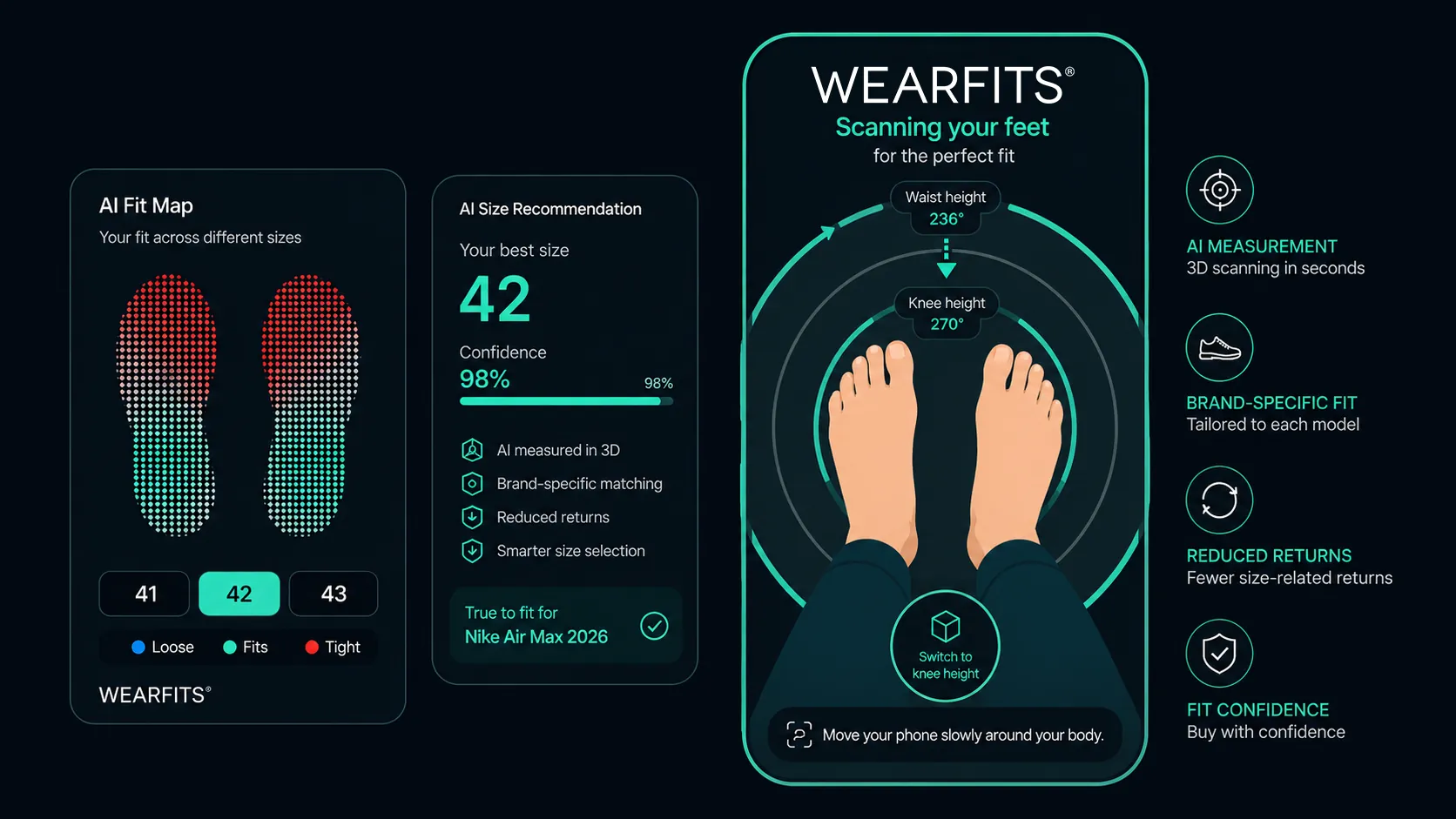
The Size & Fit functionality can then use a phone-camera scan to analyze foot dimensions and provide sizing guidance.
According to WEARFITS, its technology uses biometric information such as foot length, width and volume to determine how a specific shoe size is expected to fit.
How WEARFITS Virtual Try-On & Size & Fit Works
The experience is designed to reduce the number of steps between viewing a product and choosing a suitable size.
1. Launch virtual shoe try-on
The customer opens the feature from the product page. On compatible mobile devices, the experience runs through the browser without requiring a separate consumer app.
2. View the shoe in augmented reality
The selected footwear model is displayed digitally on the shopper's feet, allowing them to assess the appearance of the product before purchase.
3. Measure the foot
The Size & Fit feature uses a guided camera-based process to capture relevant foot geometry.
WEARFITS reports measurement accuracy of approximately 99%, within ±2 mm, for its scanning technology. Because this is a performance figure published by WEARFITS, it should be understood as a company-reported specification rather than the result of the RMIT sizing study discussed earlier.
4. Display fit information visually
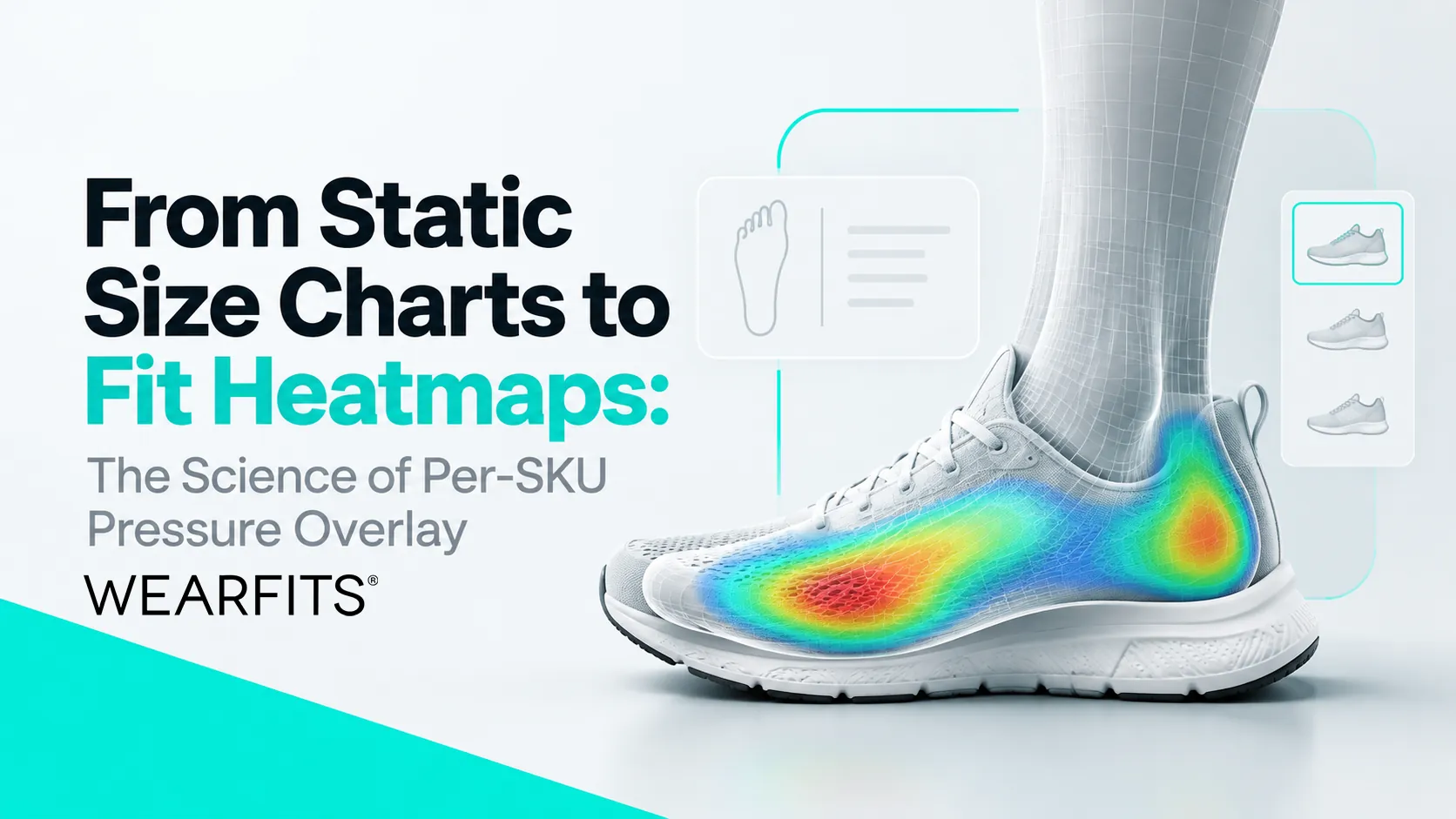
Instead of showing customers only raw measurements, the system can present a fit heatmap over the virtual shoe.
Areas represented as comfortable help communicate where sufficient space is available, while other zones can indicate potential tightness.
5. Compare nearby sizes
Customers can compare different shoe sizes and see how the predicted fit changes. This is particularly useful when deciding between two neighboring sizes.
6. Continue to checkout with a personalized recommendation
The objective is to give shoppers more information before they click “Add to Cart,” reducing their dependence on guesswork or generic size charts.
What AI Sizing and AR Try-On Could Mean for Footwear Brands
For footwear retailers, sizing technology is not only a customer-experience feature. It can also address commercial problems linked to uncertainty, returns and abandoned purchases.
WEARFITS reports that implementations combining virtual try-on and sizing can produce approximately a 20% reduction in returns and around a 30% increase in conversion. These figures are claims published by WEARFITS and should be evaluated in the context of the individual retailer, implementation and customer base rather than treated as universal industry benchmarks.
The potential business logic is straightforward: if customers receive better information about both appearance and fit before purchasing, fewer people may need to order multiple sizes or return footwear because the selected size does not work for them.
Fewer returns can also reduce packaging use, transportation requirements and reverse-logistics activity.
The Future of Shoe Sizing Is Personalized
Shoe sizing differs between brands because there is much more to fit than the number printed on the label.
Human feet vary in length, width, girth, arch structure, heel shape and overall volume. At the same time, footwear brands design products using different lasts, materials, grading systems and aesthetic requirements.
That means an EU 42 from one brand does not necessarily have the same internal geometry as an EU 42 from another.
Traditional sizing systems are unlikely to eliminate these differences completely. A more promising approach is to give shoppers information that reflects the geometry of their own feet and the characteristics of the specific shoe they want to purchase.
AI-powered foot measurement and augmented reality can move online footwear shopping away from generalized size assumptions and toward personalized fit recommendations.
For consumers, that can mean greater confidence when buying shoes online. For footwear brands, it offers an opportunity to reduce sizing uncertainty, improve the digital shopping experience and potentially decrease avoidable returns.
Want to See AI Sizing and AR Virtual Try-On in Action?
WEARFITS combines virtual shoe visualization with AI-based size and fit guidance directly within the online shopping experience.
Footwear brands interested in reducing sizing uncertainty and helping customers make more informed purchasing decisions can explore the WEARFITS Virtual Try-On and Size & Fit solutions or request a product demonstration.