How to Build a Winning Fashion E-Commerce Content Strategy With Virtual Try-On Technology


Fashion e-commerce has undergone a significant transformation. What once relied primarily on product photography, written descriptions, and traditional advertising has developed into a digital environment where shoppers expect more personalized, informative, and interactive experiences. For fashion brands, attracting visitors to an online store is only part of the challenge. The greater difficulty lies in helping those visitors choose products confidently enough to complete a purchase.
Unlike shopping in a physical store, online customers cannot immediately touch a garment, examine its proportions against their bodies, or try on different products before making a decision. Even when an online retailer provides professional photography, detailed sizing charts, product videos, and comprehensive descriptions, shoppers may still struggle to determine whether an item will meet their expectations.
A jacket can look attractive on a professional model but appear completely different when worn by someone with another body shape. A handbag that seems compact in a studio photograph may be significantly larger than a customer anticipated. A pair of sneakers can look appealing in isolation without giving the shopper a clear understanding of how its proportions will complement their own feet or everyday outfits.
These limitations create uncertainty throughout the online shopping journey.
Customers may postpone purchases because they cannot visualize themselves wearing a particular product. Others may order several sizes or variations with the intention of returning whichever items do not meet their expectations. Both behaviors create challenges for fashion retailers, including missed sales opportunities, increased operational costs, and additional pressure on profit margins.
Traditional content marketing attempts to address these problems by providing more information.
Brands invest in better photographs, styling guides, product demonstrations, size recommendations, and customer reviews. These assets help shoppers evaluate products, but they cannot always answer the most personal question in fashion shopping:
How will this product look on me?
Virtual try-on technology introduces another way to address that uncertainty.
By combining augmented reality, artificial intelligence, computer vision, and digital product visualization, virtual try-on allows consumers to explore how clothing, footwear, and accessories might appear on their bodies before purchasing.
This article explores the relationship between content strategy and virtual try-on technology, including their roles in search engine optimization, customer acquisition, product discovery, conversion optimization, and return reduction.
It also examines the technologies behind virtual try-on for clothing, footwear, and accessories, along with practical considerations for implementing interactive shopping experiences across an entire fashion e-commerce catalog.
1. Content Strategy vs. Virtual Try-On: Understanding the Fundamental Difference
The distinction between content strategy and virtual try-on begins with their primary functions. A content strategy determines how a business creates, organizes, distributes, and measures information intended to reach its target audience.
Virtual try-on, meanwhile, is an interactive product visualization technology designed to help consumers understand how an item may look when worn or used.
Although these functions differ, they increasingly overlap within modern e-commerce marketing.
What Is a Fashion E-Commerce Content Strategy?
A fashion e-commerce content strategy is a coordinated approach to producing and distributing content that supports business objectives throughout the customer journey. Its purpose extends beyond publishing blog articles or creating social media posts. An effective content strategy connects brand messaging, product information, search visibility, customer education, and conversion-focused communication. For example, a footwear retailer might develop content around running shoe selection, footwear trends, sizing information, outfit inspiration, and product comparisons. Some of this material attracts people who are beginning their research. Other content helps customers compare specific products or resolve questions before purchasing.
A comprehensive fashion content strategy typically involves several interconnected areas:
- Search engine optimization and category-specific keyword targeting.
- Educational articles, styling advice, and buying guides.
- Product descriptions, photography, and demonstration videos.
- Social media campaigns and user-generated content.
- Email marketing and personalized product recommendations.
- Customer reviews, testimonials, and post-purchase communication.
- Product page optimization and conversion-focused messaging.
Each content format contributes to a different stage of the buying process.
A blog article about choosing the right handbag size may generate organic search traffic. A product comparison can help readers narrow their choices. A detailed product page can explain the features of the selected item. However, even a well-developed content strategy may leave certain questions unresolved. A customer can read about a handbag's dimensions without immediately understanding how it will look when carried. A shopper can compare several sneaker designs without knowing how their proportions will appear on their own feet.
These are situations where interactive visualization can supplement traditional content.
What Is Virtual Try-On Technology?
Virtual try-on technology allows online shoppers to preview products on themselves or on a personalized digital representation before making a purchase. Depending on the product category and implementation, the experience may use augmented reality, generative artificial intelligence, computer vision, body tracking, or three-dimensional product models.
For footwear, an augmented reality experience can position a digital shoe model over a customer's feet using a smartphone camera. For clothing, an AI-based virtual try-on system may generate an image showing how a selected garment could appear on a photograph of the shopper or a personalized avatar. For handbags and accessories, virtual visualization can help users explore the item's size, appearance, positioning, and styling possibilities.
These experiences give shoppers an additional source of product information.
Instead of viewing a product exclusively as an isolated object, customers can evaluate it in relation to their own appearance. However, virtual visualization and physical fit assessment are not necessarily the same. A system that produces a realistic clothing image may not accurately predict garment tightness, comfort, or size. Similarly, an AR footwear experience may show how a sneaker looks without measuring whether the physical shoe will fit correctly. The distinction matters because shoppers need accurate expectations about what each experience can provide.
How Content Strategy and Virtual Try-On Compare
|
Comparison Area |
Traditional Content Strategy |
Virtual Try-On Technology |
|
Primary function |
Attract, inform, and engage audiences |
Provide personalized product visualization |
|
Typical formats |
Articles, images, videos, guides, and product descriptions |
AR experiences, AI-generated previews, and interactive 3D models |
|
Customer interaction |
Reading, watching, browsing, and comparing |
Testing product appearance through interactive visualization |
|
Personalization |
Recommendations and audience-specific messaging |
Individualized product previews |
|
Search engine contribution |
Indexable content, keyword relevance, and internal linking |
Supporting content, interactive product pages, and visual assets |
|
Conversion support |
Product education, trust, and purchase guidance |
Reducing uncertainty about product appearance |
|
Return reduction |
Accurate descriptions, sizing information, and customer education |
Helping align visual expectations with the product |
|
Main operational requirements |
Editorial planning, production, SEO, and content distribution |
Product asset creation, software integration, and visualization accuracy |
Traditional content and virtual try-on should therefore not be treated as interchangeable investments. A virtual fitting room cannot replace every function of a content marketing program. It does not automatically create search demand, build a recognizable brand voice, or answer every question about materials, care instructions, delivery, and product quality. Likewise, written and visual content cannot always replicate the experience of viewing a product on an individual's body. The strongest integration occurs when a brand uses content to attract and educate potential customers, then introduces virtual try-on at the point where personalized visualization can help them make a more informed purchase decision.
2. Why Traditional Fashion Content Does Not Always Resolve Purchase Uncertainty
Fashion is inherently visual, but appearance is only one part of a purchase decision. Customers also consider comfort, proportions, color, size, styling versatility, and how a product relates to their existing wardrobe. Traditional fashion e-commerce content communicates many of these characteristics through photographs, videos, descriptions, and size guides. Nevertheless, these resources have practical limitations.
Product Photography Cannot Represent Every Shopper
Professional product photography is essential to online fashion retail. High-quality images help customers examine materials, identify design details, compare colors, and develop an initial impression of a product. However, photographs typically present products using a limited selection of models, poses, lighting conditions, and styling combinations. A garment displayed on a tall model may create a different impression when viewed by someone with a shorter frame. Likewise, a handbag photographed without a person nearby may provide little visual context for its actual scale. Customers must mentally translate the presented images into their own circumstances. This process becomes more difficult when the shopper's physical characteristics differ substantially from those shown in the product photography. Additional photographs can help, but creating enough images to represent every possible customer is neither practical nor economically sustainable for most retailers. Virtual try-on introduces a personalized reference point without requiring a separate professional photoshoot for every body type or styling combination.
Size Charts Provide Measurements but Limited Visual Context
Size charts are another important component of fashion e-commerce content. They allow customers to compare product measurements with their own dimensions and choose among available sizes. However, interpreting those measurements requires additional effort. A customer may know that a particular bag is 35 centimeters wide but still struggle to imagine whether it will look oversized when carried. Similarly, a shopper may understand a garment's chest measurement without knowing how the fabric will drape around their body. Sizing information is especially challenging when brands use different measurement conventions or customers are unfamiliar with garment construction. A virtual preview can make some visual characteristics easier to understand. For example, an interactive handbag model may help shoppers evaluate proportions, while an AI clothing preview may demonstrate how a garment's silhouette could complement a particular outfit. These features are most informative when combined with accurate product dimensions and sizing guidance.
Fashion Videos Provide More Information but Remain Mostly Passive
Video content adds movement and context to product presentation. A clothing demonstration can show how fabric behaves while a model walks. A footwear video may reveal the shape of a sneaker from multiple angles. A handbag demonstration can illustrate different carrying methods. These assets are valuable because they communicate information that static photographs may not capture. However, video typically presents a predetermined experience. Customers watch the model or presenter rather than directly interacting with the product. Virtual try-on introduces another level of engagement by allowing shoppers to explore selected products in relation to their own appearance. Users may test different colors, switch between styles, reposition an accessory, or compare products without leaving the product page. This makes the experience more personally relevant than simply observing a product demonstration.
The Gap Between Product Presentation and Personal Expectations
A recurring challenge in online fashion shopping is the difference between how an item appears in marketing content and how it looks or feels after delivery. A customer might purchase a coat because its silhouette appears flattering in professional photography, only to discover that the garment looks different on their body. Another shopper might order a handbag expecting a compact everyday accessory and receive an item that feels too large for their preferred carrying style. These situations are not necessarily the result of misleading product information. They can arise because customers lack an effective way to interpret generic product content in relation to their individual circumstances. Virtual try-on addresses part of this problem by introducing personalized visualization before checkout. However, retailers must ensure that virtual previews accurately represent the product's appearance and do not create unrealistic expectations. The purpose of virtual try-on should be to improve product understanding rather than present an artificially enhanced version of the item.
3. How Virtual Try-On Changes the Fashion E-Commerce Marketing Funnel
The customer journey in fashion e-commerce involves several stages, from discovering a brand to deciding whether to purchase and eventually evaluating the delivered product. Traditional content marketing supports each stage through different communication formats. Virtual try-on can introduce additional opportunities for interaction throughout that journey. Its contribution is not limited to the final purchase decision. When integrated into a broader content strategy, interactive product visualization can support awareness, discovery, consideration, conversion, and post-purchase satisfaction.
Awareness: Turning Product Experiences Into Shareable Content
At the awareness stage, potential customers may have little knowledge of a particular brand or product. Fashion retailers commonly use paid advertisements, organic social media, search engine optimization, influencer collaborations, and user-generated content to reach new audiences. Virtual try-on can provide another source of shareable material. For example, a shopper experimenting with a new sneaker design may capture a screenshot showing how the shoes look on their feet. They might share the image with friends to ask for opinions about the color or style. A customer considering a handbag may send different virtual previews to a group chat before deciding which design to purchase. These interactions create opportunities for product discovery beyond the retailer's original website. A shared screenshot can introduce another person to the brand, while a social media post may encourage viewers to explore the same interactive experience. This process can connect product consideration with organic word-of-mouth marketing. However, not every virtual try-on interaction results in public sharing. Some customers may prefer to keep their shopping experiences private, particularly when the technology involves personal photographs or camera access. Brands should therefore make sharing optional and avoid designing experiences that pressure customers to distribute personal images.
User-Generated Content as Part of the Marketing Strategy
User-generated content already plays an important role in fashion marketing. Customers frequently share outfit photographs, styling recommendations, product reviews, and shopping experiences with their online communities. Virtual try-on adds another potential format. A customer might publish a comparison of several virtual outfit combinations, create a short video showing different handbag styles, or share an AR sneaker preview. These assets can complement conventional product photography by demonstrating how people interact with products during the decision-making process. Brands may also invite customers to participate in optional styling challenges or share their preferred virtual looks. However, user-generated content should not automatically be treated as material that a retailer can reuse in advertisements. Businesses need appropriate permission before republishing customer-created images, particularly when the content includes identifiable people. A well-designed virtual try-on content strategy should include clear consent processes, privacy information, and policies for handling user-generated visuals.
Discovery: Encouraging Exploration on Product Listing Pages
Product listing pages help customers navigate a retailer's catalog. These pages usually display product thumbnails, names, prices, color options, and other essential details. Their primary purpose is to help shoppers identify relevant products before opening individual product detail pages. Virtual try-on can become an additional discovery feature. A visible try-on indicator communicates that a product offers an interactive preview. This may encourage shoppers who are uncertain about a particular style to explore it further. For example, someone browsing a footwear category might notice that several sneakers support AR visualization. The shopper could select one of those products to examine how its design appears on their feet. Similarly, a customer browsing handbags may prioritize products that provide personalized scale visualization. The effectiveness of these features depends on how clearly they are presented. A try-on button should be recognizable, accurately labeled, and positioned without distracting from essential product information. Retailers may also test whether virtual try-on indicators are more useful on product cards, within quick-view interfaces, or directly on product pages. The objective is to make interactive visualization available when it contributes to the shopper's decision rather than introducing unnecessary interface complexity.
Consideration: Helping Shoppers Evaluate Products Personally
The consideration stage is where virtual try-on can provide particularly relevant information. At this point, customers have identified one or more products but may still be comparing styles, colors, proportions, or other characteristics. Traditional content helps by presenting specifications, reviews, photographs, and sizing guidance. Virtual try-on allows the shopper to explore some of those characteristics in a personalized context. For example, a customer considering a pair of boots may use an AR preview to compare different colors with their existing outfit. A handbag shopper might evaluate whether a crossbody design looks proportionate when positioned against their body. Someone shopping for clothing may use an AI-generated preview to explore how a garment could complement their overall appearance. These interactions can help narrow the customer's choices. Instead of switching repeatedly between product photographs and attempting to imagine different combinations, the shopper can test selected options within the same environment. This may make the decision-making process more convenient, especially for visually distinctive products.
Conversion: Reducing Uncertainty Before Checkout
Purchase decisions frequently depend on whether customers believe that a product will meet their expectations. Even when a shopper likes an item, uncertainty about its appearance can delay the purchase. Virtual try-on can address some of that uncertainty by presenting additional visual information. For instance, a shopper who is unsure about the appearance of a particular sneaker color may gain confidence after seeing an AR preview. A customer comparing two handbag sizes may decide which better matches their preferred proportions. An apparel shopper may use a virtual preview to understand how different colors or silhouettes could complement their appearance. These experiences can contribute to purchase confidence, but a virtual preview should not be presented as proof of physical fit. For clothing and footwear, accurate size information remains essential. The effectiveness of virtual try-on should also be measured rather than assumed. Retailers can compare conversion behavior among shoppers who interact with the feature, while accounting for the possibility that customers with stronger initial purchase intent are more likely to use it. Controlled experiments provide a more reliable basis for determining whether the feature contributes to additional purchases.
Post-Purchase Satisfaction and Return Prevention
The customer journey continues after checkout. The product must still meet the shopper's expectations when it arrives. Returns may occur because of incorrect sizing, unsuitable fit, inaccurate product representation, quality concerns, or a change in customer preference. Virtual try-on can potentially reduce some appearance-related mismatches by providing additional information before purchase. A customer who has already evaluated the scale of a handbag may be less surprised by its dimensions. Someone who has explored several sneaker colorways may be better prepared for the appearance of the selected version. Nevertheless, virtual try-on cannot eliminate all reasons for product returns. A realistic preview cannot guarantee that a shoe will feel comfortable during prolonged use or that a garment's material will meet the shopper's tactile expectations. Return reduction therefore depends on combining interactive visualization with accurate descriptions, reliable size guidance, transparent photography, and appropriate customer support.
4. Content Strategy vs. Virtual Try-On for SEO: How Interactive Shopping Supports Organic Visibility
Search engine optimization remains a fundamental component of fashion e-commerce marketing. Organic search allows retailers to reach potential customers who are researching styles, comparing products, seeking sizing information, or preparing to make a purchase. Traditional SEO strategies focus on elements such as keyword relevance, helpful content, site structure, technical performance, and product information. Virtual try-on introduces additional opportunities to create relevant shopping experiences and supporting content.
However, adding an interactive feature does not automatically improve search engine rankings. The relationship between virtual try-on and SEO depends on how the technology is implemented, how its content is presented to search engines, and whether it improves the usefulness of the page for visitors.
Targeting Search Intent With Virtual Try-On Keywords
As interactive shopping technologies become more familiar, some consumers search specifically for products they can preview digitally.
These searches may include phrases such as:
- Virtual try-on shoes online.
- AI virtual try-on for clothes.
- Virtual fitting room for online shopping.
- Try on handbags virtually.
- Augmented reality sneaker shopping.
- Virtual try-on for fashion accessories.
- Online clothing try-on technology.
Fashion retailers can incorporate relevant search terms into product pages, category descriptions, educational resources, and dedicated virtual try-on landing pages. However, keyword targeting should reflect the actual functionality available. A retailer offering visual previews should not claim to provide precise size measurement unless its technology genuinely supports that capability. For example, a page titled "Virtual Try-On Shoes Online" should clearly explain what the shopper can do. Does the experience display shoes on the customer's feet using augmented reality? Does it provide personalized size recommendations? Can the shopper compare multiple designs? Answering these questions helps match the content to the user's search intent. It also reduces the likelihood of visitors arriving with expectations that the technology cannot fulfill.
Creating Search-Optimized Virtual Try-On Landing Pages
A dedicated landing page can introduce customers to the retailer's interactive shopping experience. Rather than merely stating that virtual try-on is available, the page should explain how the feature works and which products support it. For a footwear retailer, the page might describe how customers can use their smartphone camera to preview selected sneakers. A clothing brand could explain whether its AI try-on system uses uploaded photographs, selected avatars, or another visualization method. A handbag retailer might provide information about available carrying styles and the extent to which its digital previews represent actual product dimensions. Useful landing pages can also include demonstrations, frequently asked questions, compatible devices, privacy information, and links to relevant product categories. This approach gives search engines indexable information about the experience while helping potential customers understand its purpose. The page should also provide clear navigation toward products that support virtual try-on. A visitor who discovers the technology through organic search should be able to move easily from learning about the feature to exploring the available catalog.
Product Page SEO and Interactive Visualization
Product detail pages are important destinations for transactional search queries. A well-optimized product page typically contains a descriptive title, original product copy, specifications, photographs, pricing information, availability, and relevant structured data. Virtual try-on can supplement these assets but should not replace them. Search engines generally need accessible text and structured information to understand product details reliably. An interactive experience rendered inside a visual interface may not communicate all its information through ordinary indexing. Retailers should therefore preserve informative product descriptions and make essential details available outside the virtual experience. For example, a handbag product page should still describe the dimensions, material, compartments, carrying options, and closure mechanism. The interactive preview can then provide additional visual context. Similarly, a footwear product page should retain sizing information, material specifications, construction details, and customer reviews. The AR component becomes part of a broader product information experience rather than the sole source of essential information.
Does Virtual Try-On Improve Dwell Time and Bounce Rate?
Interactive features can encourage customers to spend more time exploring a page. A shopper may use virtual try-on to test different products, compare colors, or evaluate styling possibilities. This can increase the amount of time spent interacting with the product experience. However, longer sessions do not automatically mean that a page will rank higher in organic search. Search engines do not provide a universal ranking formula that rewards every increase in session duration or every decrease in analytics-defined bounce rate. A shopper can spend a long time on a confusing page without having a positive experience. Conversely, someone may quickly find the information they need and leave the page satisfied. For this reason, fashion retailers should evaluate engagement metrics as indicators of customer behavior rather than guaranteed ranking signals. Useful measurements include virtual try-on activation, completion rates, product comparisons, add-to-cart behavior, and subsequent purchase activity. These metrics can help determine whether interactive content supports meaningful shopping decisions.
Visual Search and Three-Dimensional Product Assets
Visual search allows consumers to discover products using images rather than relying exclusively on written queries. For fashion brands, this creates opportunities to make product imagery more useful across search-driven shopping experiences. Accurate photographs, descriptive image filenames, relevant alternative text, and consistent product information help establish a strong visual content foundation. Three-dimensional product assets may also support interactive presentations, depending on the retailer's platform and the capabilities of the destination service. However, creating a 3D model does not guarantee that search engines will index it or display it in visual search results. Brands should follow the technical requirements of the specific search or shopping platform. Where supported, relevant product markup, accessible images, and properly configured 3D resources can make interactive product information easier to interpret. The wider objective is to create digital assets that can support multiple shopping experiences without compromising discoverability.
Structured Data for Interactive Fashion Product Pages
Structured data helps search engines understand information about web pages and their contents. Fashion retailers commonly use relevant product-related structured data to describe items, offers, availability, reviews, and other supported properties. When implementing virtual try-on, brands should ensure that their markup accurately represents the content visible on the page and follows the search platform's current documentation. There is no need to invent a special virtual try-on schema type or assume that adding AR-related labels will create additional search features. Product structured data and any supported 3D or interactive-commerce markup should be implemented according to the applicable specifications. Search-friendly implementation also requires maintaining crawlable product information and reliable page performance. Virtual try-on should strengthen the customer experience without making the underlying product page difficult for search engines or visitors to access.
5. Generative Engine Optimization and Virtual Try-On in AI-Powered Product Discovery
Search behavior is expanding beyond traditional lists of website results. Consumers increasingly encounter conversational search interfaces, AI-generated summaries, product comparison tools, and recommendation experiences that help organize information from multiple sources. This development has introduced growing interest in generative engine optimization, commonly referred to as GEO. In fashion e-commerce, GEO focuses on making product information understandable, accurate, and useful in environments where AI systems may summarize or reference available content. Virtual try-on can contribute to this broader information ecosystem, but its effectiveness depends on the quality of the supporting content.
Why Clear Product Information Still Matters
An AI-powered shopping assistant may help a consumer compare handbag dimensions, identify footwear materials, or understand the differences between clothing styles. To provide useful answers, the system needs reliable information about the products. A virtual try-on interface alone does not necessarily communicate that information. Retailers should provide clear descriptions of product dimensions, available sizes, materials, colors, care instructions, and relevant design characteristics. These details should remain accessible in ordinary page content wherever possible. A shopper asking an AI assistant whether a particular handbag is suitable for everyday commuting may need information about its capacity, compartments, dimensions, and carrying options. Virtual visualization can help the shopper understand the bag's appearance, but it does not replace factual specifications.
Describing Virtual Try-On Capabilities Accurately
Fashion retailers can create informative content explaining how their interactive shopping technology works. This may include questions about device compatibility, photo requirements, available products, visualization methods, and privacy practices. For example, a footwear retailer could explain that its AR feature allows customers to preview selected shoes through a compatible smartphone camera. A clothing brand might explain that its AI try-on experience creates a visual representation using a user-provided photograph. Clear descriptions allow customers and information retrieval systems to distinguish among different technologies. They also help prevent confusion between visual try-on, personalized sizing, and physical fit prediction.
Developing Helpful Content Around Interactive Shopping
Virtual try-on provides opportunities to develop educational resources that address specific customer questions. A fashion retailer might publish guidance on using a virtual fitting room, comparing garment silhouettes, interpreting handbag dimensions, or understanding the limitations of AI-generated clothing previews. Such content can support traditional search visibility while making interactive shopping easier to understand. However, GEO should not be approached as a way to guarantee inclusion in AI-generated answers. Different systems use different retrieval methods, content sources, and presentation formats. Brands should prioritize factual accuracy, accessible product information, and useful explanations rather than relying on unverified optimization techniques.
6. Virtual Try-On for Footwear: Combining Augmented Reality With Personalized Sizing
Footwear presents two distinct challenges for online shoppers. The first concerns appearance. Customers want to know whether a pair of shoes matches their personal style, complements their outfits, and looks proportionate when worn. The second concerns physical fit. Shoes must accommodate the shape and dimensions of the foot while providing appropriate comfort and support. These challenges are related, but they require different forms of technology.
How AR Shoe Try-On Works
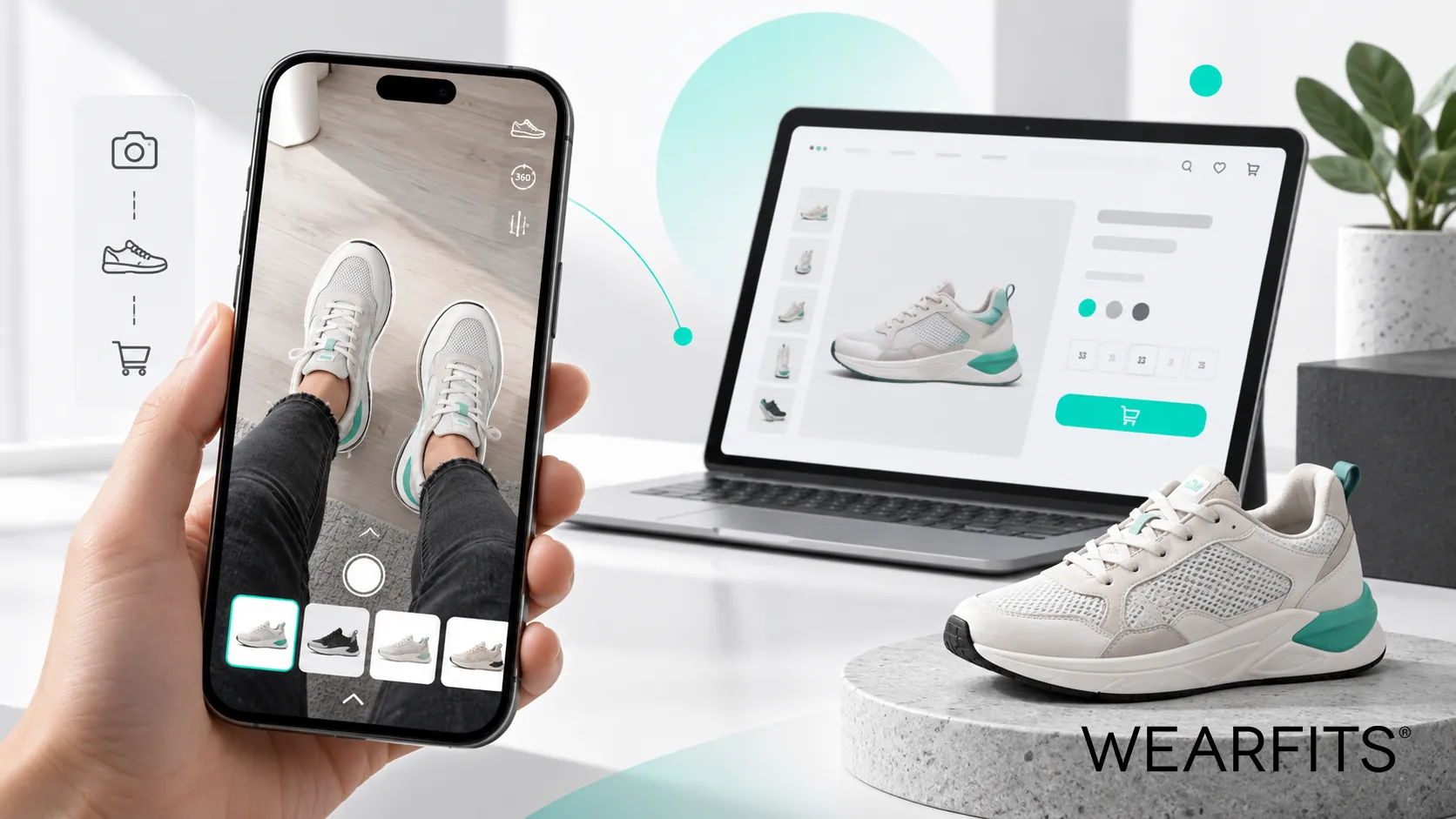
Augmented reality footwear try-on uses a camera-based experience to display a digital shoe model over a shopper's feet. The system generally relies on computer vision to detect the position, orientation, and movement of the feet within the camera view. A corresponding 3D model is then positioned to create the appearance that the shopper is wearing the selected footwear. As the person moves, the digital shoe representation can adjust its position and orientation. This makes it possible to evaluate a product from different angles without physically handling it. For example, a shopper considering a pair of white sneakers can preview how the shoes look with their current outfit. They may then switch to another colorway or select a different model. Rather than comparing isolated catalog photographs, the customer can examine the products in a personalized visual context. The quality of this experience depends on tracking accuracy, model fidelity, lighting, rendering, and device capabilities. Poorly aligned models or unrealistic proportions can undermine the usefulness of the preview.
Why Realistic Foot Tracking Matters
Footwear must appear correctly positioned to provide a convincing augmented reality experience. If a digital shoe moves independently of the foot or appears to float above the ground, the visualization becomes distracting. Realistic tracking requires the system to account for changes in foot position, camera angle, and movement. Occlusion handling is also important. When appropriate, the rendering system should account for the relationship between the virtual footwear and visible parts of the real-world scene. For instance, trousers may need to appear in front of part of the digital shoe. Accurate scale is another consideration. A preview that substantially distorts the proportions of a sneaker may create inaccurate expectations about its appearance. Fashion retailers should therefore evaluate virtual try-on systems using realistic customer scenarios rather than relying exclusively on promotional demonstrations.
Adding AI-Based Foot Measurement
Some footwear technologies combine visual try-on with digital foot measurement. Camera-based measurement systems may estimate dimensions such as foot length, width, instep characteristics, or other geometric features, depending on their design. These measurements can be compared with footwear sizing data to help generate a recommendation. However, measurement accuracy depends on the technology, calibration requirements, image quality, camera position, and available reference information. A visual AR experience should not be assumed to provide reliable sizing simply because it displays a shoe on the foot. If a retailer offers both AR visualization and foot measurement, the interface should explain the purpose and limitations of each feature separately. The visual experience can help customers evaluate appearance. The measurement component can provide additional sizing information when validated for that use.
Understanding Footwear Fit Visualization
Some systems present fit-related information through visual indicators, size recommendations, or graphical representations of potential pressure areas. These features can help communicate the relationship between estimated foot dimensions and available product measurements. However, a fit visualization is only as reliable as the underlying measurement and footwear data. Physical comfort depends on factors that may not be captured through a camera-based model, including material flexibility, internal construction, foot movement, and individual preference. Retailers should avoid claiming that virtual try-on eliminates the need for size guidance or guarantees perfect fit. Instead, the experience can be positioned as an additional decision-support tool. When supported by reliable measurements and accurate product information, the combination of AR visualization and personalized sizing can address more customer questions than either feature alone.
7. AI Virtual Try-On for Clothing: Creating Personalized Fashion Visualizations
Clothing introduces a different set of technical challenges. Unlike shoes or rigid accessories, garments change shape as they interact with the body. Fabric folds, stretches, hangs, and responds to movement. A dress may drape differently depending on the wearer's proportions, while a tailored jacket may create a distinct silhouette across different body shapes. These characteristics make clothing visualization more complex than placing a rigid digital object over a camera image. Generative AI provides one approach to creating personalized apparel previews.
How Generative AI Clothing Try-On Works
AI clothing try-on systems use image-processing and generative models to produce a visual representation of a selected garment on a person. Depending on the implementation, the customer may upload a photograph, select an existing image, or use a digital avatar. The system then processes the selected clothing item and produces an image representing how it might appear when worn. This involves interpreting information about the garment, the person's visible body characteristics, pose, and the relationship between the two. More sophisticated systems attempt to preserve important product details, including neckline shape, sleeve length, patterns, colors, and overall silhouette. For example, a shopper may select a patterned blouse and generate a preview showing how it could look with their existing outfit. They might then compare another color or explore a different garment. The goal is to provide a personalized styling reference that would be difficult to create using static product photographs alone.
Preserving Garment Identity
A major challenge in generative clothing visualization is ensuring that the preview remains faithful to the actual product. AI-generated imagery may inadvertently change garment details. A system might alter the shape of a collar, distort a printed pattern, simplify decorative elements, or change the position of seams. These changes can make the preview misleading. For fashion retailers, product accuracy is essential because customers rely on visual information to make purchase decisions. A high-quality try-on system should therefore preserve the defining characteristics of the selected garment as consistently as possible. Retailers should evaluate whether generated previews reproduce colors, prints, visible construction details, and garment proportions accurately. This is particularly important for products whose visual identity depends on distinctive patterns, embroidery, logos, or structural features.
Representing Fabric Behavior
Different fabrics produce different visual effects. A structured cotton shirt may hold its shape differently from a lightweight silk blouse. A knitted sweater may stretch around the body, while a linen dress may form distinctive folds. AI clothing visualization can attempt to represent some of these differences. However, generating an attractive image is not equivalent to physically simulating every property of the material. Without reliable fabric, garment construction, and body measurement data, a system may produce plausible imagery without accurately predicting real-world drape or fit. This distinction should be reflected in how the feature is described. Retailers may present an AI clothing preview as a styling and appearance visualization rather than a precise simulation of physical garment behavior.
Personalized Styling and Outfit Exploration
One of the most useful applications of AI virtual try-on is outfit experimentation. Customers can explore different combinations without needing to purchase every item or physically visit a store. A shopper might compare a jacket with several trousers, visualize how a blouse complements an existing outfit, or evaluate different dress colors. This can make online browsing feel more connected to the customer's personal wardrobe. It may also create opportunities for retailers to introduce complementary products. For example, a shopper previewing a coat might receive the option to explore a matching scarf or handbag. These recommendations should remain relevant to the customer's interests rather than interrupting the try-on experience with excessive promotional messaging.
Privacy Considerations for AI Clothing Try-On
Some virtual try-on systems rely on personal photographs. These images may contain sensitive information about a customer's appearance, home environment, or other identifiable details. Fashion retailers should clearly explain what information is collected, how it is processed, whether images are stored, and how customers can manage their data. The experience should also provide appropriate consent mechanisms and avoid unnecessary collection of personal information. Where possible, brands can offer alternatives such as predefined avatars for customers who do not want to upload photographs. Privacy and transparency are important parts of building trust in personalized fashion technology.
8. Virtual Try-On for Handbags and Accessories: Bringing Scale and Styling Into Focus
Handbags and fashion accessories are particularly suitable for interactive product visualization because their appearance often depends on their relationship to the wearer's body. A handbag's dimensions may be accurately described on a product page, yet customers may still struggle to understand how large it will look. The same issue can arise with sunglasses, jewelry, watches, and other accessories. Virtual try-on can provide additional context by allowing shoppers to view products in a personalized environment.
Why Handbag Scale Matters
Handbags are commonly photographed against neutral backgrounds or displayed on models selected for professional product campaigns. These images help communicate the design but may not fully represent how the bag will appear when carried by a particular customer. For example, a medium-sized shoulder bag may look compact when photographed on a tall model. The same item may appear more prominent against a smaller body frame. Customers can compare the listed dimensions with bags they already own, but this requires additional effort. An interactive preview can make the relationship between the accessory and the shopper's body easier to understand.
Three-Dimensional Handbag Visualization
AR handbag try-on uses digital product models to present an accessory in a real-world or personalized visual setting. Depending on the technology, the customer may view the handbag against their body, inspect it from multiple angles, or explore its appearance in different positions. A useful digital model should preserve the product's proportions, shape, colors, and visible material characteristics. Accurate scale is especially important. If the virtual model is significantly larger or smaller than the physical product, the experience may increase rather than reduce customer uncertainty. Retailers should ensure that the digital representation is based on verified product dimensions and appropriate calibration methods.
Simulating Different Carrying Styles
The same handbag can produce different styling effects depending on how it is carried. A shoulder bag may sit close to the body, while a crossbody configuration changes the apparent position and proportion of the accessory. A backpack, handheld tote, and belt bag each create a different relationship between the product and the wearer. Virtual visualization can help customers explore these variations. For products with adjustable straps, the experience may offer different carrying configurations or approximate strap positions. However, not every AR handbag experience can simulate actual strap movement or physical behavior. Retailers should distinguish between fixed-position visual previews and systems that support dynamic strap or material simulation. The feature should accurately communicate the available functionality.
Material Realism and Physically Based Rendering
Handbag appearance depends heavily on material properties. Leather grain, metallic hardware, fabric texture, stitching, and surface reflectivity can influence a customer's perception of the product. Physically based rendering, often abbreviated as PBR, is a technique used in three-dimensional graphics to represent how surfaces interact with light. When applied carefully, it can help digital products display more realistic material characteristics. A leather handbag may show a different surface response from a glossy synthetic accessory. Metallic buckles and decorative elements may reflect the surrounding environment differently from fabric components. However, realistic rendering also depends on the quality of the original asset and the lighting conditions. A visually attractive model that uses inaccurate materials may misrepresent the actual product. For that reason, brands should treat digital asset validation as part of their product content quality process.
Accessories Beyond Handbags
Virtual try-on can also support other fashion accessories. For sunglasses, face tracking may help position digital frames over the shopper's face. For jewelry, AR visualization may help customers explore how earrings, necklaces, or bracelets look when worn. Watches may be displayed using wrist tracking or other camera-based positioning methods. The relevant technology depends on the accessory's physical characteristics and the customer's main decision-making questions. Retailers should prioritize the type of visualization that provides meaningful information for the specific product rather than assuming that a single implementation is suitable for every category.
9. Virtual Try-On as an Interactive Content Asset
Traditional fashion content usually follows a publishing model. A brand creates an article, image, video, or campaign asset and distributes it across selected channels. Customers consume the content, and marketing teams evaluate its performance through traffic, engagement, and conversion metrics. Virtual try-on introduces a different type of content asset. Instead of presenting the same fixed visual to every visitor, the technology can generate or render individualized product experiences. This changes the relationship between product content and customer interaction.
From Static Product Images to Personalized Experiences
A standard product photograph is designed to communicate information to a broad audience. Virtual try-on adapts the presentation to the individual user. Two shoppers viewing the same pair of sneakers may see different previews because the product is displayed in relation to their own feet. Similarly, two customers using an AI clothing try-on feature may receive different images of the same garment. The product remains consistent, but the surrounding visual context changes. This creates opportunities to make product content more personally relevant without producing a unique editorial campaign for every customer.
Reusing Digital Product Assets
A high-quality digital product model can potentially support several applications. For example, a 3D sneaker asset might be used in an AR try-on interface, an interactive product viewer, or a selected marketing presentation. A handbag model may support product visualization on a website and other compatible retail experiences. This can reduce the need to create an entirely separate visual asset for every interactive use case. However, asset reuse depends on technical compatibility. Different platforms may require different file formats, model complexity, material configurations, or tracking-related adjustments. Retailers should assess these requirements when designing their digital content production workflows.
Interactive Content and Product Storytelling
Virtual try-on can also support product storytelling. A fashion brand may use an interactive experience to introduce a new collection, highlight design variations, or demonstrate how selected products work together. For example, a footwear launch could invite customers to preview several colorways. An accessories campaign might allow users to explore different handbag styles in a personalized setting. A clothing collection could include virtual outfit combinations that help shoppers understand the relationship between individual pieces. These experiences can complement editorial photography and campaign videos. The important distinction is that virtual try-on gives the customer an active role in exploring the product rather than presenting a predetermined visual sequence.
Building a Consistent Brand Experience
Interactive technology should feel like a natural part of the retailer's wider content strategy. A luxury fashion brand may require a visually restrained interface that reflects its established aesthetic. A sportswear retailer might prioritize fast product switching and practical footwear visualization. A trend-focused clothing brand may place greater emphasis on outfit experimentation and shareable styling experiences. The appropriate design depends on the audience, product category, and brand identity. Virtual try-on should not appear as an unrelated technical feature added to a website without consideration for the surrounding shopping experience. It should support the same product information, visual standards, and communication principles used throughout the retailer's marketing.
10. Scaling Virtual Try-On Across Large Fashion E-Commerce Catalogs
One of the main operational challenges of virtual try-on is creating the digital assets required to represent products accurately. A small fashion retailer may have a limited number of items, but larger e-commerce businesses often manage hundreds or thousands of products. Each item may also include several colors, sizes, or seasonal variations. Creating interactive models manually for every product can become expensive and time-consuming. For this reason, the scalability of virtual try-on depends heavily on the retailer's asset production workflow.
Traditional Three-Dimensional Modeling
Manual 3D modeling involves creating a digital representation of a product using specialized software. A designer or technical artist may work from product photographs, measurements, reference materials, or existing design files. The process can involve building the product's geometry, applying materials, adjusting textures, and testing the final model. For highly detailed products, accurate modeling may require substantial specialist work. Manual production can provide a high degree of control over the final asset. However, the time and cost involved may limit how many products a retailer can prepare for interactive visualization. This is particularly relevant for fashion businesses with rapidly changing collections. If the digital asset production process takes longer than the commercial lifespan of a product, the investment may be difficult to justify.
Photogrammetry and Image-Based Reconstruction
Photogrammetry uses multiple photographs of an object to help reconstruct its three-dimensional form. The process typically requires images captured from different positions, along with appropriate lighting and sufficient visual detail. Specialized software then analyzes the images to estimate the object's geometry and appearance. For fashion products, the quality of the result depends on factors such as material reflectivity, product shape, image consistency, and the capture setup. Highly reflective or transparent materials may present particular challenges. Photogrammetry can be useful in certain product digitization workflows, but it still requires operational planning and quality control. The method should be evaluated in relation to the retailer's product categories and required output quality.
AI-Powered Image-to-3D Production
AI-assisted image-to-3D technology offers another approach to creating digital product assets. These systems use machine learning methods to infer a three-dimensional representation from one or more product images. Depending on the technology, a retailer may be able to use existing catalog photographs as inputs. This can reduce the amount of specialist manual work required for certain types of products. For example, standardized footwear photography may provide a starting point for generating sneaker models. Handbags photographed against consistent backgrounds may also be suitable for automated reconstruction workflows. However, the effectiveness of image-to-3D systems varies. A model generated from limited photography may not accurately reproduce hidden surfaces, internal structure, material behavior, or precise dimensions. Automated output therefore needs validation before it is used in a customer-facing virtual try-on experience.
Comparing Digital Asset Production Methods
|
Production Method |
Main Approach |
Operational Considerations |
|
Manual 3D modeling |
Specialist artists create product geometry and materials |
Detailed control but potentially substantial labor requirements |
|
Photogrammetry |
Multiple photographs are used to reconstruct product geometry |
Requires suitable capture conditions and processing |
|
AI-assisted image-to-3D |
Machine learning generates models from product images |
Can streamline production but requires accuracy checks |
|
Existing CAD or design assets |
Product design files are adapted for visualization |
Useful when available, though conversion and optimization may be necessary |
The appropriate method depends on product complexity, existing resources, desired realism, and implementation cost. A retailer may use different production methods for different categories. For example, selected luxury products may justify detailed manual modeling, while more standardized catalog items may be suitable for automated asset generation.
Building a Repeatable Product Digitization Workflow
Scalable implementation requires more than choosing a modeling technology. Fashion retailers should establish a consistent process for preparing, reviewing, publishing, and maintaining interactive assets. The workflow may begin with standardized product photography and verified product measurements. Digital models can then be generated or adapted using the selected production method. Before publication, the assets should be checked for visual accuracy, scale, orientation, material representation, and compatibility with the virtual try-on platform. Once approved, the assets can be connected to the appropriate product records in the e-commerce catalog. When products are discontinued or modified, the associated digital content should be updated accordingly. This approach helps prevent customers from encountering outdated or inaccurate virtual representations.
Making Virtual Try-On an Essential Part of Your Content Strategy
An effective fashion e-commerce content strategy goes beyond attracting visitors with product photography, engaging blog posts, and optimized product descriptions. It should also help customers make informed purchasing decisions by providing personalized, interactive shopping experiences.
Virtual try-on technology bridges the gap between traditional content marketing and the customer's need to visualize products before buying. By integrating augmented reality and AI-powered virtual try-ons into product pages, fashion brands can transform passive browsing into an engaging experience that helps shoppers explore clothing, footwear, and accessories in a more personal way.
When incorporated into a broader content strategy, virtual try-on can support several important marketing objectives, including improving product discovery, encouraging user-generated content, increasing customer engagement, strengthening conversion opportunities, and reducing uncertainty that may contribute to product returns. It also creates opportunities to develop interactive content that complements SEO efforts and connects with shoppers throughout their purchasing journey.
For fashion retailers, the key is not to replace traditional content with virtual try-on technology but to combine both approaches into a cohesive digital marketing strategy. Search-optimized content attracts potential customers, detailed product information helps them evaluate their options, and virtual try-on provides the personalized visual experience that static images and descriptions cannot fully deliver.
The future of fashion e-commerce content strategy lies in combining informative content with interactive product visualization. Brands that integrate virtual try-on into their digital shopping experiences can offer customers a more personalized, engaging, and informed path from product discovery to checkout.